
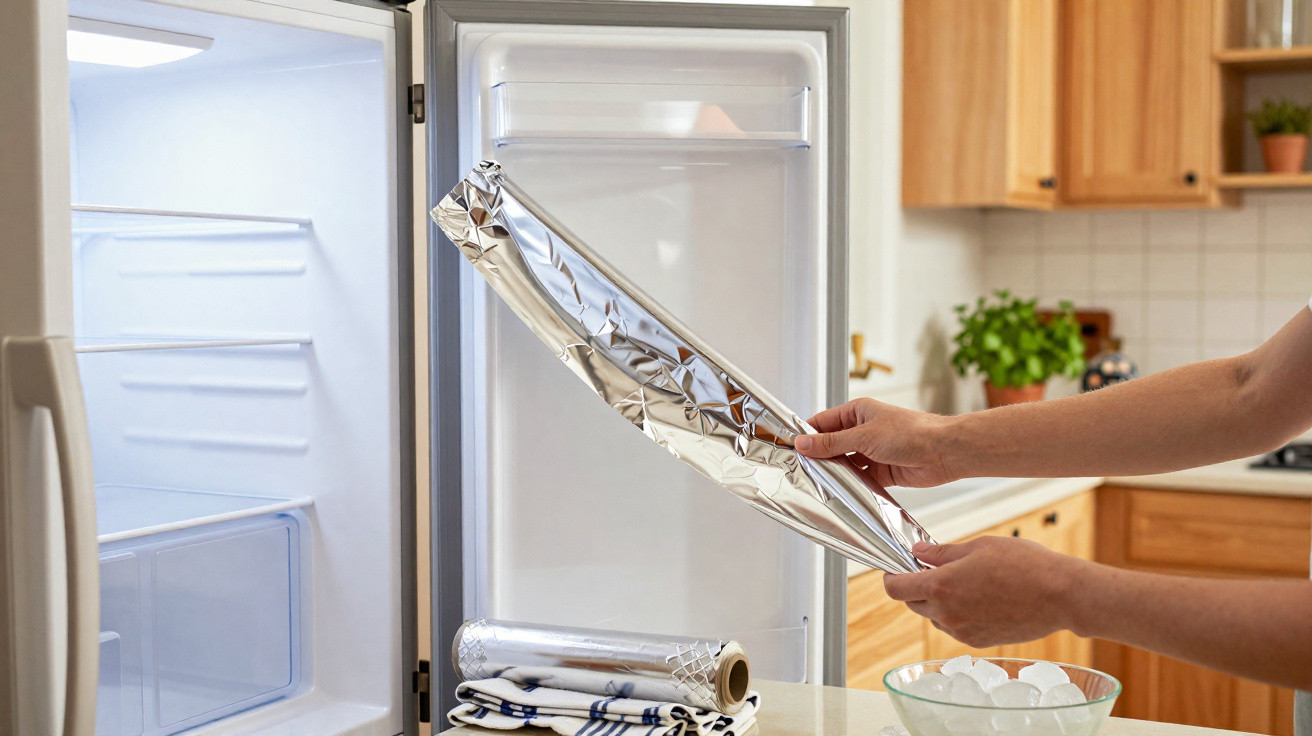
A thick shell of ice in the freezer steals space, makes it harder to find food and pushes up your electricity bill. Rather than spending hours scraping and balancing bowls of hot water, there’s a surprisingly straightforward fix: an ordinary sheet of aluminium foil from the kitchen drawer. It sounds like an internet “hack”, but it’s rooted in simple physics.
Why ice in the freezer is more than just annoying
Frost inside a freezer may look harmless, yet over time it causes real problems - for the appliance and for your wallet.
- Ice acts like an insulating layer: the thicker it gets, the harder it is for the system to move cold air effectively around the interior.
- The compressor runs for longer: the unit cycles more often, uses more energy and wears out sooner.
- The door seals less well: ice along edges or the back panel can interfere with the gasket - warmer air creeps in and even more ice forms.
- Less usable storage: pizzas, vegetables and frozen staples lose room; items can freeze to the wall or tear and get damaged when you pull them free.
Anyone who keeps postponing defrosting knows the loop: open the door, warm air rushes in, moisture condenses, freezes again - layer after layer. Your electricity meter certainly won’t thank you.
“Every layer of ice in the freezer is basically wasted energy - and avoidable stress for the appliance.”
At some point, many people reach for a scraper, knife or screwdriver. It can feel quicker in the moment, but it’s also how interiors get damaged. A small crack in plastic or a nicked cooling line can turn your freezer into an expensive call-out.
What aluminium foil does to ice in the freezer
The concept is simple, and it works because of a basic effect: ice grips especially well to rough, porous surfaces. Plastic inner walls develop fine scratches over time - often from aggressive scraping or rigid packaging. That’s exactly where ice can lock on.
Aluminium foil is smooth and non-porous. If you place it over the trouble spots, it creates a kind of separating layer between the wall and the frost:
- Moisture freezes on the foil, not directly on the wall.
- The surface stays comparatively smooth.
- Ice bonds less strongly and can be removed in one piece together with the foil.
“Instead of scraping ice for hours, later you simply peel away a strip of foil - frost and all.”
For the method to pay off, the setup has to be right. Aluminium foil isn’t magic; it needs a clean, dry base to work properly.
How to apply the aluminium foil trick properly
Step 1: Defrost the freezer thoroughly once
To start, you’ll do one final “traditional” defrost - but in a controlled way:
- Put food into cool bags, or (in cold weather) place it outside briefly.
- Switch the appliance off and unplug it.
- Let the ice melt steadily; loosen large chunks carefully with a plastic scraper, never metal.
- Catch the meltwater so it doesn’t end up all over the kitchen.
As soon as there’s no visible ice left, the key part begins.
Step 2: Dry the interior completely
Leftover moisture is the biggest enemy of this approach. If water remains on the wall, the foil won’t sit properly and can bubble.
- Wipe everything down thoroughly with a clean tea towel.
- Leave the door open for a few minutes so residual damp can evaporate.
- If needed, use a hairdryer briefly on the lowest setting from a good distance - do not blast hot air directly onto plastic.
Step 3: Fit aluminium foil - but do it methodically
Now it’s time for the roll of aluminium foil. Proceed like this:
- Cut strips sized for the back panel and the upper interior surface.
- Focus on the areas where frost usually appears first (typically the back wall and the top section).
- Smooth the foil down with your hand or a soft cloth, pressing out any air pockets.
- Wrap edges around corners as far as possible so nothing lifts.
- Don’t cover vents or sensors - those areas must remain clear.
| Area | Priority | Note |
|---|---|---|
| Back panel | high | This is often where a thick layer of ice forms first. |
| Upper interior area | high | Warm air rises, and frost tends to settle there. |
| Side panels | medium | Worth doing on freezers that ice up easily. |
| Base | low | Only if ice regularly builds up there. |
“If you apply it carefully, you often halve the time needed for each future defrost.”
How often the foil should be replaced
Aluminium foil won’t make the freezer maintenance-free. What it does is make routine upkeep far easier. As a rough guide, check the foil every few months and replace it if there are major tears or a heavy build-up of ice.
A practical routine could look like this:
- When you’re sorting the contents, take a quick look at the foil.
- At the latest, when you can see full sheets of ice, fit a fresh strip.
- Use only as much foil as you actually need - the roll will usually last for years.
The main advantage is that, instead of emptying everything and waiting for hours, you pull off the foil that’s carrying the ice, do a quick dry wipe, and lay new strips. In the best case, it’s done in minutes.
Why the trick also protects the appliance
If you’ve previously attacked ice with hard tools, you’ll know what can happen: fine scratches, dull patches, sometimes even small dents. They may be barely visible, but they help future ice grip even more stubbornly.
The foil functions as a protective layer:
- Interior surfaces stay smoother.
- No metal tool touches plastic or coatings directly.
- The freezer keeps its interior in better condition for longer.
“Every scratch inside is an invitation for stubborn frost - the foil takes the hassle instead.”
Reduce ice even further with simple habits
The aluminium foil trick works best if you also adjust a few day-to-day habits. Small changes can make a noticeable difference:
- Keep the door open briefly: only open the freezer as long as necessary; sort shopping before you start loading.
- Seal food properly: open bags or loose lids add extra moisture to the system.
- Don’t freeze hot food: let it cool fully in the fridge first, then move it to the freezer.
- Watch the fill level: a moderately filled freezer holds temperature more steadily than one that’s empty or crammed full.
If you organise your fridge and freezer consciously, you waste less food and you’re not opening the door repeatedly just to hunt for something. That reduces the moisture entering the freezer compartment - and therefore the frost build-up.
Risks, limits and sensible additions
Aluminium foil shouldn’t be put into every freezer without thought. A few points are worth keeping in mind:
- With No Frost appliances, only place foil where it won’t block air circulation.
- Avoid sharp foil edges so nothing tears or damages seals.
- If condensation keeps pooling behind the foil, something is usually off with the door seal or the temperature setting.
Some households use thin, smooth plastic mats instead of aluminium foil, which can also peel away cleanly. The underlying idea is the same: a smooth, removable layer between the wall and the ice.
If you enjoy small household tricks, you quickly notice that many everyday nuisances can be eased with simple methods. Whether it’s shoes with soles you can’t remove, or a stubborn blockage in the sink trap, a bit of basic know-how saves time, stress and real money. Aluminium foil in the freezer fits neatly into that category: low cost, no specialist tools, but a tangible effect on energy use, storage space and your patience at the frozen-food shelf.





Comments
No comments yet. Be the first to comment!
Leave a Comment