
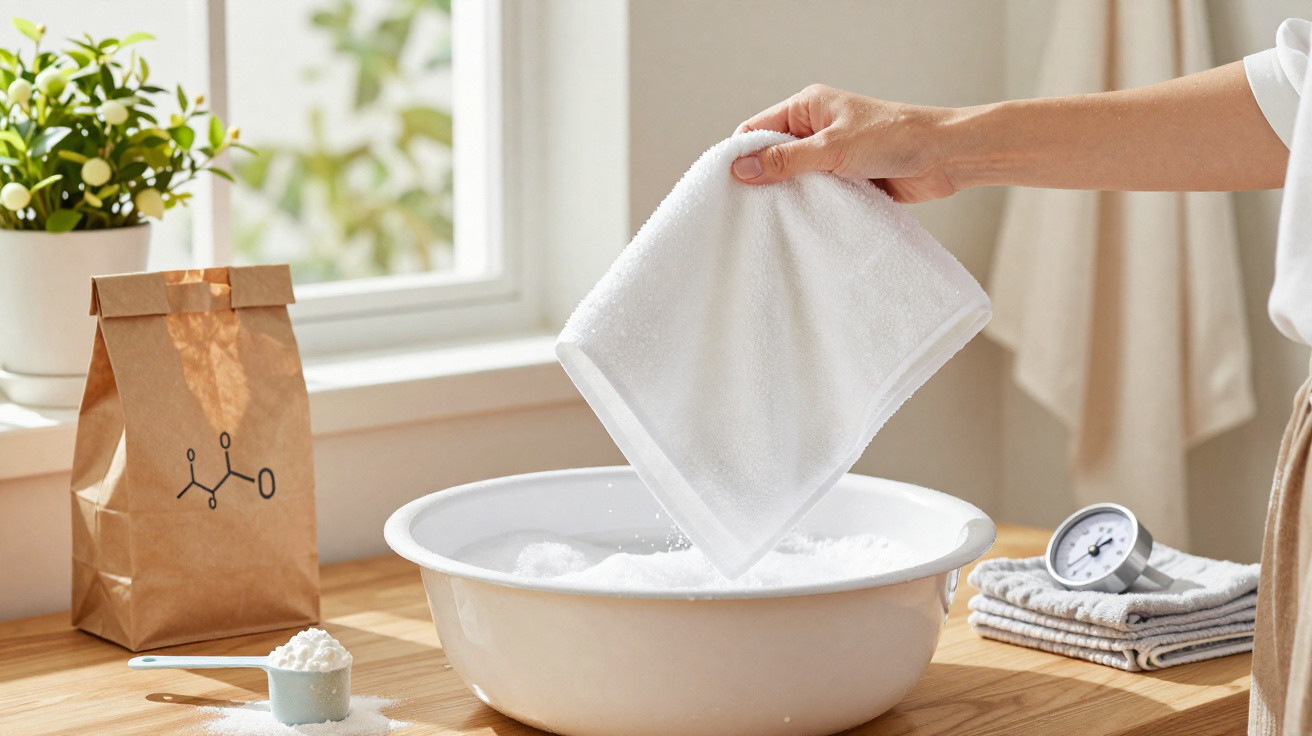
An old-fashioned powder can make greyed fabrics look almost like new again.
In many kitchens, piles of dull, grey, slightly greasy-looking tea towels build up-items that never quite seem properly clean, even after countless washes. Expensive biological powders, specialist cleaners and stain sprays promise miracles, yet stubborn shadows from fat, red wine or tea often refuse to shift. The answer, however, is frequently already sitting in the cleaning cupboard: a modest white powder that many people have forgotten about-yet it can brighten textiles without wrecking them.
The powder that makes bleach look outdated
What we’re talking about is sodium percarbonate, usually sold as “percarbonate” or as an “active-oxygen stain remover”. From a chemistry point of view, it’s a solid form of hydrogen peroxide-meaning oxygen bleach in powder form. It looks like coarse laundry powder, dissolves in water and releases active oxygen.
That released oxygen is what attacks the colour pigments in stains, including those from coffee, tea, berries or tomatoes. Unlike chlorine-based bleaches, sodium percarbonate is far gentler on cotton fibres and doesn’t leave a yellowish haze behind. Fabrics come up looking cleaner and fresher, rather than “scorched” or worn out.
“Active oxygen breaks down discolouration without destroying the cotton-that’s the key advantage over harsh chlorine bleach.”
Another advantage is what’s left after it’s done its job: the powder breaks down into water, oxygen and soda. These substances put very little burden on wastewater. If you want a cleaner kitchen without reaching for the most aggressive supermarket chemicals, this is a convincing alternative.
Why temperature decides success or failure
Plenty of people have tried sodium percarbonate before and felt let down. The most common mistake is simply tipping it into a cold wash or a 30 °C cycle. In lukewarm water, very little happens-the grains dissolve poorly and most of the oxygen remains locked inside the powder.
To properly kick off the reaction, the product needs heat. The process starts at around 40 °C, and it works best at about 60 °C. In that temperature range, the powder releases large amounts of active oxygen. In the fabric, there can be grease, protein residues, dyes and bacteria-the oxygen breaks these structures down so the remains can be rinsed away later.
For kitchen towels, that effect is doubly useful: they don’t just look whiter, they become more hygienic. Towels used to wipe up meat juices or dry worktops often hold more germs than you’d expect. The combination of hot water and oxygen bleach reduces that load significantly.
The soaking method: turning grey towels back into laundry that looks like new
If you want genuinely striking results, don’t rely only on the machine wash-pre-soak the items on purpose. Old, deeply set stains in particular come away far more easily this way.
Step by step to the “miracle bath”
- Choose a container: A heat-resistant bowl, bucket or the sink.
- Add water: Use very hot water; around 60 °C is ideal for white cotton tea towels. For coloured items, it’s safer to try roughly 40–50 °C first.
- Dosage: Stir in about 1–2 tablespoons of sodium percarbonate per litre of water. Use the higher amount for heavy soiling.
- Dissolve thoroughly: Stir with a wooden spoon or an old ladle until no grains seem visible.
- Soak immediately: Put the towels straight into the fresh solution while the oxygen is being released.
How long you soak for determines how fully the stains lift. Lightly greyed towels usually do well with two hours. With old, dark tea stains or red-wine marks, a four to six hour bath is often worth it. Some people even leave textiles in the bucket overnight-especially for heavily encrusted kitchen towels from catering settings or busy, keen-cook households.
“The longer the soaking time and the hotter the water, the deeper the active oxygen penetrates the weave.”
After soaking, gently squeeze the towels out and wash them as normal in the machine. A standard biological powder is enough; fabric conditioner isn’t necessary. Many people find that after this treatment the towels come out of the drum noticeably brighter and fresher-and that the improvement remains visible for weeks.
Where sodium percarbonate reaches its limits
As helpful as this product is, not every textile can handle the treatment. Tea towels are usually made from robust cotton or linen, and oxygen bleach works very well on those. It becomes risky with delicate fibres such as:
| Material | Suitability for sodium percarbonate | Note |
|---|---|---|
| Cotton (white) | very good | Best at 60 °C. |
| Cotton (coloured) | limited | Test first on a hidden area. |
| Linen | good | Hot water is possible; check colourfastness. |
| Wool | not suitable | Fibres can felt and become brittle. |
| Silk | not suitable | Fibre structure is strongly attacked. |
Sensitive, protein-based fibres such as wool or silk react badly to the alkaline solution and the oxidising action. They can turn rough, lose their sheen and may even break. For these fabrics, mild wool detergents and low temperatures are the better option.
Household safety: dose sensibly and mix correctly
Even though sodium percarbonate is considered relatively environmentally friendly compared with many specialist cleaners, it isn’t a harmless kitchen herb. In high concentrations, the powder can irritate skin and eyes. If you handle it frequently, it’s best to wear rubber gloves and avoid breathing in the dust.
Mixing also matters. Many people also rely on vinegar or citric acid for limescale. However, neither should go into the same tightly sealed container as oxygen bleach. The combination can produce significant gas, which may cause the container to swell and, in the worst case, overflow.
“Rule of thumb: don’t let oxygen bleach and acids react in a closed container-use them one after the other or apply in an open vessel.”
For everyday use, a modest dose is perfectly adequate. More powder doesn’t automatically mean better results. What really counts is temperature, soaking time and a proper wash cycle afterwards.
Everyday tips: helping other kitchen textiles too
Once people see what it does for tea towels, they often reach for the powder for other household problems as well. Typical candidates include:
- greyed patterned tea towels (do a colour test first),
- white fabric napkins with red wine or curry stains,
- oven gloves and barbecue mitts with greasy shadows,
- cotton pot holders that have started to smell strongly.
It’s especially effective on odours. Active oxygen breaks down smelly molecules rather than masking them with perfume. So if you want to get rid of that familiar “old fat” smell from kitchen textiles, this powder can be a very effective tool.
Why it pays to read the label
Many modern detergents already contain a portion of oxygen bleach. The catch is that the dose is designed for “average dirt”. Heavily soiled kitchen towels, however, often need a more concentrated treatment. That’s why a separate bag of pure sodium percarbonate can be worthwhile-so you can add extra when required.
On packaging you’ll often see terms such as “Oxi-Power”, “active oxygen” or “stain salt”. In many cases, they refer to exactly this powder, sometimes blended with other additives. A quick look at the ingredients list will tell you what you’re dealing with. If you prefer as few additives as possible, look for products with the highest possible proportion of sodium percarbonate.
With a little practice, what first feels like tedious stain removal becomes a fairly straightforward routine. Instead of throwing out tea towels regularly and buying new ones, many older pieces can stay in use for much longer-while still looking surprisingly well cared for. That’s kinder to your budget and the environment, and it also delivers a small sense of achievement in everyday household life.
Comments
No comments yet. Be the first to comment!
Leave a Comment