
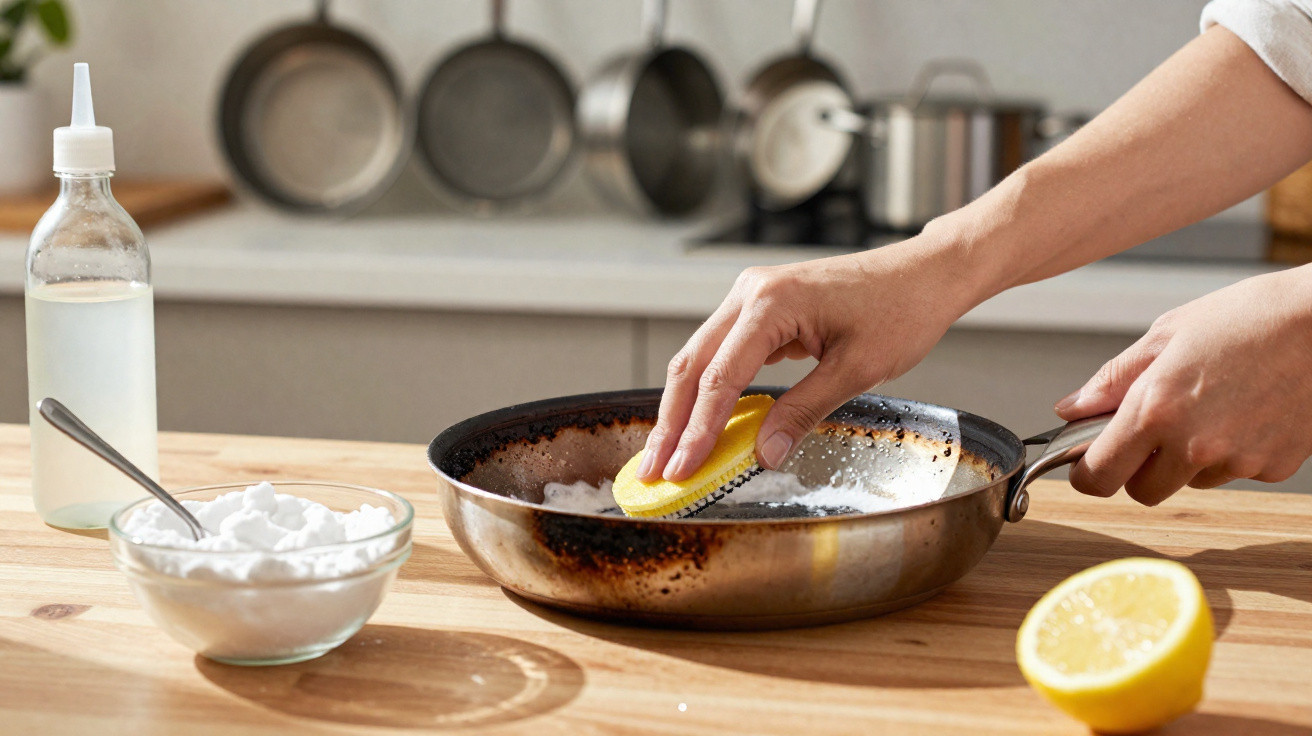
A simple trick using everyday cupboard staples can often reverse the damage.
Many people give up on pots and pans far too soon because the base has turned black, the outside looks blotchy, or nothing seems to shine any more. Rather than binning expensive cookware or wrecking it with steel wool, a few straightforward products from your cleaning cupboard can protect the surface and bring back much of the original lustre.
Why pots and pans get worn so quickly
Cookware rarely gets a break in day-to-day use: high heat, grease, acids from food, and water marks after washing. Over time, even high-quality materials start to look tired.
- Grease spits up to the rim and bakes onto the outside.
- Pasta water boils over and the starch leaves rings.
- Dishwashers dull finishes and can attack coatings.
- Hard water leads to limescale and streaking.
A common response is to reach for harsh scourers or aggressive cleaners. They may lift grime quickly, but they also scratch surfaces and, in the long run, can damage non-stick coatings or polished stainless steel.
"If you clean too aggressively, you drastically shorten the lifespan of your cookware – gentle household remedies are often the better choice."
Gentle cleaning with baking soda and washing-up liquid
A reliable household staple is baking soda (also sold as bicarbonate of soda). When you combine it with washing-up liquid, you get a paste that loosens dirt without scratching the surface.
How the baking soda and washing-up liquid paste works
- In a small bowl, mix baking soda with a few drops of washing-up liquid.
- Add a little water until you have a thick, spreadable paste.
- Apply the paste to the outside of the pot or pan using a soft sponge or cloth.
- Leave it to work for a few minutes.
- Rub gently in circular motions without pressing hard.
- Rinse thoroughly with warm water, then dry and buff.
Used this way, it helps remove baked-on grease around the rim, yellowing from gas flames, and dull patches caused by heat. Wear on the surface stays minimal as long as you avoid metal scouring pads.
Reviving dull surfaces with white vinegar
When stainless steel or aluminium pans look matt, the culprit is often limescale, or a limescale-and-grease film. Plain white household vinegar dissolves these deposits very effectively.
Step by step to restore shine
A spray bottle filled with neat, white vinegar is particularly handy because it lets you apply a light, even layer exactly where you need it:
- Spray the cooled, clean pan inside and out with vinegar.
- Wipe with a soft cloth using horizontal strokes.
- Grease and limescale haze lifts away, and the surface looks clearer again.
- Finish by drying with a microfibre cloth, which also adds a little extra polish.
Microfibre cloths make a noticeable difference here: they pick up moisture and grime more effectively and leave an even finish without streaks.
"White household vinegar removes limescale, baking soda provides mild abrasion – together they make a powerful but gentle cleaning combination."
Burnt-on bases: when food has really stuck
It’s a familiar scenario: the sauce reduced too far, rice caught, or potatoes glued themselves to the bottom. Instead of scraping with a knife, a small kitchen-chemistry trick using household staples can help.
Baking soda and vinegar method for stubborn burnt-on residue
For heavily burnt bases, a combination of water, white vinegar and baking soda works well:
- Fill the pot or pan with enough water to fully cover the burnt area.
- Add a generous splash of white vinegar.
- Bring it to the boil on the hob until it bubbles vigorously.
- Turn off the heat and let it sit briefly.
- Carefully sprinkle in 1–2 tablespoons of baking soda (it will foam).
- After a few minutes, pour off the liquid.
- Wipe with a soft sponge – many residues will now lift with very little effort.
The reaction between baking soda and vinegar helps work underneath the baked-on layer. Even brown crusts usually come away much more easily, without leaving the base covered in scratches.
Lemon trick for light to moderate crusting
If you prefer a fresher smell, reach for lemon. Combined with baking soda, it also forms a cleaning paste:
- Cut a lemon in half and squeeze the juice into a small bowl.
- Add baking soda gradually until a thick paste forms.
- Apply the mixture to the affected areas in the pot or pan using a cloth.
- Leave for about 10–15 minutes.
- Rub with a soft sponge and rinse with water.
The citric acid loosens residue, while baking soda provides gentle mechanical help. It can also leave a slight sheen, especially on stainless steel.
How to keep pots and pans looking newer for longer
The easiest clean is the one you never have to do. A few small habit changes in the kitchen can protect your cookware over the long term.
The right way to handle cookware while cooking
- No metal on coatings: use wooden or silicone spatulas on non-stick pans.
- Don’t preheat an empty pan on high for long periods, as the coating can suffer.
- Add salt to boiling liquid, not to cold water in stainless steel pots – this helps prevent pitting spots.
- Don’t run a red-hot non-stick pan under icy water; the thermal shock can warp it.
Proper care after washing up
Drying and storage also influence how long cookware lasts:
- Always dry pots and pans completely after washing to prevent water marks.
- If stacking, place a tea towel or a piece of kitchen roll between items.
- Avoid cleaning non-stick pans in the dishwasher all the time, as strong detergents and high temperatures can attack the coating.
"With silicone or wooden utensils, hand washing, and a cloth between stacked pans, cookware often lasts many years longer."
What to consider with different materials
Not every pan tolerates every treatment. A quick check of the material helps avoid expensive mistakes.
| Material | Special notes |
|---|---|
| Stainless steel | Handles vinegar and baking soda well, but avoid steel wool on polished surfaces. |
| Non-stick coating | Use only soft sponges; avoid harsh powders; avoid very high heat with an empty pan. |
| Cast iron (uncoated) | Don’t soak for long; use little to no washing-up liquid; always dry thoroughly and lightly oil afterwards. |
| Enamel | Avoid hard scrapers; use the baking soda–vinegar method only cautiously. |
Practical examples from the kitchen
Everyday scenarios show how these tricks fit into real life. After a long evening of roasting with sauce that’s baked onto the bottom, boiling a vinegar-and-water mix briefly is often enough. If you then sprinkle on a thin layer of baking soda, most dark patches lift off the base without heavy scrubbing.
For a pan whose outside has gone yellowish from a gas flame, the baking soda and washing-up liquid paste tends to work particularly well. Coat the exterior all over, wait a few minutes, then wipe it away with a damp sponge - the result can look surprisingly close to new.
Risks and limits of household remedies
Despite their benefits, baking soda, vinegar and lemon do have limits. On very delicate coatings, frequent rubbing - even with gentle products - can gradually roughen the surface. Cast-iron pans can lose their protective seasoning if exposed to too much acid and may rust more quickly.
A quick material check still makes sense: what does the manufacturer recommend? Does the pan tolerate washing-up liquid? Is it dishwasher-safe? When you combine those guidelines with these household tricks, you can get the most from your cookware without ruining it.




Comments
No comments yet. Be the first to comment!
Leave a Comment