
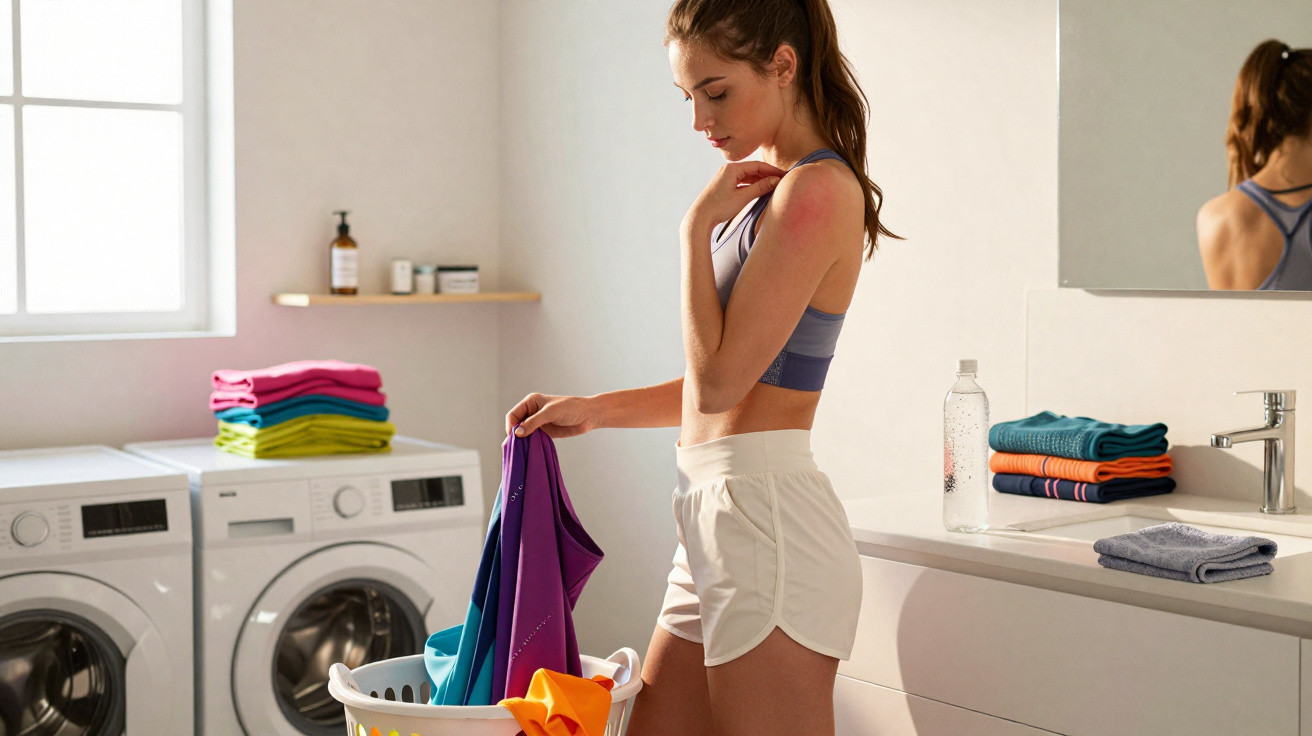
A hard session at the gym, a quick change of clothes, then later slipping back into your favourite set: it sounds convenient, but it can put real strain on your skin. A dermatologist from New York explains how often sportswear should go in the washing machine, when bacteria start thriving - and why blemishes, irritation or fungal infections can become almost inevitable.
Why worn sportswear is an ideal breeding ground for germs
Fresh sweat doesn’t usually smell much on its own. Trouble starts when it sits in tight, technical kit and mixes with the bacteria that naturally live on your skin. Those microbes lodge themselves in the fibres and can remain there even once the garment has dried.
"The longer damp, sweaty clothing stays on the skin, the more time bacteria have to cause trouble - from spots to infections."
In the dermatologist’s clinic, she often sees people with spots and rashes across the chest, back or buttocks. It’s especially common in those who train frequently but don’t change straight afterwards, or who re-wear the same outfit because the workout "wasn’t that intense".
If a sweaty top is simply draped over a chair and pulled on again the next day, the germs are still sitting in the fabric. It may feel dry, but it isn’t hygienic.
Clear rule: wash tight sportswear after every session
For anything that fits close to the body, the expert’s advice is straightforward: wash it after each training session. This applies in particular to:
- Leggings and tight training trousers
- Sports bras and bralettes
- Technical tops and compression layers
- Sports socks, especially for trainers or football boots
Technical fabrics tend to hold onto moisture more effectively than cotton, which means they can stay slightly damp for longer. That’s exactly what bacteria and fungi like. In gyms there’s often an extra issue: shared spaces can circulate germs such as staphylococci, which can transfer onto textiles.
"If you’re prone to blemishes, eczema or fungal infections, you should never wear sweaty sports kit a second time."
If washing genuinely isn’t possible, at least change promptly, rinse your skin and underarms with water, take the clothing out of your bag, and let it dry fully in the open air. This isn’t a substitute for laundering, but it can lower the risk of rapid bacterial growth.
How training intensity affects how often you should wash
The dermatologist draws a clear line between hard endurance work and gentler movement. The more intense the session, the more you sweat - and the greater the chance of skin trouble.
Activities that produce a lot of sweat
For the following, sportswear should always go into the wash after a single wear:
- Running sessions and interval runs
- HIIT and high-intensity cardio classes
- Team sports such as football, handball or basketball
- Workouts in hot environments, such as hot yoga
- Spinning, CrossFit or bootcamp-style sessions
These typically cause heavy sweating across the whole body. Breathable fabrics absorb a lot of moisture that can linger, creating a warm, damp environment that’s ideal for germs and fungi.
When you might be able to wear a top twice
With very light effort, the dermatologist allows a little flexibility. If the fit is loose, the fabric is mainly cotton, and it genuinely stays dry after exercise, it may be acceptable in isolated cases to wear it a second or third time. For example:
- relaxed walks on cooler days
- gentle yoga with minimal sweating
- light stretching and mobility work at home
The moment a top becomes even slightly damp or starts to smell more strongly, it should go straight into the laundry basket. And for anyone with sensitive skin, a tendency to acne, or a history of fungal infections, the general rule still applies: washing more often is safer than taking the risk.
How to look after your skin properly after training
It’s not only your kit that needs attention - your skin benefits from a simple post-workout routine too. The dermatologist recommends getting out of sweaty clothes as quickly as you can and removing sweat gently.
- Pat sweat away first with a clean part of a towel - don’t rub.
- Shower soon afterwards, cleaning the face, back, chest and any skin folds thoroughly.
- Use mild, pH-balanced cleansers, avoiding harsh fragrances or aggressive surfactants.
- Let clothing and towels dry properly after use, and replace them regularly.
"If you only give your body a quick wipe with a wet wipe after training and pull your leggings back up, you’re practically inviting skin problems."
Take extra care with very hot water. After intense exercise your blood vessels are widened; an extremely hot shower can place additional strain on circulation and, in the worst case, lead to dizziness or even fainting. A better approach is to start lukewarm and finish by briefly rinsing your legs with cooler water. That can also help reduce muscle soreness - the same principle used in cold-water therapies.
Common skin problems caused by unwashed sportswear
The number of issues that can come from a "quick re-wear" is longer than many people realise:
- Acne on the back, chest or bottom: blocked pores, sweat and bacteria can trigger inflammation.
- Irritation and chafing: damp fabric increases friction, leaving skin red and sore.
- Fungal infections: warm, moist areas such as the groin, buttock crease or under the breasts are particularly at risk.
- Eczema flare-ups: in people with atopic eczema or very sensitive skin, symptoms often worsen.
It isn’t only long sessions that cause trouble. Even a brief workout can irritate the skin if clothing is tight and remains against sweaty skin afterwards - for instance after a quick lunchtime training session.
Practical tips when washing isn’t possible right away
Real life doesn’t always cooperate, especially when you’ve squeezed in a workout before work. A few simple steps can reduce the risk until you can do a proper wash:
- Pack a spare T-shirt and fresh underwear, and change immediately after training.
- Don’t leave damp items sealed in a closed bag; hang them up to dry as soon as you can.
- Keep a travel-sized bottle of mild shower gel in your gym bag.
- If your skin is particularly sensitive: bring your own clean towels for the gym.
If you train several times a week, it helps to own two or three sets of technical kit and rotate them. That way you’re less likely to talk yourself into wearing the same leggings "just one more time".
What modern technical fabrics can - and can’t - do
Many brands promote antibacterial finishes or odour-control fibres. These may slow down smells, but they don’t replace washing. Such materials can sometimes reduce certain germs, yet they won’t remove them completely - and sweat, sebum and dead skin cells still remain trapped in the fabric.
If you have very sensitive skin, be cautious with strongly fragranced detergents. Residue can stay in technical fibres and may irritate the skin again when it’s "reactivated" by heat and sweat. A gentle sports detergent, no fabric conditioner, and a programme that thoroughly rinses are often the best combination.
The bottom line: the tighter, more synthetic and sweatier your sportswear is, the more it belongs in the wash straight after training. It’s a small effort - and your skin often repays it with fewer spots, less irritation, and a much more comfortable feeling overall.




Comments
No comments yet. Be the first to comment!
Leave a Comment