
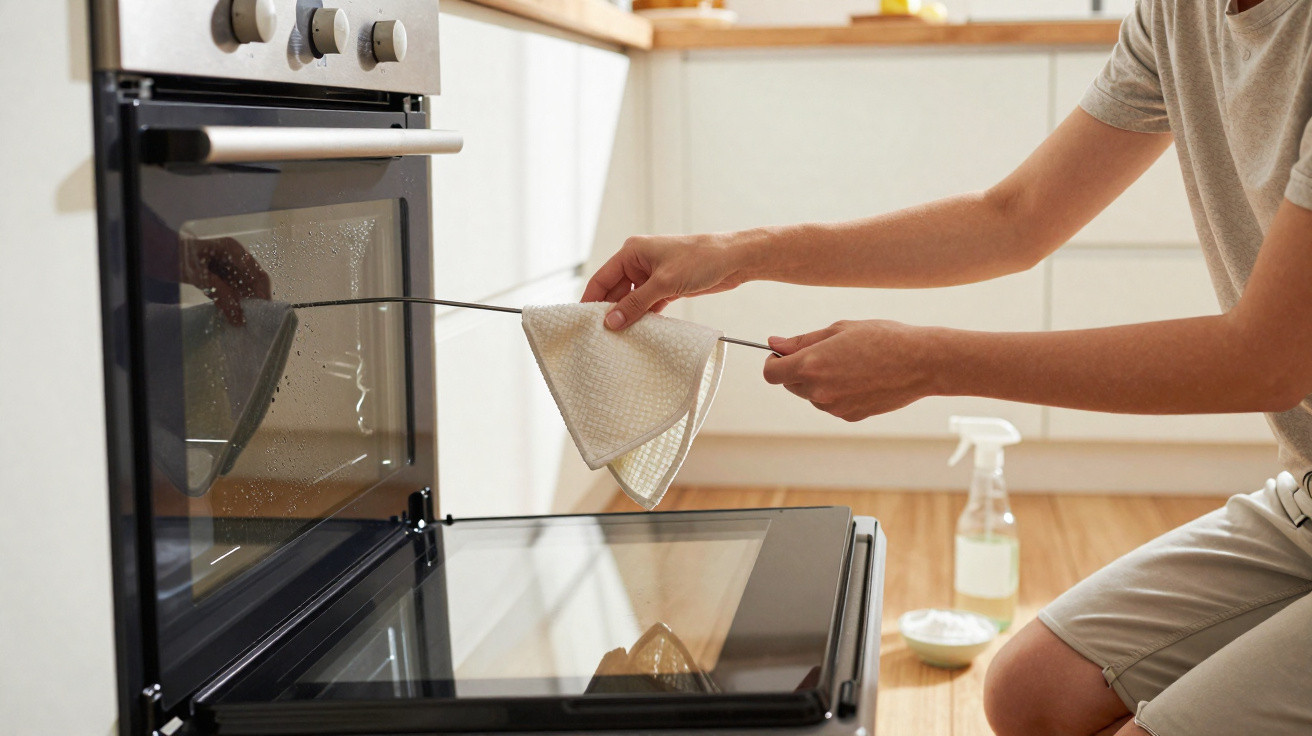
Grease, crusty deposits and a cloudy view into the oven: plenty of people get fed up and give up on cleaning the oven door - yet it’s far easier with one simple household item.
Anyone who cooks or bakes regularly will recognise the issue. Over time, the glass in the oven door builds up an unappetising layer of fat splashes, roasting residue and baked-on marks. The worst of it ends up in the narrow gap between the glass panes - a space that looks almost impossible to reach. That’s when many people assume there’s only one option: take the door off, remove the glass, and wrestle with fiddly parts - or just live with the mess. In reality, there’s a surprisingly straightforward method that works without screws, specialist tools or pricey cleaners.
Why the oven’s glass panes are so difficult to clean
Most modern ovens have two, sometimes even three, panes of glass in the door. Between them is an air gap that acts as insulation. Unfortunately, that same gap gradually collects plenty of grime:
- Fat splatters from roasting joints, bakes or pizza
- Vapour from sauces and oil that settles as a film
- Fine particles that burn during baking and stick to the glass
Oven heat effectively bakes these deposits onto the surface. On the outside you can usually scrub them away with a bit of effort; inside the gap, standard cleaning simply doesn’t reach.
That’s why many manufacturers design the door so it can be unhooked and the inner panes removed. In day-to-day life, though, this often turns into a frustrating job: tiny screws, delicate clips, awkward brackets - plus the constant worry that the glass could crack or go back in slightly misaligned.
“With one simple trick, you can skip all the fiddling with screws and glass parts - and still get the space between the panes properly clean.”
The pros’ trick: turning an everyday item into a cleaning tool
The answer is something many people have in a wardrobe, usually meant for shirts or trousers: a thin metal wire coat hanger (the kind often returned from the dry cleaners). Because the wire is soft, it bends easily, yet it’s firm enough to apply gentle pressure where you need it.
Step 1: Prepare the hanger properly
Take a slim metal coat hanger and reshape it:
- Straighten it out fully so you end up with the longest, straightest rod you can.
- Bend a small, flat hook at one end - roughly finger-length.
- Make sure the hook has no sharp edges so it won’t scratch the glass.
This hook is what will hold your cloth and guide it into the tight gap between the panes.
Step 2: Secure the right cloth
To stop the wire scraping directly against the glass, cover the hook with a cloth. Good options include:
- A microfibre cloth, slightly damp
- Alternatively: a damp disposable cleaning wipe from the supermarket or chemist
Wrap the cloth around the hook and fasten it securely using, for example:
- a rubber band
- a little tape
- strong string or thin garden wire
It needs to be firmly attached so nothing comes loose while you’re cleaning and disappears inside the door.
Step 3: Choose the cleaning solution
For this kind of build-up, simple household cleaners are often enough:
- hot water
- a splash of clear vinegar or a vinegar-based cleaner
This mix cuts through greasy film well and usually leaves minimal residue. If the dirt is particularly stubborn, add a small amount of washing-up liquid, or use a mild dose of oven cleaner. Key point: dampen the cloth rather than soaking it, so liquid doesn’t pool inside the door.
How to reach the narrow gap inside the oven door
Most oven doors have small openings that allow air to circulate. These ventilation slots are typically the best way into the space between the panes:
- Often they sit along the lower edge of the door.
- On some models they’re at the top, just above the glass.
- In certain designs, pulling the lower drawer out fully can reveal openings that are otherwise hidden.
Once you’ve located an entry point, gently slide the prepared hanger (with cloth attached) into the gap. Then work across the space section by section.
“Slow movements, light pressure, re-dampen regularly - and even old grease marks between the panes will start to lift.”
Cleaning technique: how to avoid streaks and smears
If you want the glass to look genuinely clear rather than merely “less dirty”, it helps to clean methodically:
- Work from the bottom upwards so loosened grime doesn’t run back down.
- Pull the hanger out occasionally, rinse the cloth and dampen it again.
- If you can still see streaks at the end, wipe over with a second cloth that’s only lightly damp.
- Finally, buff with a clean, dry cloth - if you can reach the area.
If the tightest corners still won’t budge, you can try a thin wooden stick or the handle end of a wooden spoon wrapped in cloth, provided the opening is large enough.
Advantages of this method compared with taking the door/glass apart
Many households know the pattern: after dismantling an oven door once, you promise yourself you’ll never do it again. The coat-hanger method saves a lot of frustration - and offers other benefits too:
| Aspect | Coat-hanger trick | Remove door/glass panes |
|---|---|---|
| Effort | a few minutes of preparation | often longer, with screws and instructions |
| Risk | very low risk to glass or mechanisms | risk of cracked glass or incorrect refitting |
| Frequency | easy to do more often | usually put off for a long time |
| Tools | just a hanger, cloth, cleaner | screwdriver, possibly special parts |
For older appliances in particular - especially those where the panes aren’t designed to be removed - the coat-hanger approach can be the only practical way to restore a clear view into the oven.
Safety: what to check before you start
A quick safety check is worth doing first:
- Let the oven cool completely - no residual warmth in the glass.
- Unplug from the mains or switch off the circuit at the consumer unit if you’ll be reaching deep into openings.
- Round off the wire ends, or cover them with tape, to prevent scratches.
- Use cleaning liquid sparingly so none runs into the inside of the door.
If you’re unsure - or the oven is particularly expensive - consult the instruction manual. It often shows where the ventilation slots are and how delicate the door construction may be.
Practical extra: how to keep the oven cleaner for longer
If you don’t want to be cleaning between the panes every few weeks, a handful of everyday habits can reduce the build-up:
- Line baking trays with baking paper to limit fat splatter.
- Cover casserole dishes lightly, for example with a lid or aluminium foil.
- After the oven cools, wipe heavy marks from the inner side of the glass straight away.
- Plan a thorough clean once or twice a year before residue fully bakes on.
Many newer ovens also include cleaning programmes such as pyrolytic cleaning or steam-assisted cycles. These help with the oven cavity walls, but they usually don’t reach the space between the door panes - which is where the coat-hanger trick remains the practical option.
Household cleaners that genuinely help with oven cleaning
There’s no shortage of kitchen-cleaning “hacks” online, but a few combinations have proved themselves in many homes:
- Sodium bicarbonate (baking soda or a pure powder): mix with a little water into a paste, apply to burnt-on areas, leave to work, then wipe away.
- Vinegar or a vinegar-based cleaner: useful against grease and light limescale - and especially handy in the cloth mixture for the hanger.
- Lemon: can leave a fresher smell, but it won’t replace a proper degreaser.
Whatever you use, always test on an inconspicuous spot first, and never use sharp-edged scourers or abrasive cleaners on the glass. Otherwise you can damage the coating, making the surface more prone to future staining.
No-drama conclusion: a wire coat hanger is often all you need
A lot of people see a filthy oven door and mentally give up, putting the job off for months. Yet a simple metal wire coat hanger, a microfibre cloth and a little cleaner are often enough to make even the hard-to-reach gap between the panes clear again - with no tools and no dismantling. Spend a few minutes trying this approach and you’ll quickly find that the supposedly dreaded task of “cleaning the oven door” becomes far less daunting.

Comments
No comments yet. Be the first to comment!
Leave a Comment