
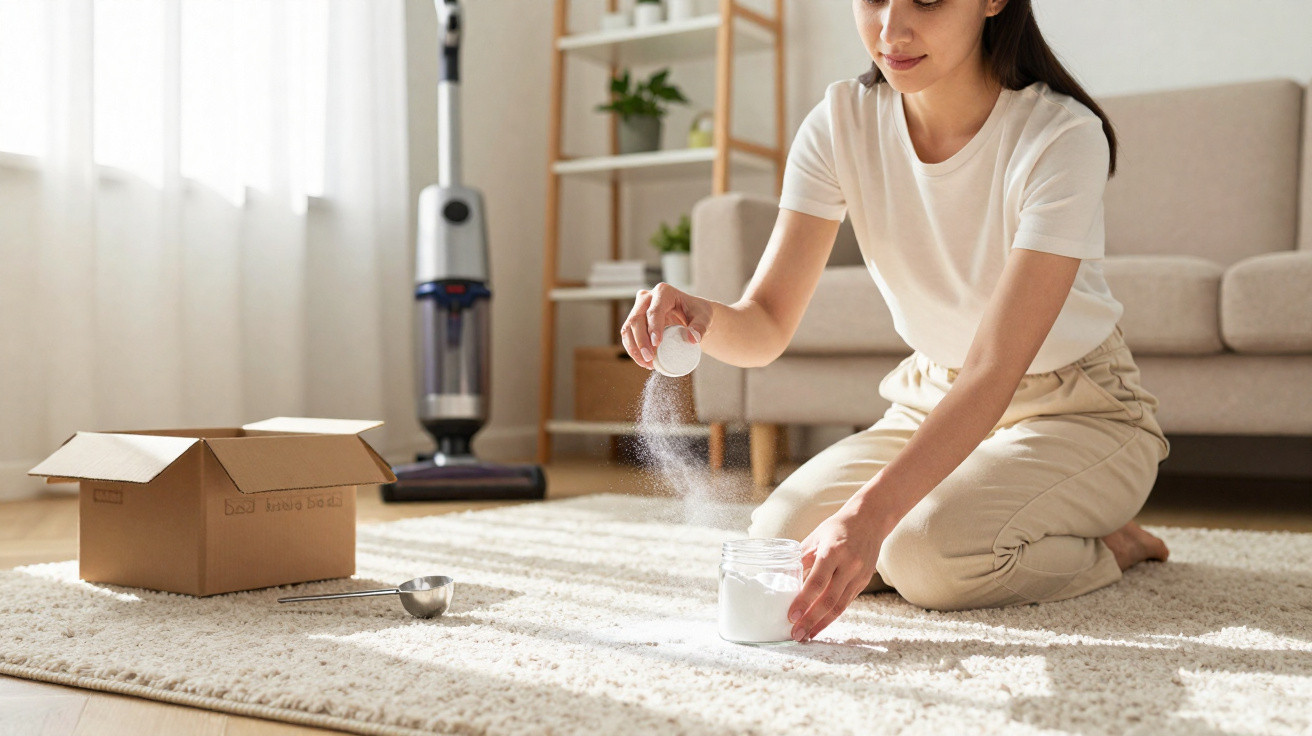
The smell didn’t arrive with a bang. It crept in. At first it was only a faint mustiness, somewhere between wet dog and an old sports hall. No one could pinpoint the source until someone padded barefoot across the living-room carpet and wrinkled their nose. Suddenly it was obvious: not the kitchen bin, not the fridge - the carpet was to blame. Visitors politely pretended they couldn’t notice. The people living there acted as if they’d imagined it. Yet it was there, every morning when the front door opened. A quiet, unpleasant “welcome back”.
We all know that moment when you think: “I really hope nobody else can smell what I can smell.”
Why carpets start smelling “old” so quickly - and nobody talks about it
Carpets are like silent diaries. They record daily life: crumbs, skin flakes, pet hair, spilled coffee, rainwater carried in on damp shoes. From the outside they can still look perfectly fine, but something else is happening within. The fibres absorb moisture, trap microscopic debris, and bacteria get to work. This kind of odour almost never appears overnight. It builds slowly, almost timidly, until one day it’s simply impossible to ignore.
Let’s be realistic: hardly anyone rolls up their carpet every week, hauls it off for professional cleaning, and calmly waits for it to come back. Carpets are “set-and-forget” furnishings - you put them down and expect them to just cope. That’s exactly where the issue begins, because odour has patience.
A young mum told me about her “carpet fiasco” in the nursery. It started with a small mishap: a cup of hot chocolate knocked over, quickly blotted with kitchen roll. Two weeks later the room had a strange sweet-and-sour smell. She aired the room, washed bedding, and blamed the nappy bin. Nothing changed. Only when she walked barefoot over the play rug did she realise what was going on: the stain had gone, but the fabric around it felt slightly stiff. An invisible boundary where the cocoa mix had soaked into the pile - ideal conditions for bacteria.
A bit of digging led her to figures you’d rather not think about: older carpets can sometimes harbour more germs than an average toilet seat, especially in homes with children or pets. It sounds like scaremongering at first, but it’s really just everyday reality. We live on our carpets. And our carpets - in a microbiological sense - live with us.
The logic is straightforward, almost brutal. When moisture meets organic matter and doesn’t dry properly, odour follows. Carpet fibres behave like a sponge. They pull liquid in and hold it at the core even when the surface feels dry again. So the “nose problem” begins in places we can’t see. Add kitchen fats, tiny food particles, cigarette smoke, perfume, pet drool - everything that floats eventually settles on the floor. A standard vacuum cleaner only removes what’s loose on top. The real “source of the smell” stays anchored deep in the pile.
That’s why room sprays and scented candles only help for a few hours. They mask what’s still fermenting away inside the carpet. You could almost say the carpet always wins - at least while we keep treating it on the surface.
The one method that genuinely works: dry, deep, patient
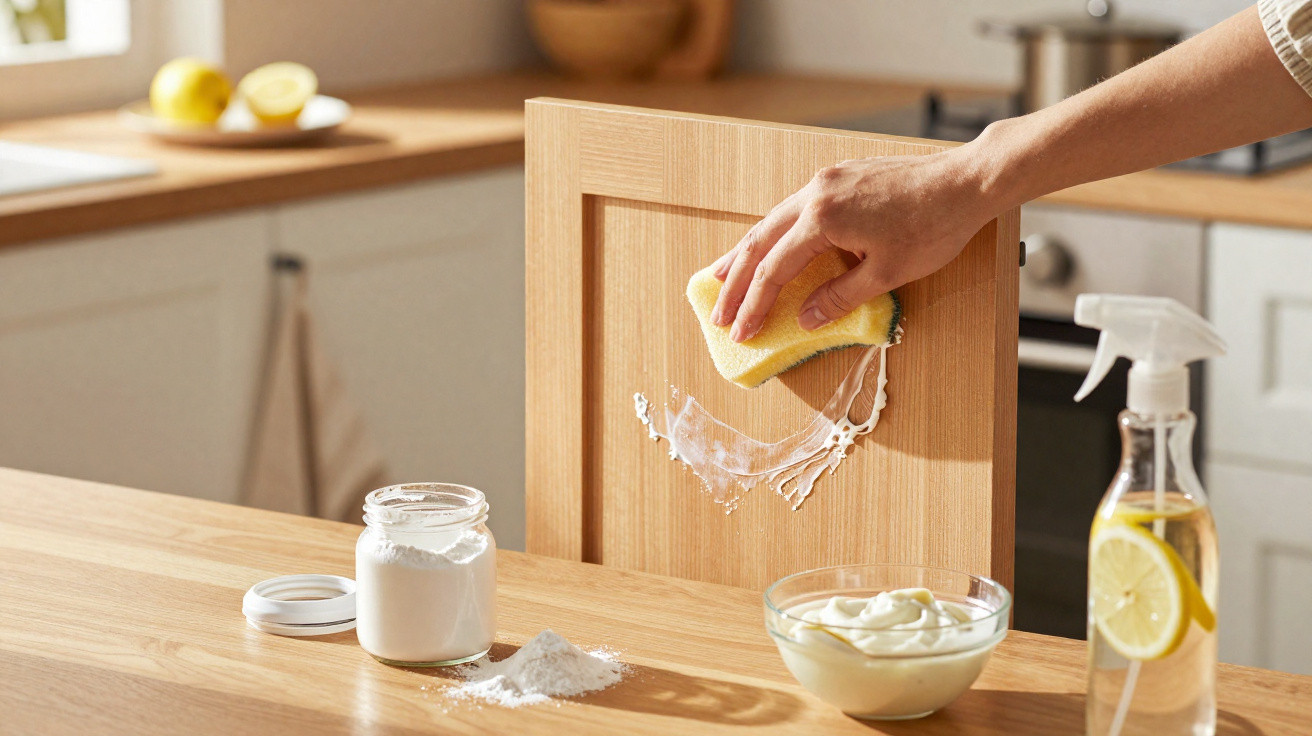
The most effective approach to carpet odour starts surprisingly plainly - with a white powder from the kitchen cupboard. Bicarbonate of soda (Natron) is a quiet hero when it comes to smells. It doesn’t disguise anything and it doesn’t perfume the room; it binds odour molecules. Used properly, it can bring a musty carpet remarkably close to a reset. The key is time, contact, and leaving it alone.
The steps sound easy, but the details matter. First, vacuum thoroughly to remove as much loose dirt as possible. Next, sprinkle bicarbonate of soda generously across the carpet - not timidly; you should be able to see it. Work it in lightly with your hand or a soft brush so the powder sinks into the fibres. Then you wait. Not for an hour, but overnight - ideally 12 to 24 hours. Only after that do you vacuum it up properly, best done in slow passes, twice in different directions. What you’re left with isn’t a synthetic fragrance, but neutrality.
Most people don’t fail because the method doesn’t work; they fail because they rush it. They dust on a little bicarbonate of soda, leave it for two hours, and feel disappointed when the smell is only slightly improved. Or they try to “boost” the result with fragrance sprays, or mix vinegar and bicarbonate of soda directly in the carpet, creating damp clumps. The biggest classic mistake is too much water. When a carpet smells strongly, people often scrub it, soak it, or cover it in foam. For a moment it seems clean, but moisture remains trapped inside - a feast for bacteria.
If you have pets, you’ll know the next trap: quick-fix cleaners with a harsh chemical scent. One spray makes your eyes water, the carpet smells of “lemon freshness” for three days, and then it’s back to square one. Emotionally, there’s often shame tied up in it. Nobody wants their home to smell of dog, cat, or stale carpet. A more useful way to see it is simple: odour isn’t a moral judgement - it’s a technical problem.
“The turning point came when I stopped spraying at the smell - and started pulling it out of the carpet,” a dog owner told me, who now buys bicarbonate of soda in a five-kilogram sack.
The reason this combination of dry cleaning and patience is so effective is that it tackles the issue from several angles:
- Bicarbonate of soda neutralises acidic odours and binds molecules rather than covering them up.
- A dry treatment avoids adding fresh moisture to the carpet’s core.
- A long dwell time gives the powder a chance to work deep within the fibres.
- Careful vacuuming removes the bound dirt for good.
- Regular repetition stops “old smell” from building up again.
What you’re left with after a fresh-smelling carpet
When a room suddenly stops smelling of “carpet”, you realise how much that odour had been shaping what home felt like. Colours seem brighter, the air feels lighter, and even day-to-day life appears a touch more in order. It sounds dramatic - until you experience it. Smell is the quietest problem in a home, and at the same time one of the most emotional. It can decide whether you happily sit on the floor in the evening or unconsciously choose the sofa every time.
What’s interesting is that once you’ve seen how targeted a method like bicarbonate of soda can be, you start viewing your home differently. “My carpet stinks” shifts towards: “What exactly is happening in my rooms?” You begin to read odours as signals rather than embarrassment. Maybe you air the place more deliberately, stop leaving wet shoes to dry on the carpet, and deal with spills faster - blotting with kitchen roll and using a mild cleaner instead of pretending it didn’t happen.
And then something almost freeing happens: the carpet can stay where it is. It doesn’t need replacing immediately, and it doesn’t take an expensive professional visit every time life leaves a mark. Carpets can go back to being what they were meant to be - spaces for playing, laughing, arguing, and living. Without that one thought running in the background: “I hope nobody can smell it.” Perhaps that’s the quiet strength of this method: it doesn’t just deliver neutral air, it also gives you a small piece of calm in your own home.
| Key point | Detail | Benefit for the reader |
|---|---|---|
| Bicarbonate of soda dry treatment | Sprinkle generously, work in, leave for 12–24 hours, vacuum thoroughly | A simple, low-cost method that genuinely neutralises odours instead of masking them |
| Avoiding moisture | Don’t soak the carpet; only clean damp in small spots and sparingly | Reduces bacterial growth and helps prevent new odours long-term |
| A realistic routine | Regular vacuuming, a bicarbonate of soda treatment every few weeks, quick response to stains | A practical everyday approach rather than perfectionism - a fresher carpet without extreme effort |
FAQ:
- How often should I use bicarbonate of soda on my carpet? For households without pets, a bicarbonate of soda treatment every 4–6 weeks is usually enough. With children or animals, a 2–3 week rhythm can make sense, especially in high-traffic areas.
- Can bicarbonate of soda discolour or damage my carpet? On most synthetic and cotton carpets, bicarbonate of soda is unproblematic. For delicate Persian-style or wool carpets, test a small hidden patch first and don’t rub it in too firmly.
- Does bicarbonate of soda help with cat urine or strong dog smells? It can reduce odour intensity significantly, particularly after a targeted clean with a mild cleaner. For older urine stains that have soaked in deeply, professional treatment may be necessary.
- Is thorough vacuuming not enough? Vacuuming removes dust and visible particles, but it has limited impact on odour molecules deep in the fibre core. Combining vacuuming with bicarbonate of soda is far more effective against smells.
- What else can I do to keep my carpet fresh for longer? Air rooms regularly, don’t leave wet shoes and gym bags on the carpet, blot spills immediately and only clean slightly damp, and shift furniture a little every few months so the carpet can dry properly all over.
Comments
No comments yet. Be the first to comment!
Leave a Comment