
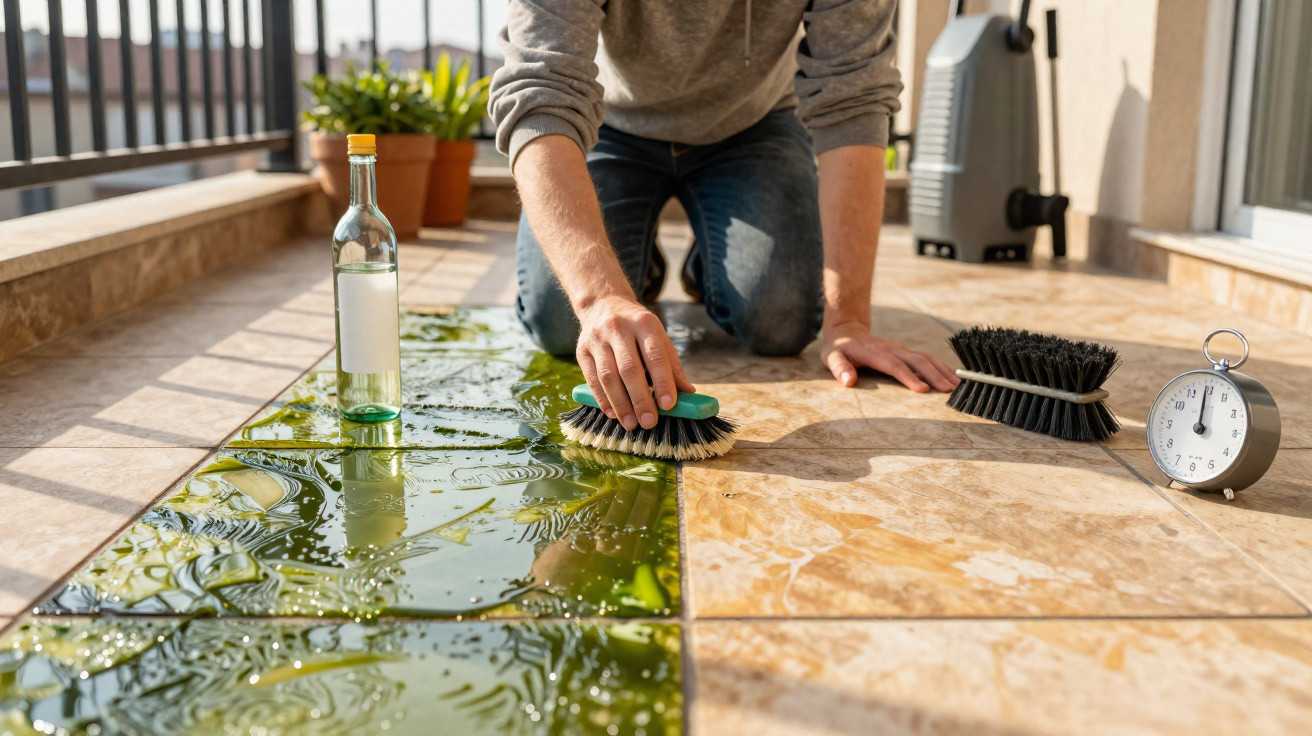
When you slide the terrace door open in spring, the view is often familiar: grey or green-tinged slabs, slippery films and dark staining. Many people instinctively reach for pricey specialist cleaners or drag the pressure washer out of the shed. Yet in plenty of cases, all you need is a single bottle from the kitchen cupboard that costs only a few pence.
Why the terrace suddenly becomes so hazardous after winter
Weeks of constant rain, limited sunshine and damp leaves all leave their mark. On concrete, paving stones and tiles, a thin layer of grime, microorganisms and dust settles in. That film becomes the perfect breeding ground for moss and algae.
As soon as temperatures rise in spring, the green growth takes off - not only in the flowerbeds, but across the terrace as well. The result is a surface that can feel as slick as an ice rink.
"Moss and algae don’t just look neglected - they directly increase the risk of slipping and falling, especially for children and older people."
Waiting and hoping it will “dry out on its own” often makes things worse. Damp patches linger, the green growth thickens, and dark marks work their way deeper into the material’s pores. If you only start scrubbing in summer, you’ll usually need far more effort and stronger chemicals.
The 30p ingredient miracle: what household vinegar really does
At the heart of this approach is a long-standing cleaning staple: clear household vinegar, often sold as vinegar cleaner or vinegar essence in supermarkets. In the UK, a viral personal account has been doing the rounds that uses exactly this method every spring - for less than £1 per terrace.
The idea is straightforward: household vinegar contains acetic acid. It attacks the thin nutrient film that moss and algae feed on, and it also loosens limescale and dirt residues that help the growth cling on.
"The acid damages the cell structure of moss and algae, dries them out, and makes them much easier to lift off."
So rather than spending hours scrubbing with pure elbow grease, you weaken the layer chemically first - using something millions of households already keep in the kitchen.
How the 1-hour routine works on balconies and terraces
In practice, this can be used on most terrace surfaces: concrete slabs, paving stones, brick pavers or glazed porcelain tiles can all benefit from this quick treatment. One key point: choose a time when the surface is frost-free and not in harsh, direct sunshine, so the solution doesn’t evaporate too quickly.
Step-by-step guide to a clean terrace
- Prep: Sweep away loose leaves, twigs, soil and gravel thoroughly.
- Mix: Combine 1 part clear household vinegar with 1 part warm water in a bucket.
- Apply: Use a watering can, pump sprayer or scrubbing brush to spread the solution generously over all green and dark areas.
- Leave to work: Pause for around 60 minutes while the acid loosens the film.
- Brush: Go over the area with a stiff scrubbing brush or yard broom, using only light pressure.
- Rinse: Flush the slabs with plenty of clean water using a garden hose or buckets.
If you like, you can treat heavily affected patches a second time. In most cases, though, one pass is enough to shift the worst of the moss and algae.
Caution: not every surface can handle acid
As useful as this method is, a quick material check helps you avoid unpleasant surprises. Acid-based cleaners can damage or discolour certain surfaces.
| Material | Suitable for vinegar? | Note |
|---|---|---|
| Concrete slabs, paving slabs | Yes, when diluted with water | Don’t let it sit in puddles for long; rinse well. |
| Ceramic tiles, porcelain tiles | Usually yes | Keep an eye on grout; test first if it’s a natural-stone look. |
| Brick pavers, paving stones | Generally yes | Try a patch in an inconspicuous corner first. |
| Marble, travertine, limestone | No | Acid can etch the surface and leave it dull. |
| Timber decking (untreated) | Better not | Wood may bleach and the fibres can raise. |
"If you’ve laid stone with a high limestone content or sensitive natural stone, avoid vinegar and use mild specialist cleaners instead."
Protecting plants matters too: if a lot of vinegar solution runs straight into borders or onto the lawn, delicate plants can suffer. You can simply cover the edges, for example with cardboard or old towels.
Small bonus: dealing with weeds in the joints at the same time
A welcome side effect is that the vinegar-and-water mix doesn’t only tackle moss and algae - it also weakens fresh weeds pushing up through joints. Young shoots without deep roots are much easier to pull out after treatment.
If you plan to refill the joints anyway, once everything is dry you can top them up with a dedicated jointing compound for paving or with quartz-rich sand. That helps reduce future weed growth and also makes the surface more stable.
When a pressure washer still makes sense
Plenty of terrace owners swear by a pressure washer. In some situations it can genuinely help after a vinegar treatment - for example, when thick moss mats have been building up for years. The acid loosens the growth, and the high-pressure jet then flushes residue and dirt out of the pores.
However, this combination comes with risks: too much pressure can wash out paving joints, roughen delicate tiles or damage the surface texture of concrete. If you do use the machine, turn the pressure down and keep a safe distance.
Prevention: how to keep the terrace cleaner and more slip-resistant for longer
Once the surface is clean again, a few habits can help stop it going fully green again next winter:
- Clear leaves regularly: Don’t leave wet leaves sitting for weeks; sweep at least once a week.
- Lift plant pots: Moisture collects under pots - small feet or risers improve airflow.
- Watch shaded areas: North-facing spots dry slowly; clean them more often.
- Schedule a spring check: As soon as the first mild days arrive, look for early green patches and act quickly.
If your terrace is heavily shaded, it can be worth considering trellises or light pruning of shrubs to let more daylight reach the ground. Every extra hour of sunshine helps slabs dry faster and removes the conditions algae thrive on.
How effective is vinegar compared with specialist cleaners?
Shops sell a wide range of moss and algae removers, often based on stronger acids or biocidal ingredients. They tend to work more aggressively, but they’re also more expensive and can place a heavier burden on the environment and wastewater.
Vinegar’s main advantages are cost and availability. It usually deals with light to moderate growth without much trouble, but it has limits with decades-old, hardened build-up. In those cases, you’ll need to combine methods: loosen chemically first, then shift it mechanically.
"For many typical city terraces and terraced-house patios, one vinegar treatment each spring is enough to keep the surface safe, clean and visually tidy."
If you’re sensitive to smells, work with doors and windows open or choose a breezy, dry day. After a thorough rinse, the familiar vinegar odour typically disappears within a few hours.
A practical real-world check for everyday life
In the end, the real question is whether it’s genuinely worth doing. A typical example shows how workable it is day to day: for a medium-sized terrace of about 20 square metres, you’ll usually need around 0.5 litres of vinegar, the same amount of water, a bucket, a stiff brush and an hour of time. You avoid next-day aches, and the risk of slipping drops noticeably.
If you want to split the task up, apply the mix in the morning, get on with other jobs indoors, then come back later to brush and rinse quickly. Particularly for anyone without garden equipment or a pressure washer, it’s a straightforward way to make the terrace usable again in time for the start of the outdoor season.



Comments
No comments yet. Be the first to comment!
Leave a Comment