
The woman sitting ahead of me on the bus had an immaculate blow-dry and utterly grimy windows at home.
I knew because, ten minutes before, she had posted a story: sunshine, houseplants and glass marked with so many streaks that you could run a finger through them. The mismatch amused me. We groom ourselves carefully but overlook the glass separating us from the world.
Dirty windows creep up on you. The build-up goes unnoticed until a bright morning, when the low sun exposes every fingerprint, drip and swirl of dust as though it were an accusation. You clean them, they look “ok”, then the dull film has returned a week later.
When I began asking people how often they cleaned their windows, the answer was repeatedly the same: “Not enough.” What hardly anyone had was a reliable process. That, however, is where the real difference is made.
Why most windows never stay clean for long
I watched a neighbour clean his living-room window with the same dedication he normally reserved for washing his car. From my balcony, I saw the complete routine: spray, wipe, buff with an old T-shirt, step back and give an approving nod. Within two days, a cloudy layer had settled over the pane, catching every shaft of light. He had not done anything “wrong”. He had simply followed the steps in the wrong order.
One overcast afternoon, I visited a professional cleaner responsible for shopfront glass on a busy high street. Cars, buses and oily exhaust fumes passed all day. I assumed he would reveal some industrial chemical trick. Instead, he demonstrated a measured, almost rhythmic process: dry, wash, rinse, squeegee, buff. “Same pane, same city,” he said, “different order, different lifespan.” A week later, his windows remained clear, whereas those at the café opposite already appeared worn out.
The reasoning is remarkably straightforward. Skip the “dry clean” stage and wet cloths rub dust and grit into the glass. Fail to rinse away the cleaning solution and a microscopic tacky coating remains, collecting every fresh particle of pollution. Buff too soon and you merely distribute watered-down dirt like invisible glue. A good-looking finish on the first day does not always mean the surface is clean. Often, it just means the dirt is well hidden.
The window-cleaning sequence that keeps glass clear for longer
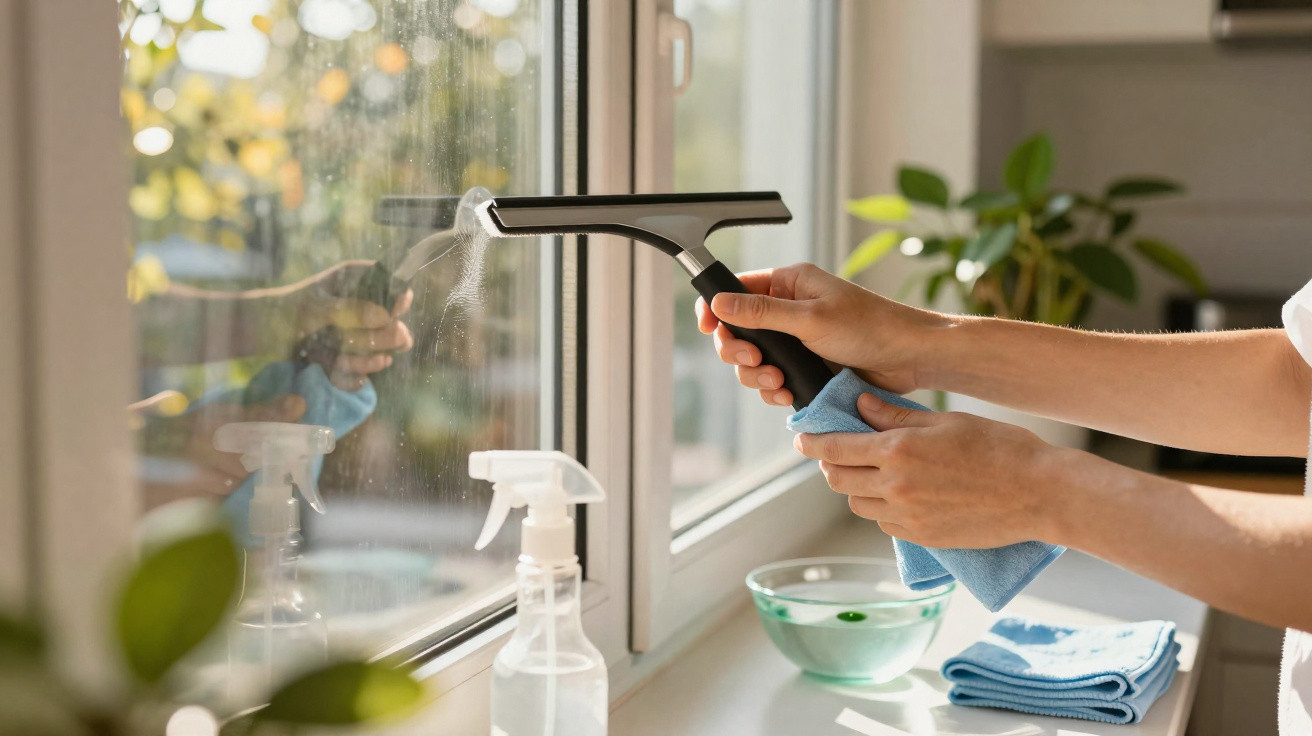
This is the professional sequence that quietly transforms the result. First, dry-dust the glass and frames using a clean microfibre cloth or soft brush. Use no product at this stage; simply lift away all loose debris. This alone prevents half the streaks people later complain about.
Next, wash with a bucket of lukewarm water containing a tiny drop of washing-up liquid. Use a sponge or microfibre cloth, begin at the top and work downwards. Avoid circular motions; use gentle vertical or horizontal strokes instead. Then comes the vital third stage that people tend to miss at home: rinse thoroughly with clean, plain water to remove the soap residue. Only then should you draw a squeegee from top to bottom in straight passes, wiping its blade after each one.
Finish by using a dry microfibre cloth only around the edges and on any overlooked droplets. That is all. There is no need for frantic buffing, newspaper methods or layers of mystery sprays. You’re not trying to make the glass smell nice; you’re trying to leave nothing on it at all. That “nothing” is what helps the clear finish endure.
For a small urban balcony, this order makes a rapid difference. One reader told me that traffic dust meant she used to clean her sliding doors every fortnight. Once she adopted this sequence, she found herself extending that to once a month without deliberately meaning to. Her street had not suddenly become cleaner. The glass had simply stopped acting like flypaper for grime.
A north-facing window in a damp climate benefits differently: the method slows the cloudy, blotchy appearance that can develop after rainfall. A pane that has been properly rinsed and squeegeed dries more evenly after every shower. Water marks cannot be defeated indefinitely. Even so, the “newly washed” appearance lasts for more consecutive days. On a sunny morning, that added week of clarity feels a little like getting one over on the weather.
In purely practical terms, the additional time is minimal. Rinsing and squeegeeing add perhaps three minutes per window. Yet that brief effort means fewer complete cleans throughout a season. The biggest change is not the overall workload, but no longer feeling perpetually behind. Windows cease to be that faint background guilt in the living room.
Common mistakes that secretly attract dirt
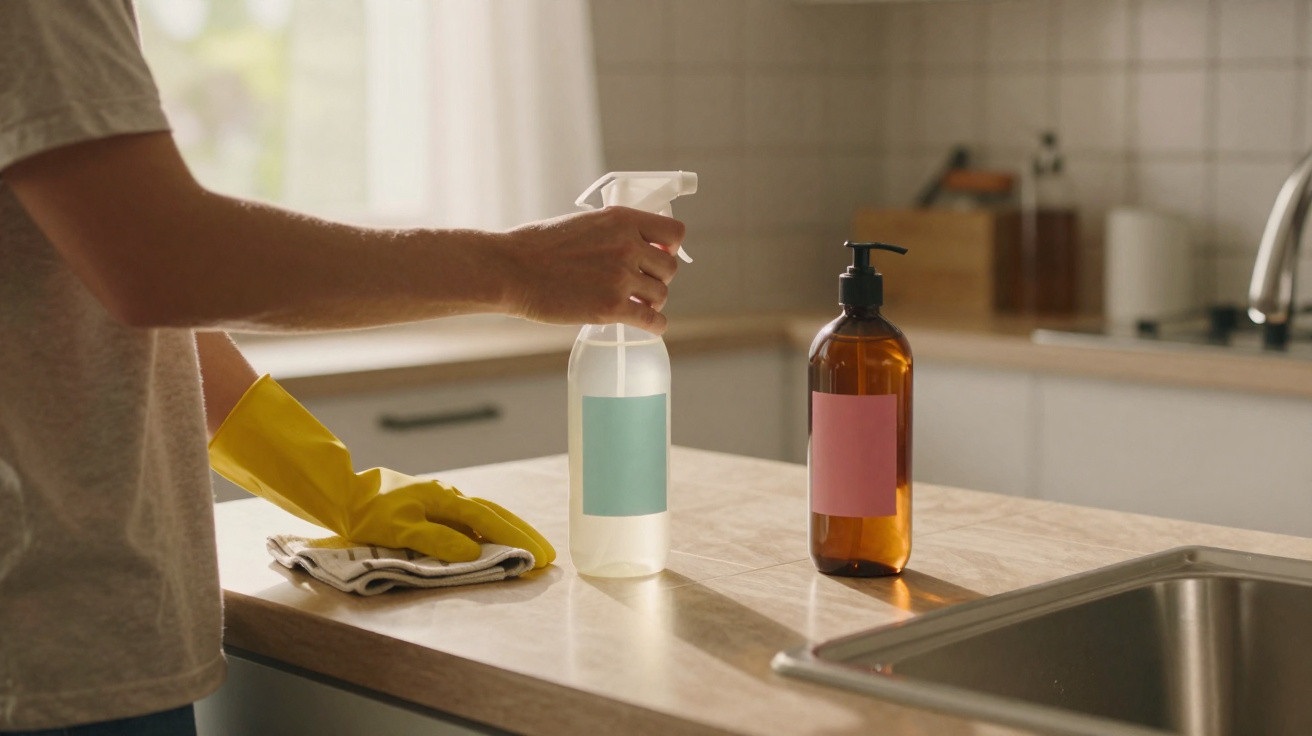
The first pitfall is using too much product. Powerful glass sprays, multi-surface cleaners, vinegar solutions: people combine them as though following a recipe. The usual outcome is a tacky mixture that is not immediately visible. Dust, pollen and cooking fumes then stick to it as if it were double-sided tape. A weak, simple soap solution followed by clean water quietly performs better than the entire chemical arsenal.
The second trap is choosing the wrong cloth at the wrong stage. That old cotton T-shirt which has already wiped the kitchen worktop? It is full of grease and detergent residue. The unexplained streaks that emerge as sunlight moves through the room often come from the cloth rather than the glass. Keeping a dedicated set of plain microfibre cloths, washed without fabric conditioner, improves the final result more than buying yet another spray bottle. Let’s be honest: nobody really does that every day.
Timing matters too. Cleaning windows in full direct sunshine can seem efficient, as if you are “making the most” of good weather. In fact, heat causes the cleaning mixture to evaporate too quickly, leaving marks where it dried midway through wiping. Early morning or late afternoon may be less glamorous, but it is far kinder to the glass. On a still day, the task can feel almost meditative rather than hurried.
“Glass never gets tired of being cleaned,” a veteran window washer told me with a grin. “It only gets tired of being cleaned badly.”
We all know the experience of stepping back after half an hour’s work and noticing a single long, faint streak running from top to bottom. It is more than irritating; it is a clue. It reveals where the squeegee missed, where the cloth was too damp or where soap residue remained. On a bad day, it can seem as though the glass is taunting you. On a good one, it becomes a small guide to what to alter next time.
- Keep one cloth for dry dusting, one for washing and another for final buffing. Combining their roles puts dirt back onto clean glass.
- Replace the water as soon as it turns cloudy. Dirty water creates an invisible film.
- Always clean frames and window tracks first, preventing grime from dripping back onto freshly cleaned panes.
How to make windows stay “invisible” in everyday life
The sequence itself is only one half of the solution. The other is fitting it into everyday life without becoming someone who spends every weekend fixating on glass. Practically speaking, the simplest routine is to link window cleaning to something already done each season: changing wardrobes, switching on the heating or putting plants outside again. Attach it to those milestones and your mind treats it as “part of that ritual”, rather than an isolated chore lingering in the corner.
There is also a subtle emotional benefit to leaving longer gaps between major cleans. When one window remains clear through rainy weather and a sunny week, the home feels steadier and less at the mercy of changing conditions. On a misty morning, the outside world appears soft rather than smeared. It may sound poetic, but anyone who has worked from home beside a dirty window knows how quickly grime becomes visual noise. On a difficult day, one dirty line at eye level can lower your mood by a notch.
More practically, lasting clarity depends on what you avoid doing. Do not spray polish or scented products close to freshly cleaned glass. Tiny airborne droplets settle on it, creating the same invisible coating you have just removed. Open windows wide for a few minutes after cooking or showering, allowing humidity and grease to escape rather than cling to surfaces. None of these actions are heroic. They are simply small favours for your future self, ensuring that next month’s clean is a light reset rather than a full rescue operation.
| Key point | Details | Why it matters to readers |
|---|---|---|
| Begin with a dry clean | Before adding water, use a dry microfibre cloth or soft brush to remove dust, cobwebs and grit from the glass, frames and corners. | It prevents scratches and stops dirt becoming a muddy film that causes streaks and faster re-soiling. |
| Follow a simple wash–rinse cycle | Wash using lukewarm water and a drop of washing-up liquid, then rinse with clean water before using the squeegee. | It removes dirt as well as detergent residue, so the glass is not left slightly sticky and likely to collect fresh grime. |
| Work in suitable conditions | Clean on an overcast day, or while windows are shaded, when wind is low and temperatures are moderate. | You have longer before the solution dries, streaks are reduced and each cleaning session looks good for longer. |
FAQ
- How often should I clean my windows if I live in a city? For windows facing a busy road, most professionals suggest a full clean every 4–6 weeks, plus a quick dry dust in between when pollution accumulates. The precise schedule depends on traffic, floor height and the amount of direct sun you receive, but a sound sequence will usually allow you to extend the interval slightly without feeling as though you live behind a filter.
- Is vinegar really good for keeping windows clear longer? Vinegar breaks down mineral deposits and can help with hard-water marks, but using it too frequently or too strongly may leave a slight odour and could irritate certain seals. For occasional use, a mild vinegar rinse followed by plain water is sufficient; lasting cleanliness comes from the wash–rinse–squeegee order, not from the acidity of the mixture.
- What kind of cloths work best and how should I wash them? Flat-weave microfibre cloths are best for washing and final buffing because they capture fine particles without leaving lint. Wash them separately from ordinary laundry in hot water, without fabric conditioner, then allow them to air-dry. Conditioner coats the fibres and turns them from “dirt magnets” into smear machines.
- Do professional window cleaners use special products I can’t buy? Most use very basic equipment: a quality squeegee, a mop or applicator, a bucket and a mild detergent formulated to rinse away cleanly. Technique and order matter much more than unusual formulas. You can achieve results close to professional standard at home by following their sequence and buying a decent squeegee instead of another spray bottle.
- Can I use the same sequence on mirrors and shower glass? Yes, with one adjustment: bathroom glass often has heavier soap scum and limescale, so before the usual wash–rinse routine you may require a dedicated limescale remover or a vinegar soak. Once the worst build-up has gone, the same structured sequence helps mirrors and shower screens remain clearer between deep cleans.

Comments
No comments yet. Be the first to comment!
Leave a Comment