
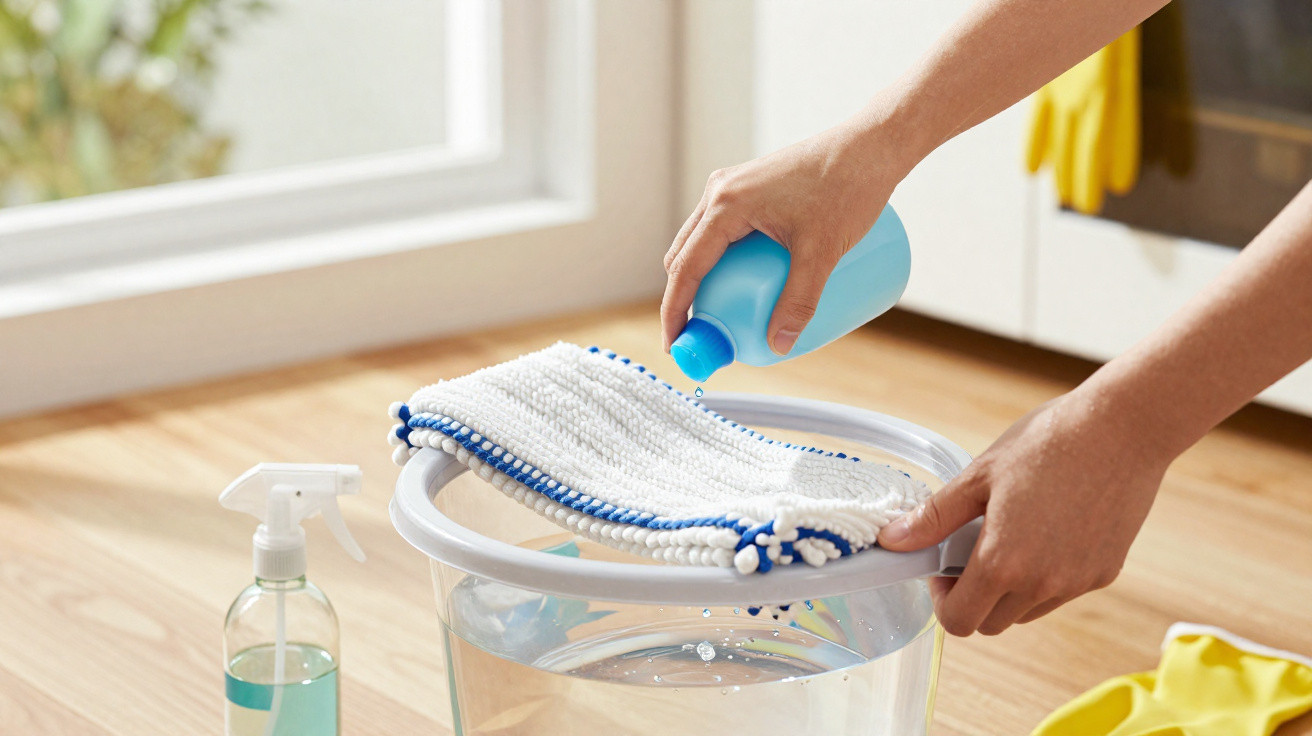
Two striking drops of vivid blue liquid plunge into a bucket of mop water. The creator gives it one stir, sweeps the mop over the tiles and promises that her home will smell like a luxury hotel for three whole days. The comments fill up with heart emojis and cries of “game changer”.
Beneath the applause, however, another refrain emerges: “You’re breathing in chemicals.” “This is toxic madness.” “My chest hurt after trying this.” The very trick that gives a hallway a fresh-laundry fragrance is also being portrayed as a gradual health risk. Between the sparkle of “CleanTok” and scientific caution, one understated question remains.
What, precisely, are we releasing into the air in pursuit of that flawless, long-lasting fragrance?
Why the “2-drop mop” hack took over your feed
The 2-drop mop method has an irresistible simplicity. Fill a mop bucket with warm water, take a strongly fragranced fabric softener and add just two drops. Not a capful, nor a generous pour: two small drops, spreading into a hazy blue swirl. Mop normally afterwards and, supposedly, the floors retain that laundry-day scent well after the water has evaporated.
It is strangely satisfying to watch on video. The liquid trails through the water, the mop slides across the floor, and the scent almost seems to come through the screen. For people who love immaculate homes and “that clean smell”, the routine can feel like membership of a private club. It offers the atmosphere of freshly washed bedding without having to remove a single sheet.
Part of its appeal is simple exhaustion. People want a clean-looking home, but they also want an immediate emotional payoff. A fragrance that says, you did something. The idea that two minuscule drops could provide that feeling for days is exceptionally appealing.
Look through the replies to any viral version of the hack and the divide is obvious. Someone from Manchester says their hallway smelled “like a perfume shop” for four days. A mother in Texas says she used half a cap rather than two drops and developed a severe headache. Someone else reports that their dog avoided the newly mopped kitchen “like it was lava”.
Most of us have copied an online trick at home only to find it less magical than it appeared on screen. Social media seldom shows the sore throat that lingers, the child who begins coughing or the person awake at 3 a.m. wishing they had not tried it. Allergies, asthma, pets and dated ventilation systems can all make one identical hack feel very different in a real household.
Some creators take it further by combining disinfectant and softener in one bucket, or dissolving crushed, undiluted fragrance beads in hot water. This is where the comments become much more alarmed. “My lungs are burning.” “My doctor told me to stop this.” The cosy, styled-home aesthetic suddenly collides with something harsher and more clinical.
Those attractive blue drops conceal both chemistry and marketing. Fabric softener is not designed for floors: it is formulated to coat fibres with lubricants and fragrances, leaving clothes softer and more strongly scented. Applied to hard surfaces, those ingredients may form a light sticky layer that can collect dirt more quickly, despite smelling pleasant. The layer may also include fragrance chemicals and preservatives that can irritate some people’s airways.
For a long time, we have tended to equate “smells clean” with “is clean”. Brands therefore load products with strong perfumes, while influencers reinforce that association on camera. Indoor-air experts, though, point out that many fragranced cleaning products release volatile organic compounds into the home. They are not illegal, nor are they inevitably disastrous, but neither are they neutral. The 2-drop mop trick sits right in that space: is it a minor cosmetic enhancement, or a small repeated exposure that accumulates over time?
The debate is not about whether two drops will immediately poison anyone. It concerns how regularly the technique is used, how sensitive the people in the household are and what is already present in the air in the living room.
How to use the 2-drop mop trick safely, if you still want to try it
For anyone who likes the concept but is not prepared to abandon it, there is a more measured approach. Start with strict dosing: use only two drops in a full bucket of water, rather than adding a rough splash. If you tend to pour too freely, use a dedicated teaspoon or small dropper. Aim for a “hint of scent”, not “laundry aisle in a storm”.
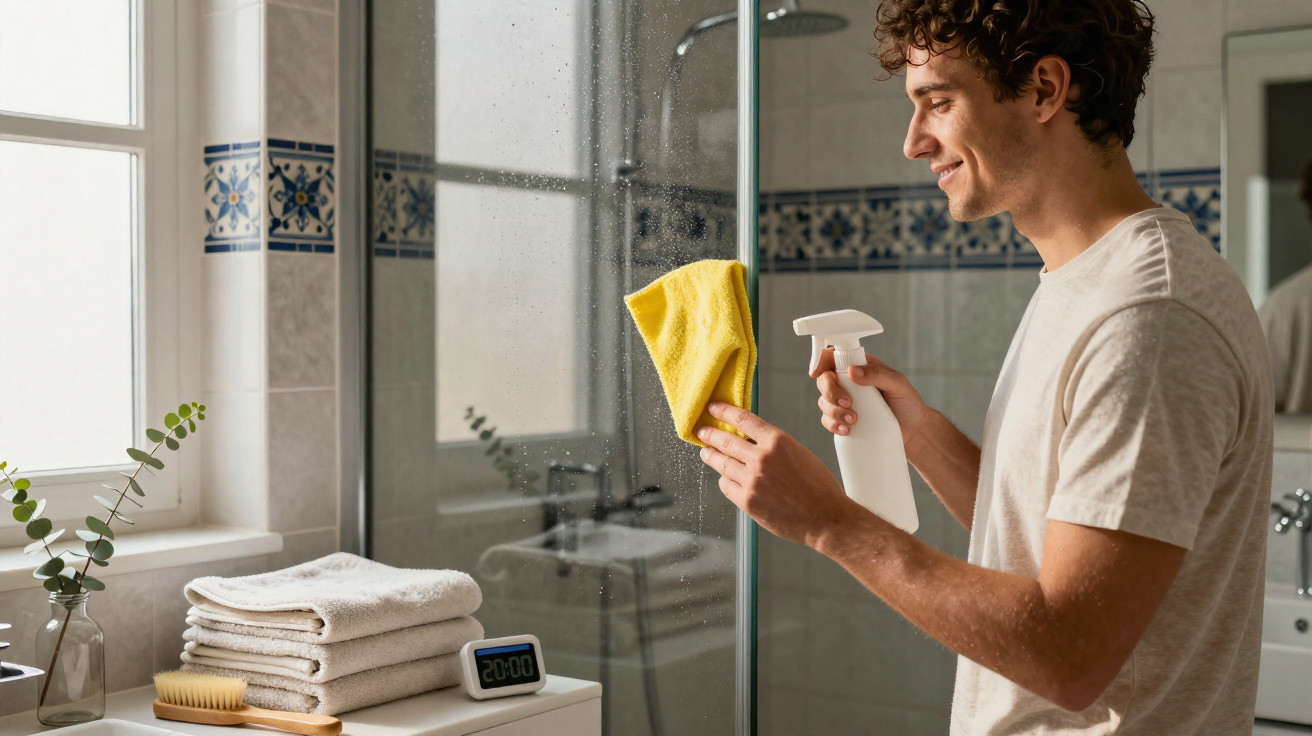
Pick a softener marked hypoallergenic or suitable for sensitive skin, preferably without colourants. Lighter cotton-style fragrances can be less overpowering than heavy floral options. Open the windows fully while mopping and keep them open for at least 15–20 minutes afterwards, allowing vapours to disperse. Mop the floor, let it dry completely and then leave the room rather than remaining there to enjoy the scent at close range.
Take an even more cautious approach if you live with children, pets or anyone with asthma. Consider limiting the technique to less-used areas, such as hallways, rather than bedrooms where people sleep and breathe the same air for hours. Keep the bucket out of reach until it has been emptied and rinsed.
Let’s be honest: nobody truly does this every day. Nor should they. Keeping the 2-drop trick for “special occasions” can help limit exposure. Reserve it for visitors or for the occasional psychological lift, rather than making it part of every Tuesday afternoon.
A widespread error is combining products for “extra power”. Social media is full of buckets containing floor cleaner, bleach, softener and fragranced disinfectant together. That is more than unnecessary. Certain combinations can produce vapours that sting the eyes and throat, particularly in compact bathrooms or windowless corridors. If you choose to add softener, leave out every other fragranced additive.
Another common problem is mopping sticky kitchen spills without dealing with them beforehand. The film left by softener can seal in grease or sugar, so floors may soon appear dull and feel dirty again. First remove visible mess with plain soapy water; if you still want fragrance, mop the area afterwards with lightly scented water. It takes a few extra minutes, but prevents that greasy layer underneath.
Listen to what your body is telling you as well. Headaches, a scratchy throat, chest tightness or itchy skin after mopping in this way are early warnings. Reduce the amount, change to fragrance-free cleaners or abandon the trick altogether. No fragrance is worth wheezing for.
“The cleanest homes I visit don’t smell like flowers,” confides Claire, a professional cleaner in London. “They just smell like… nothing. Fresh air, maybe a bit of soap. The obsession with heavy perfume is more about Instagram than hygiene.”
For anyone torn between enjoying scent and worrying about “toxic madness”, several practical alternatives can preserve the ritual while reducing anxiety:
- Use one small drop of mild floor cleaner with two drops of softener, rather than creating a mixture of products.
- Trial the method in one room, then wait 24 hours before using it throughout the home.
- Ventilate more than seems necessary, especially during winter when windows tend to remain closed.
- Alternate fragranced mopping with plain hot water and vinegar, on appropriate floors, to reduce the overall chemical load.
| Key point | Details | Why it matters to readers |
|---|---|---|
| Use tiny amounts, not “a splash” | Keep fabric softener to 1–2 drops in a full 5–8 litre bucket. Using more does not improve cleaning; it only increases perfume and residue. | This lets you achieve a pleasant fragrance without unnecessarily adding chemicals to the air and floor that may irritate skin or lungs. |
| Ventilate while you mop | If possible, open windows on opposite sides of the home. In small bathrooms or poorly ventilated hallways, use an extractor fan. | It limits the indoor accumulation of scented vapours, which can be particularly beneficial for children, pets and people with asthma or allergies. |
| Don’t mix multiple strong products | Use either a gentle floor cleaner plus softener, or softener alone in water. Do not add bleach or strongly perfumed disinfectants to the same bucket. | It prevents harsh mixtures that may create eye-watering vapours, while making the cleaning routine simpler, safer and easier to repeat. |
The wider question behind a pleasant-smelling floor
What this small 2-drop controversy really reveals is the extent to which cleaning has become emotional. Many people are not merely tackling dust; they are trying to manage anxiety, disorder and the sense of falling behind in life. A home smelling “hotel fresh” for three days can feel like evidence that everything is under control, even if an overflowing laundry basket is sitting in the next room.
The disagreement between supporters of the hack and those who call it toxic is not solely about science. It also reflects two competing versions of comfort. One group wants to feel protected by a scented cocoon. The other wants calm, invisible air that does not irritate their throat. Both are seeking the same outcome: somewhere their body can unwind at the end of the day.
Perhaps the most radical step is to separate the idea of being clean from being heavily perfumed. To pay attention to how a room feels after twenty minutes of airing, without any special drops at all. To recognise that a subtle trace of soap may be as pleasing as viral “bouquets” that remain until Friday. And to allow ourselves to enjoy a little fragrance without pretending that it is harmless magic.
The next time an immaculate mopping video appears on your Discover feed, you may view it differently. You will see more than the shining tiles: you will notice the invisible cloud lifting from the bucket. You may still test the trick, but use it sparingly, ventilate and pay attention to your lungs. Or you may decide that quiet, neutral air is your new luxury. Either way, the balance of control changes: the algorithm does not decide what “clean” means in your home. You do.
FAQ
- Is the 2-drop mop trick actually dangerous? When used infrequently, with very small quantities and good ventilation, it is unlikely to be dramatically dangerous for most healthy adults. The concern is frequent use, limited airflow and people using far more than a few drops, all of which may irritate the lungs, skin and eyes over time.
- Can I use fabric softener on all types of floors? It is not advisable for unsealed wood, natural stone or very old parquet, as residue can dull the surface and hold onto dirt. It is less risky on sealed tiles and vinyl, but a proper floor cleaner will always be more appropriate than a laundry product.
- What should I do if I get a headache after using this hack? Stop putting softener in your mop water, open the windows fully and use a fragrance-free cleaner for a period. If symptoms continue to return, speak to a doctor and consider reducing all heavily fragranced household products.
- Are essential oils a safer alternative in mop water? They may seem more natural, but they are still powerful concentrates that can provoke allergies, particularly in pets and children. One or two drops in a large bucket is normally sufficient; stronger amounts can leave oily marks and an overpowering scent.
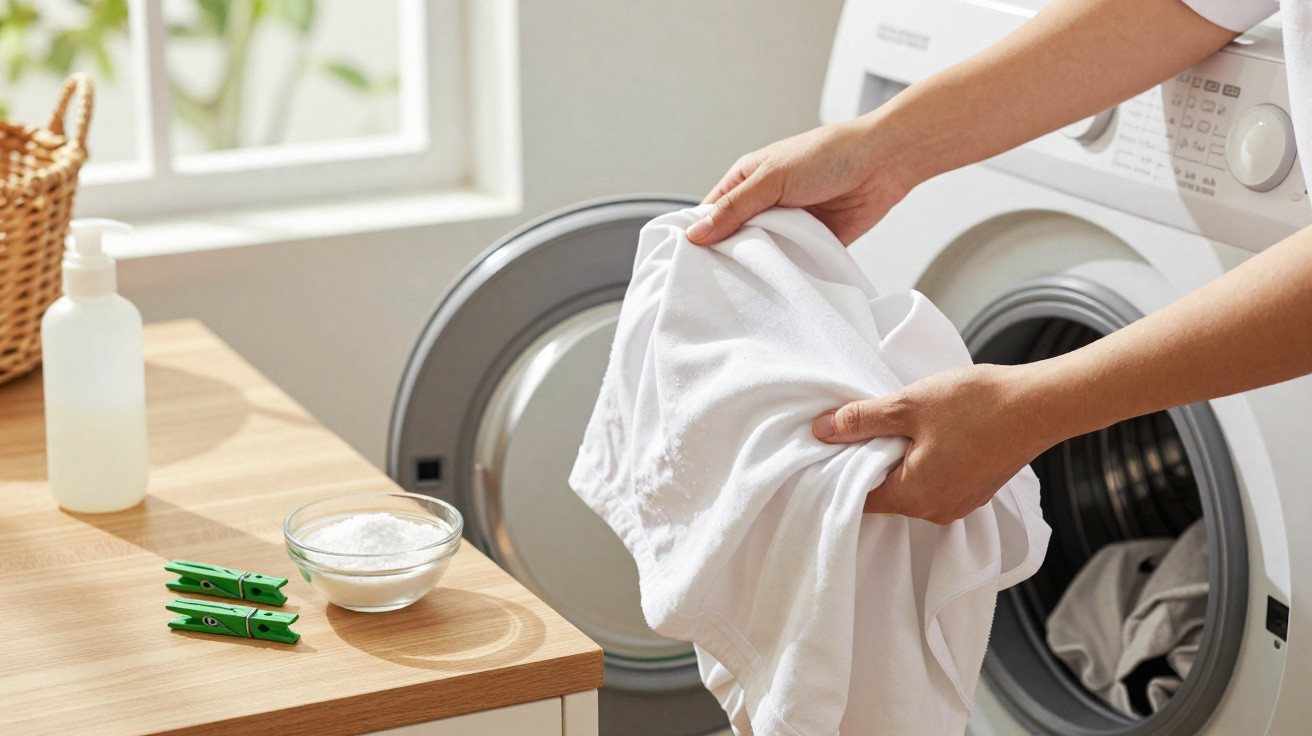
- How can I make my home smell fresh without these tricks? Straightforward habits can help: air rooms regularly, wash textiles such as curtains and sofa throws, empty bins frequently and use mild cleaners only where needed. A small bowl of bicarbonate of soda in musty spots, together with floors washed using gentle soap, can achieve more than any viral hack.
Comments
No comments yet. Be the first to comment!
Leave a Comment