
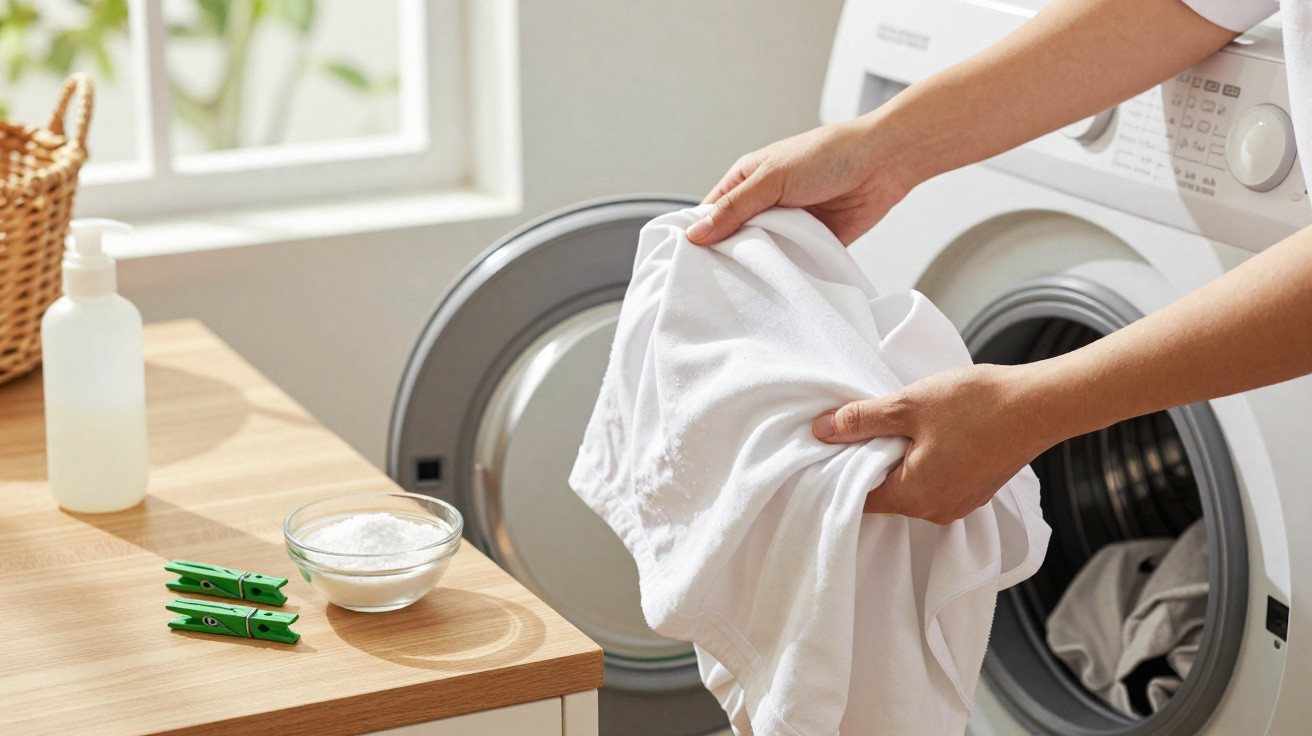
The machine stops, the drum gives a click, and the bathroom falls silent.
You promise yourself you will put the washing out “in five minutes”. Two hours pass before you return, and a sharp, chilly smell meets you straight away. It is not quite dirty, but it is not properly clean either. It is simply… damp, stale and unpleasant.
You wash the load again, use extra detergent and perhaps add fabric conditioner in an attempt to “fix” it. The fragrance disappears, only to return with the next bout of rain or slightly humid day. It becomes a ghostly odour that seems to cling to certain T-shirts more than others. Towels, meanwhile, appear to hold onto it indefinitely.
Eventually, you realise this is not merely about forgetting one load of washing. It is about what happens to the fabric during those still hours inside the washing machine.
Why your “clean” laundry begins to smell like a damp basement
Open a washing machine three hours after its programme has ended and inhale gently. You will notice a blend of warm metal, detergent and something slightly sour. The drum is shut, warm and moist: a tiny greenhouse perfectly suited to creating the smell your nose notices later.
Fabric is not a smooth, flat surface. It is more like a woodland of minute fibres and tiny hollows where water can linger. Once the spin cycle finishes, microscopic droplets remain caught in seams, elasticated sections and inner layers. In the darkness, without circulating air, that moisture gradually turns into a small chemistry laboratory.
Your clothes may appear clean, but other things are beginning to stir within the fibres.
Consider your favourite gym T-shirt. You wash it after a long run, leave the load overnight and hang it out the next morning. By lunchtime, it is dry to the touch and ready to wear. Yet, the next time you sweat in it, that familiar sour, musty note returns more quickly than it did before.
Researchers investigating household odours use a rather unglamorous term for this: “wet storage malodour”. In one laboratory test, fabrics inoculated with skin bacteria and kept damp for several hours generated substantially more odorous compounds than fabrics dried promptly. These include tiny molecules such as geosmin and 2-methylisoborneol, which are also responsible for the earthy scent of wet soil after rainfall.
With towels and cotton, these molecules are not easily rinsed away. They attach themselves, conceal themselves and linger. A single forgotten load can influence many washes that follow.
There is a quiet but persistent explanation for this stubborn odour. Before washing, clothes contain skin cells, perspiration, oils and invisible microbes from both your body and surroundings. Detergent removes much of this material, but not every trace. Certain bacteria remain alive in the deeper parts of the fabric, particularly in synthetics and the loops of towelling.
After the programme ends and the drum remains closed, the water has drained away but humidity stays high. The temperature is often lukewarm, which is just right for bacteria to begin multiplying again. They feed on leftover sweat and body oils that the detergent did not fully break down.
As they multiply, they emit volatile organic compounds. Those compounds are the actual source of the smell. Some are attracted to fats and cling to synthetic fibres, while others bond to cotton. Following several neglected cycles, fabrics can begin to accumulate these compounds like a gradual perfume - although this is the complete opposite of luxury.
Can you really remove a set-in washing machine smell?
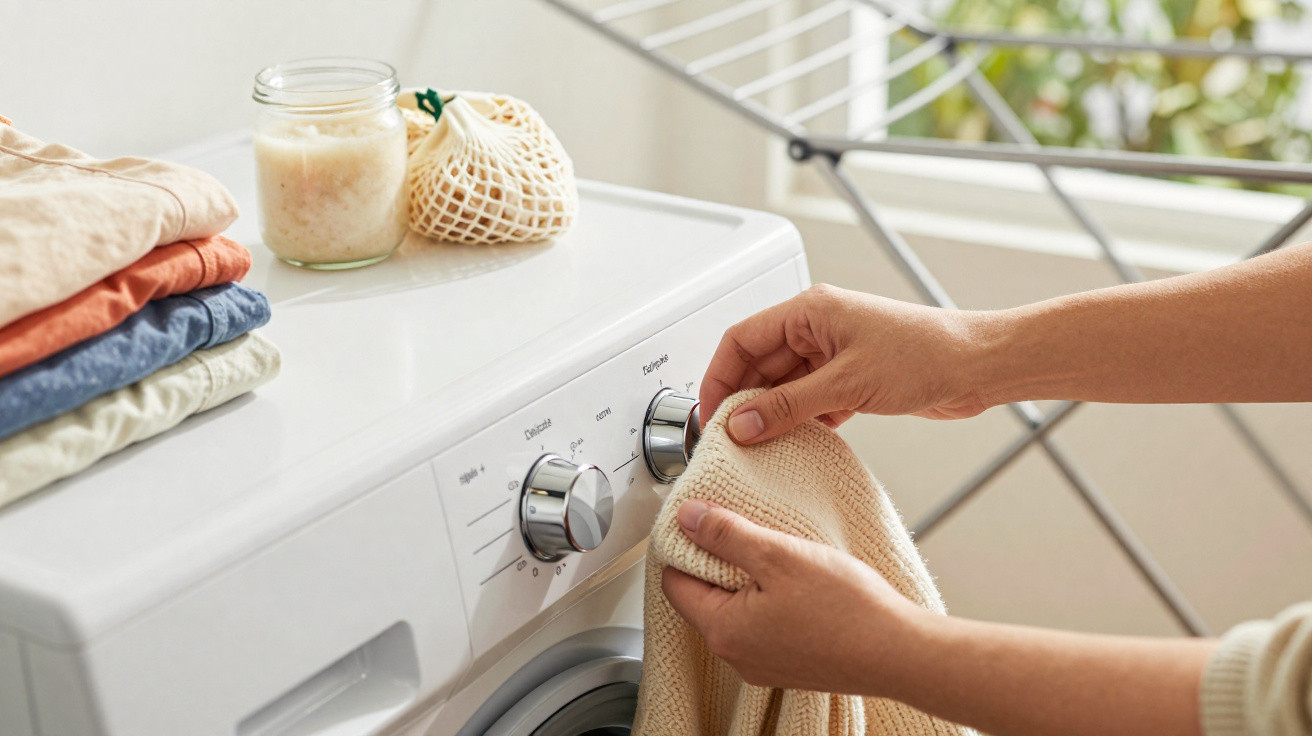
One straightforward rule can make a major difference: take damp laundry out of the drum within 30 to 45 minutes of the programme finishing. It is not always possible, but this timeframe prevents the worst bacterial activity from getting underway.
If you know you will be out or occupied, use the delay-start or end-time setting so the cycle ends when you are genuinely at home. Some newer machines offer a gentle tumble programme that keeps the load moving with brief spins, helping moisture drain from fabrics while you are delayed.
If you do forget a load and it smells unpleasant, a quick cold rewash is unlikely to be enough. Choose a shorter 40°C cycle, use slightly less detergent, and add an oxygen-based stain remover or washing soda. The combination of warmth and more effective rinsing can help loosen the connection between odour molecules and the fibres.
Many people assume fabric conditioner will “cover” the smell. It may do so for a day, but once its fragrance fades, the old damp note creeps back. Plenty of readers admit to throwing away complete sets of towels because they believed they were “ruined” beyond saving.
The problem is the tendency to wash at ever-higher temperatures while adding more and more detergent. This can leave additional residue in both the textiles and the machine, which, ironically, provides fuel for fresh odours. Let us be honest: nobody really does all of this every day; we repeat the same habits while waiting for a miracle.
A more useful approach is to strip troublesome items occasionally. Soak them in hot water with washing soda or a dedicated laundry-stripping mixture, then run a full rinse and spin cycle. It can seem extreme the first time, but many people say it is the only method that genuinely resets odours in older fabrics.
“The worst odour issues we see aren’t from ‘dirty’ people,” notes one domestic science researcher. “They’re from normal routines stretched over years - mild under-dosing of detergent, low temperatures, and letting wet laundry sit a bit too long.”
More practically, there are several measures you can take to prevent smells settling into fabrics in the first place and becoming permanent residents in your machine’s ecosystem.
- Remove washing from the drum within 45 minutes whenever possible.
- Leave the door and detergent drawer slightly ajar between washes.
- Carry out a hot monthly maintenance wash without clothes, using only machine cleaner or washing soda.
- Wash towels at 60°C regularly to interrupt bacterial cycles.
- Alternate line-drying and tumble drying for thicker textiles such as towels.
Why some fabrics never quite smell “new” again
Once you have noticed it, it is difficult to ignore: fabrics do not all age in the same way when it comes to odour. An old cotton hoodie may still smell reasonably neutral, while a comparatively new sports top can retain a faint changing-room smell regardless of how fresh the detergent is.
Part of the explanation lies in the fibre itself. Synthetic materials such as polyester and elastane are hydrophobic, meaning that sweat and oils tend to remain on their surface instead of soaking in and rinsing out. When these garments stay damp for hours in a closed drum, bacteria have easy access to a concentrated feast on the surface.
Some of the odour molecules they create are hydrophobic too, allowing them to settle into those same spaces. Over time, the repeated process makes the fabric smell “used” sooner, even if it is technically clean.
By contrast, heavy cotton items such as towels and thick T-shirts retain water deep within their yarns. They dry slowly in a quiet bathroom or a poorly ventilated utility room, remaining in that risky damp state for longer. That is why towels that once smelled like a hotel spa can, after a year of careless washing habits, bring to mind an old beach house instead.
One frequently overlooked issue is the washing machine itself. Rubber door seals, detergent drawers and concealed hoses can build up a thin biofilm: a combination of soap scum, minerals and microbes. Every time you leave a load sitting in the machine, you add new moisture and nutrients to that layer.
Later, even a wash removed at exactly the right time passes through this same environment. Clean water moves over old biofilm, collects a subtle odour trace and transfers it to your fabrics. Over months and years, that background scent becomes the washing machine’s “default”, with clothes gradually reflecting it.
The harsh truth is that certain items do reach a point of no return. Towels that have absorbed layer upon layer of body oils, detergent deposits and prolonged dampness may eventually reach a stage where no household treatment restores them to a truly neutral smell. Replacing them at that point is not wasteful madness; it is simply accepting how fibres, water and time interact.
The quiet power of one small laundry habit
There is something unexpectedly personal about the fragrance of clean clothes. It surrounds your day, rests on your pillow and welcomes you when you open a drawer. When that scent turns slightly sour, it can feel like a small betrayal by your own home.
That is why the seemingly minor act of leaving laundry in the washing machine for hours carries more emotional weight than we generally acknowledge. It is not about perfectionism or “doing laundry right”. It is about whether your fabrics feel like a fresh beginning or a reminder of things left unattended for too long.
During a busy week, you may not manage to catch every programme promptly. You may rewash the same load once or twice, quietly muttering at yourself. In a calmer week, you might experiment with that 30-minute window, leave the bathroom door open a little, keep the machine ajar and observe how the smell slowly improves over a month.
We have all had the moment when we pull a T-shirt over our heads, pause with a wrinkled nose and think: “Didn’t I just wash this?” That is precisely where small changes can begin. Not dramatic resolutions, simply one different decision on the next load, and then the one after that.
The science behind washing machine odours may sound clinical, with its molecules, microbes and fibre structures. Yet it comes back to a simple human question: how do we want our homes to smell when nobody is visiting, when we are simply moving through our private rooms?
Some people will insist on vinegar, while others favour very hot cycles or expensive detergents making elaborate promises. Others will quietly purchase a new set of towels and leave it at that. Between those options is a gentler route: small, repeatable habits that slowly reset the story your fabrics are telling.
Perhaps that story starts tonight, when the washing machine beeps while you are halfway through an episode of a series. You press pause, walk to the bathroom, open the door, feel the faint warmth of the drum and take out a load that never had the opportunity to turn against you.
| Key point | Detail | Benefit for the reader |
|---|---|---|
| Timing after washing | Remove laundry within 30–45 minutes to prevent bacterial growth | A simple habit change that stops odours forming |
| Fabric and fibre type | Synthetics and thick cotton retain odours in different ways | Helps you decide how to wash items and which ones to replace |
| Washing machine ecosystem | Biofilm in seals and drawers transfers odours to every load | Explains recurring smells and why maintenance washes are important |
FAQ
- How long can laundry safely remain in the washing machine? Most experts recommend keeping it there for no more than one hour; after two hours, the chance of a musty odour rises sharply, particularly in warm rooms.
- Can I rescue clothes that already smell musty after being left wet? Often, yes: wash them again at 40–60°C using less detergent plus oxygen bleach or washing soda, then dry them quickly in moving air or a tumble dryer.
- Is vinegar enough to remove the “wet dog” smell from towels? Vinegar may help dissolve residues, but combining it with a hot wash and an occasional deep strip wash is much more effective against long-term odours.
- Why do my gym clothes smell bad again as soon as I sweat? Sweat-reactive odour molecules remain trapped in synthetic fibres; when you warm up, they are released more rapidly, so deep cleaning and faster drying between wears are essential.
- Do I really need specialist detergent for sportswear? Not necessarily, although enzymes that target sweat and oils can help; correct dosage, the appropriate temperature and not leaving the garments wet in the drum matter more.

Comments
No comments yet. Be the first to comment!
Leave a Comment