
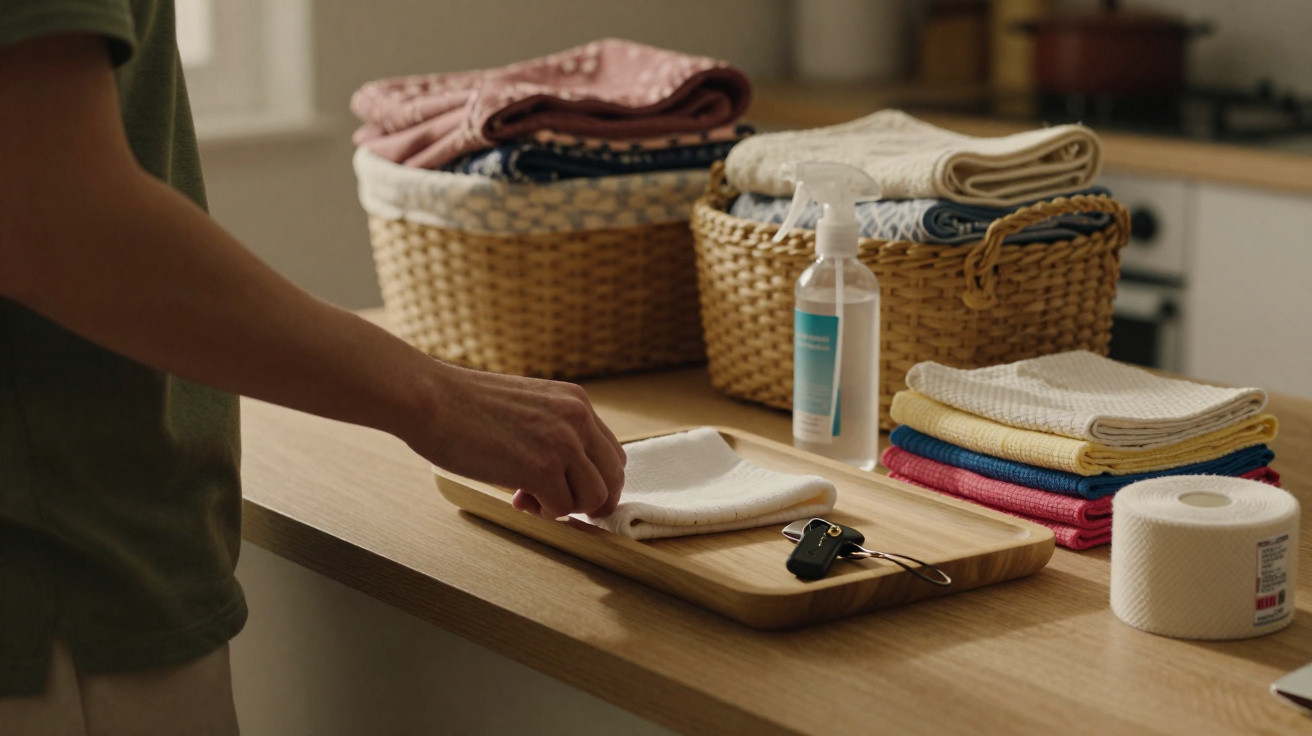
The sitting room carries a faint scent of lemon cleaner, the cushions have been plumped up, and the vacuum lines remain on the rug. You pause with your hands on your hips and take it all in. Everything is technically “clean”, but your body refuses to settle. Your shoulders remain tense, while your mind continues to search the room for a problem.
The windows have been cleaned, the sink is bare and even the laundry heap has been contained in a basket. Even so, the room feels strangely… crowded. It is not dirty, but it is not relaxing either. Your gaze darts between the remote on the table, keys on the console and shoes left by the door. Nothing is grimy, yet the space still does not feel complete.
That persistent discomfort is not caused by dust. It comes from one neglected stage that most of us miss: the step that determines whether a home feels like a hotel lobby or a human nest. Once you recognise it, it becomes impossible to ignore.
The invisible reason your home never feels fully clean
It is easy to blame dust, tacky floors or a sink piled with dishes. Those problems are visible, measurable and, oddly enough, satisfying to tackle with cleaning products and equipment. You can spray, scrub and vacuum them away, then tick them off your list.
But what makes a home genuinely feel clean is not cleanliness in the narrow sense. It is about what is kept out of sight rather than what gets scrubbed: visual noise and micro-mess. These are all the items that may technically deserve to be there but, together, take over a room. Your brain registers that disorder before you consciously notice it.
Picture a standard hallway on a weekday evening. There is post you put down “just for now”, the tote bag you need again tomorrow, three pairs of shoes, a helmet, two scarves and the dog lead tangled loosely together. Nothing is dirty. There is no unpleasant odour or stain. Still, the entire area feels strained, as though it is about to sneeze.
Researchers at UCLA’s Center on Everyday Lives of Families spent years filming real homes. They found a close link between cluttered settings and increased cortisol levels, particularly among women. The issue was not heaps of dust, but heaps of belongings. That stack on the hallway console is interpreted by your body as an unfinished job.
On a Sunday, you may carry out an impressive clean: bathroom, kitchen and bedrooms all finished. For an hour, the house feels acceptable. Then the week begins and every surface gradually gathers receipts, chargers, mugs and unopened parcels. The floor remains technically clean, but by Wednesday the room looks weary again. The dirt did not truly return; the objects did.
There is a reason this feels so disconnected. Your mind treats clutter as work that is still in progress. Every item in the wrong place quietly says, “deal with me later”. Now multiply that message by 60 across each room, every day. That is the exhaustion you feel when you come through the front door after work. It is not merely physical mess; it is cognitive load.
Cleaning deals with residue, whereas tidying deals with decisions. Dirt is passive: remove it and it disappears. Belongings are active, because each one requires a small decision: keep or throw away, here or there, now or next week. When we miss this mental stage and go straight for mops and sprays, we create “clean chaos” - gleaming surfaces covered by random possessions.
That is why a freshly mopped kitchen can still resemble a staff room. The worktop may be free of crumbs, but it is scattered with appliances, bottles, school letters, half a loaf, vitamins, keys and headphones. This is not filth but friction. You may smell the detergent, yet there is nowhere for your eyes to rest. The overlooked step is deliberate, almost ritualised, visual editing before you pick up a sponge.
The overlooked step: a 10‑minute reset, not a deep clean
The change begins when you stop with products and start with patterns. This overlooked step is a brief daily “reset round” that requires nothing heroic. You are not scrubbing or attempting to reorganise your entire life. Instead, you walk through your home once and return each item to its base.
A base is not an aspirational Pinterest storage arrangement. It is the most practical place where you would instinctively look for the item. Keep keys by the door, chargers in one basket and post in a single tray rather than across five surfaces. The benefit lies in consistency, not appearance. Ten minutes spent simply relocating objects is more effective than an hour of resentful scrubbing.
We have all experienced the moment when guests are arriving in 20 minutes and panic-tidying begins. At that stage, nobody is deep-cleaning the oven. You are throwing toys into baskets, piling papers, folding throws and clearing the coffee table. Suddenly, in less than a song and a half, the house feels twice as calm.
That is a reset performed under social pressure. The key is to use the same momentum when nobody is visiting. A young couple we followed in a small London flat set a 9-minute timer every evening at 9:09 p.m. They named it “the sweep”. With no phones and no talking, they raced through the rooms and put everything back where it belonged. After three weeks, they said they cleaned less frequently and felt “less angry at the flat”. The dirt was unchanged, but their baseline was different.
From a psychological perspective, a reset reduces “ambient demand”. Your brain no longer has to keep a hundred open tabs whenever you look around. An empty coffee table does more than appear attractive: it signals to your nervous system that nothing requires your attention and you can sit down. That is why hotel rooms can feel peaceful even when they are not spotless. There are very few items, and each has a clear purpose.
At a sensory level, having fewer things around makes your effort visible. If clutter covers every area, vacuuming can seem pointless. You may clean the floor, but the room still appears untidy. When surfaces are largely clear, each small task stands out: a wiped sink, a neatly made bed or a folded towel. That visual reward encourages you to continue the following day.
Let us be honest: nobody really manages this every day without missing a beat. Life happens. Children grow, jobs change and moods dip. The aim is not perfection. It is to lift the everyday standard from low-level chaos to gentle order, making real cleaning easier, less frequent and unexpectedly satisfying again.
How to build a reset that actually works in real life
Begin almost ridiculously small. Choose one area for a daily reset rather than taking on the whole house. A kitchen worktop is a classic option, as is the coffee table. For one week, your sole task is to return that one zone to an “almost empty” state once a day. It does not need to look like a showroom; it simply needs to be mostly clear and easy to wipe.
Give every homeless object a home that still works on a bad day. Put a large bowl by the door for keys and miscellaneous pocket contents, use one tray for post and school letters, and keep a large basket in the sitting room for stray items before bedtime. The reset should be simple: walk, drop, move on. The less thought it demands, the more likely it is to last.
One useful gentle rule is: “nothing sleeps on the floor unless it’s furniture”. Put shoes in a row, box or rack - anywhere except the middle of the hallway. Clothes should go in the laundry basket, back in the wardrobe or onto a designated chair. Your evening reset is essentially a walk around the house to wake any item that has fallen asleep in the wrong place.
A common trap is turning a reset into a perfectionist project. You begin reorganising drawers, sorting photographs and debating the history of every possession. That is not a reset; it is a weekend. Your daily round should feel nearly lazy: two songs, perhaps three. If you are sweating and swearing, it has become too much. If you are bored enough to hum, you are doing it correctly.
Be gentle with yourself on days when things do not go to plan. Some evenings, the reset may amount to 3 minutes and a half-hearted plump of the cushions. It still counts. The body responds better to routine than effort. Small victories repeated often are more valuable than occasional heroic cleans. Progress you repeat is cleaner than progress you only dream about.
“Our home only started to feel clean when we stopped cleaning it for visitors and started resetting it for ourselves, every night, no audience.”
This is not about creating a home worthy of a magazine. It is about shaping a place that does not challenge you every time you enter it: somewhere your eyes can settle on a clear section of table and your mind can quietly exhale.
- Start with one surface: Select the area that irritates you most and defend it firmly for 7 days.
- Set a strict timer: Limit the reset to 5–10 minutes so that it never feels punitive.
- Use “lazy” homes: Bowls, baskets and trays are better than ideal systems you will abandon next month.
The clean feeling you’ve been chasing isn’t about bleach
After experiencing a few evenings when the house is “reset” before you settle onto the sofa, your usual cleaning routine begins to shift. You will notice that mopping takes half as long when socks and toy cars are not scattered over the floor. Cleaning the bathroom can even feel pleasant when the worktop is not covered by 12 products and yesterday’s hairbrush.
The distinction between “tidy enough” and “mentally peaceful” becomes more obvious. That former urge to throw everything away and begin again changes into something quieter: ongoing maintenance. Rather than battling your house every Saturday, you are gently guiding it back to neutral each evening. Scrubbing still takes place, but it becomes an extra rather than an emergency.
This is where the true strength of the overlooked step appears. It is less about control than respect: respect for your space, your tired future self and the people sharing those rooms. A reset says: I know tomorrow will be a lot. Let’s leave the stage ready. Perhaps that is why a home that truly feels clean does not look sterile or cold. It looks as though somebody cared earlier, before you were exhausted.
| Key point | Details | Why it matters to readers |
|---|---|---|
| Do a 10‑minute nightly reset | Choose a regular evening time, set a timer and walk through the main rooms, returning belongings to their usual places. Do not scrub; simply put things “back to base”. | It helps the home feel calmer each morning and reduces weekend cleaning time without creating a demanding extra chore. |
| Create a “drop zone” by the door | Use a tray, bowl and small hook rail for keys, post, bags and headphones, so they land in one place rather than spreading through the home. | This cuts visual noise in living areas and prevents entrance clutter from reaching every surface. |
| Protect one “always clear” surface | Pick a coffee table, kitchen island or bedside table, and keep it almost empty each day so it is the simplest area to reset. | It provides a resting place for your eyes, instantly making the room feel cleaner and more deliberate. |
FAQ
- Is a reset just another word for tidying? A reset is briefer and more targeted than ordinary tidying. You are not trying to upgrade your storage or sort through possessions; you are simply putting items back in their usual places so the house can “start from zero” the following day.
- How do I reset if I have kids and toys everywhere? Choose large, straightforward containers rather than complicated systems. One toy basket per room, a quick five-minute “toy sweep” before bed and realistic boundaries such as “no toys in the hallway overnight” can make a noticeable difference without causing arguments.
- What if my home is already very cluttered? Start with one small area, such as half the kitchen worktop or only the coffee table. Reset that spot every day for two weeks. Once it feels routine, slowly declutter the nearby spaces so your reset needs less effort.
- How often should I still deep-clean? A reset is not a replacement for proper cleaning. Most homes feel good with light weekly cleaning of the bathroom, floors and kitchen surfaces, plus a more thorough session once a month. The reset simply makes those sessions quicker and less daunting.
- Can a reset help if I work from home? Yes. Finishing your working day with a two-minute desk reset - clearing your mug, shutting your laptop and placing papers in one stack - creates a clear visual divide between work and home life. This can reduce stress and help evenings feel more “off-duty”.


Comments
No comments yet. Be the first to comment!
Leave a Comment