
The sharp, artificial scent of lemon spray reaches you first; the irritation at the back of your throat follows soon after.
The bathroom window is open a crack, yet the atmosphere remains dense, filled with something chemical and faintly unsettling. Bleach has dried out your hands, the tiles are clean without quite feeling “fresh”, and a familiar, slightly uneasy thought lingers: what, exactly, am I inhaling?
You wash out the sponge, watching cloudy water disappear down the plughole, then notice the label: hazard icons, fine print and a claim of “99.9% clean”. It sounds authoritative, almost militaristic. Even so, the bathroom smells like a pool and your head is beginning to feel slightly woolly.
A friend once mentioned that it was possible to keep a bathroom fresh with next to nothing. It seemed far too straightforward to believe at the time. Now, though, it feels less like a passing trend and more like a small, quiet act of defiance.
Why we’re moving away from aggressive bathroom cleaning
A trip down any supermarket cleaning aisle can feel like watching brands compete to be the loudest. There are neon bottles, ultra-power formulas, “deep action” claims and promises of “extreme hygiene”. The implication is unmistakable: your bathroom is a war zone, and only powerful chemicals can win. It is dramatic, somewhat theatrical and, somehow, completely normalised.
For many of us, the smell of bleach was the childhood signal that something had been “really clean”. We associated a burning nose, sore hands and fumes that remained for hours with effective results. But as we learn more about indoor air pollution, skin irritation and asthma triggers, that confidence is beginning to fade.
A subtle change is taking place in bathrooms around the world. People are opening their windows, checking ingredients and looking for ways to clean without feeling as though they are preparing for a laboratory experiment. They may not be aiming for a “zero waste lifestyle” or a Pinterest-perfect spa at home. They simply want clean, fresh surfaces without the after-effects of harsh chemicals.
A 2022 European survey of household cleaning habits revealed a simple but striking finding: almost 60% of participants said intense smells made them “doubt the safety” of a product, even when it performed well. That represents a change. Ten years ago, fragrance was a key selling point; now, an overwhelming artificial scent can raise concerns.
Consider Emma, 34, who lives in a compact flat with no bathroom window. She once cleaned her shower using a thick gel that claimed to offer “professional-level disinfection”. Every time she used it, the odour lingered in the hallway for hours. Her partner, who has mild asthma, began coughing more frequently on cleaning days. At first, they blamed dust, then mould, before eventually considering the obvious cause: the cleaning product itself.
One Sunday, when she was nearly out of supplies, Emma used hot water and white vinegar, a combination her grandmother had mentioned years earlier. She expected it to be underwhelming. Instead, soap scum loosened, the glass shower screen became clear and the room felt… light. There was no foggy head and no coughing partner. Only a mild, sharp vinegar smell remained, disappearing after a quick rinse.
Experiences like Emma’s are not about achieving perfection or pursuing complete “natural purity”. They reflect a practical realisation: in small, badly ventilated bathrooms especially, strong chemicals can create more unwanted effects than benefits. Steam, humidity and spray all remain in the air, along with volatile compounds released by aggressive cleaning products.
From a practical perspective, most bathroom dirt is unremarkably predictable: soap scum, body oils, toothpaste splashes and minerals left by hard water. These are physical deposits, not evidence of a chemical battle requiring heavy-duty products. They need something that will dissolve or lift them before they can be wiped away. Mild acids, including vinegar, can break down mineral deposits and soap film, while bicarbonate of soda provides gentle abrasion without scratching surfaces.
The real problem is not “germs in general” but lingering moisture combined with dirt. Together, they encourage mould, stale odours and that tacky feeling on tiled surfaces. When the focus moves towards removing deposits and drying surfaces rather than trying to sterilise everything, cleaning starts to make more sense. Harsh formulas look less essential and more like an old habit.
The simple bathroom method that keeps surfaces fresh
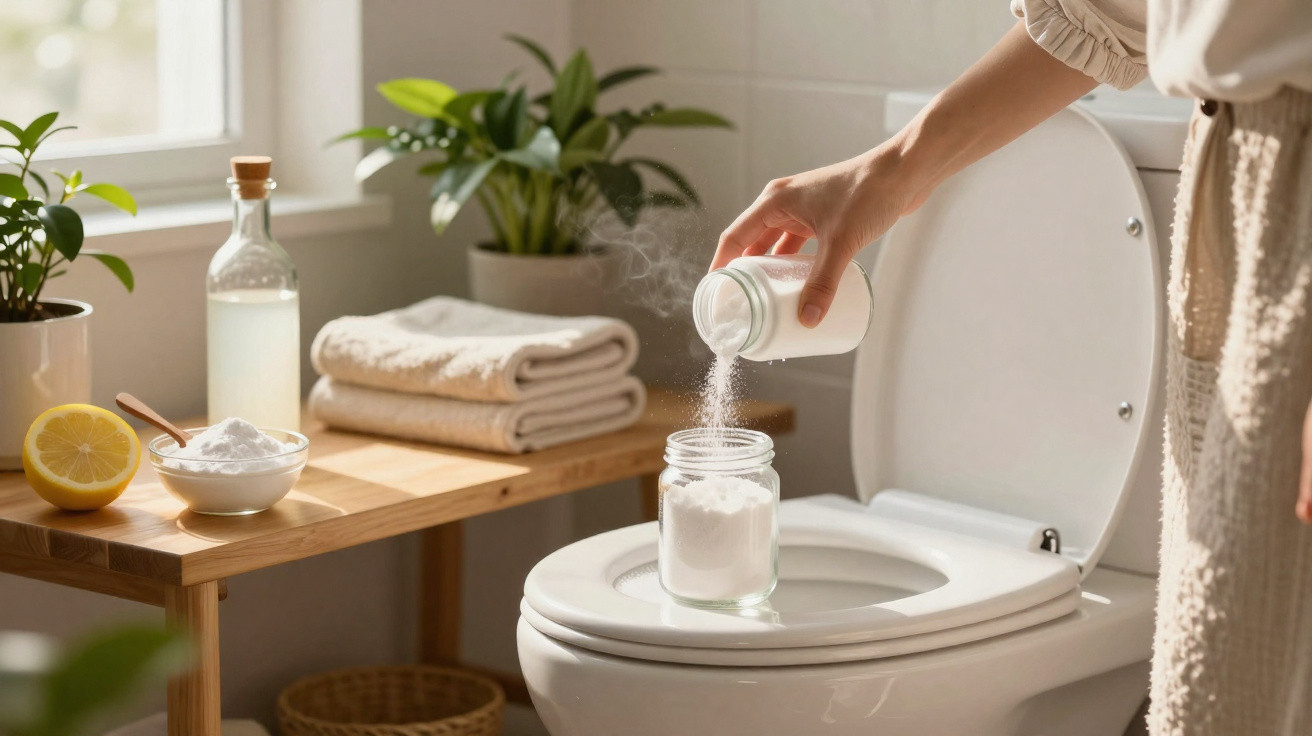
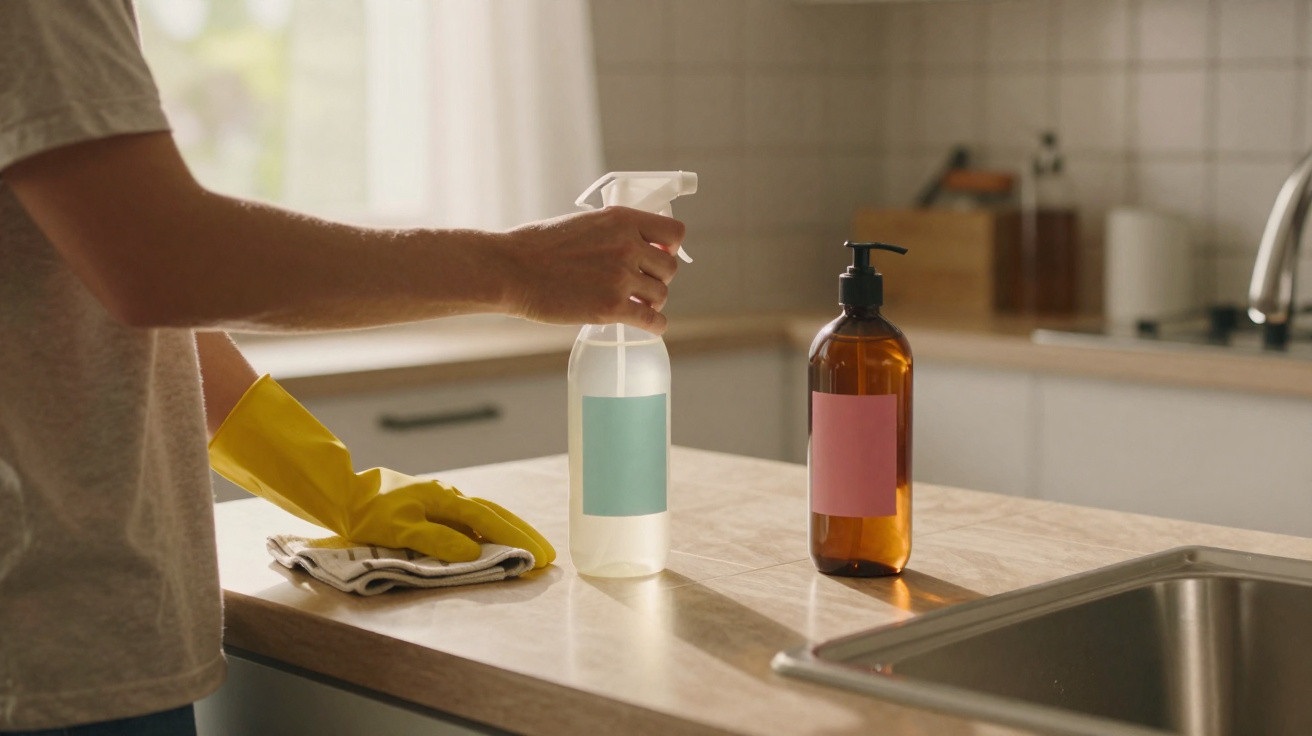
The approach for keeping bathroom surfaces fresh without harsh chemicals is almost frustratingly straightforward. It does not involve a specialist tool or an obscure TikTok ingredient. It is simply a weekly, or twice-weekly, routine with three items you probably already have: white vinegar, bicarbonate of soda and hot water. There are no fluorescent bottles and no complicated line-up of ten products.
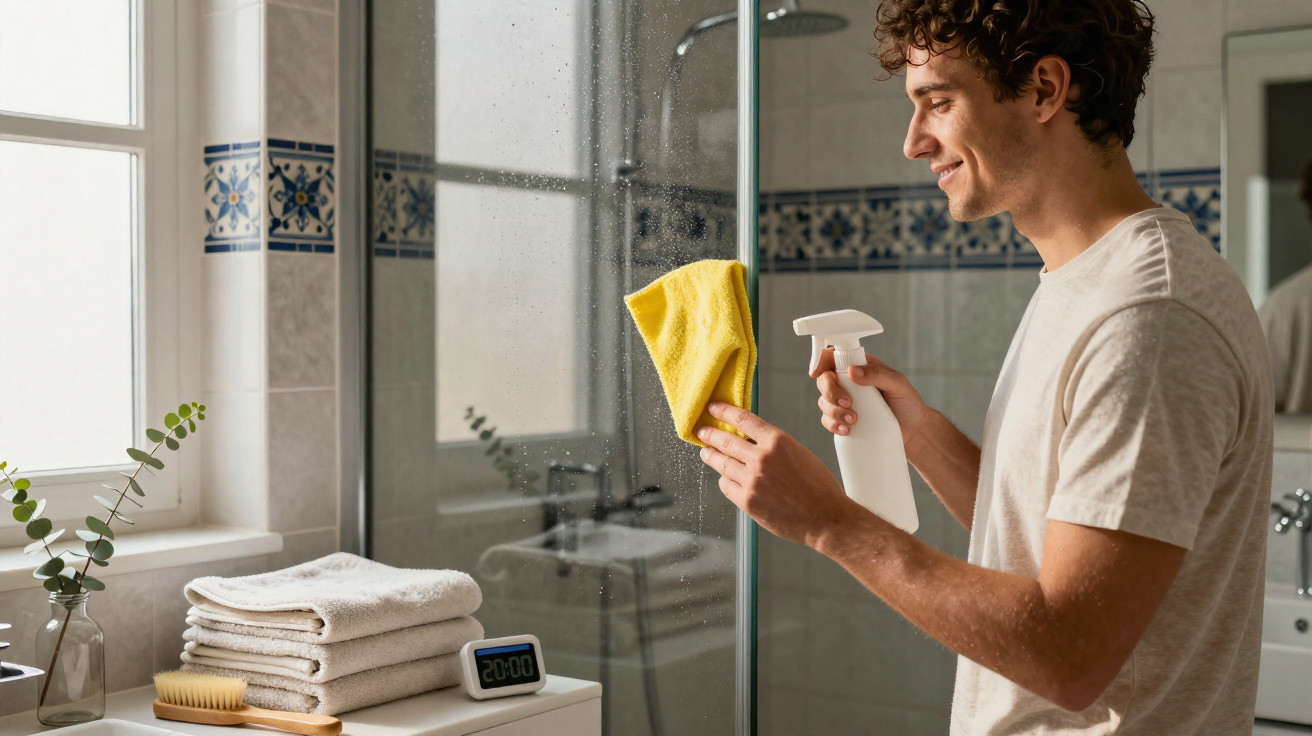
Start by combining equal quantities of white vinegar and warm water in a spray bottle. This becomes your main bathroom-fresh solution. Apply it generously to tiles, the shower screen, taps and basin. Let it sit for 5–10 minutes, allowing it to loosen soap scum and mineral residue. The initial vinegar smell may be noticeable, but its sharpness fades as the surface dries.
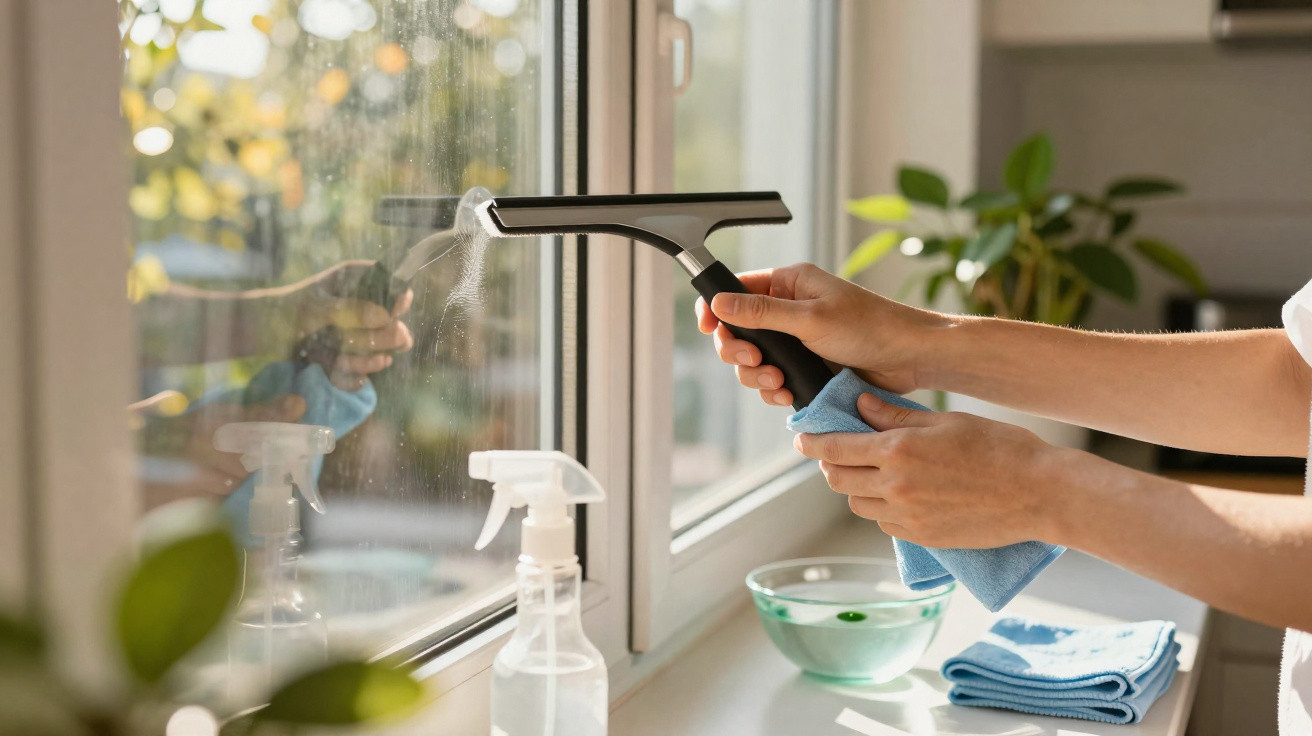
Next, scatter bicarbonate of soda over stubborn areas, such as around the plughole, on marked grout or inside the basin. Spray the vinegar solution over it again. It will fizz gently, as though the surface is exhaling. Work the area in small circular motions with a soft sponge or cloth, then rinse using hot water. Finally, dry everything with a microfibre cloth to prevent water from sitting on the surface and leaving fresh marks.
This routine is gentle enough to use regularly, and that is precisely why it is effective. Rather than doing one exhausting deep clean each month, spend 10–15 minutes tackling small deposits before they become a bigger problem. Let’s be honest: nobody genuinely does this every day. But once a week, or even once every ten days, is realistic for most people. The easiest approach is to connect it to an existing routine: Sunday evening, towel-washing day or the time spent waiting for a hair mask to work.
The main mistake is treating this method as though it requires an overnight lifestyle transformation. You do not have to dispose of every product beneath your sink, nor should you feel bad about keeping a powerful disinfectant for limited situations, such as a stomach bug incident or a serious patch of mould. This is not a contest in purity; it is a calmer, more proportionate way to manage everyday bathroom dirt.
Others lose patience too quickly. They use vinegar once on limescale that has built up over years, then decide it “doesn’t work”. In reality, severe deposits may require a longer vinegar soak or a one-off stronger treatment. After that, this straightforward routine can help stop the problem reaching the same stage again. It is a relay rather than a miracle.
Another frequent error is soaking every surface in vinegar without drying it afterwards. Even a bathroom cleaned with natural products can invite mould if it stays wet. Drying surfaces may initially feel like an unnecessary extra task, but it is the detail that makes the difference. The room smells cleaner, remains clearer for longer and can genuinely change how you feel about the space.
“The most sustainable routine is the one you actually repeat,” says an environmental health researcher I spoke to. “A simple habit that feels kind to your skin, your lungs, and your schedule will beat a complex, heroic clean once a month.”
To make the method easier to maintain, think of it as a small ritual instead of a dreaded household task. Put on a favourite short podcast, open the window for five minutes and take your time. Enjoy the small transformation of cloudy glass becoming transparent or dull taps becoming bright after a few careful wipes. Reassurance does not require perfection.
- Keep a vinegar-and-water spray bottle in the bathroom where you can reach it easily.
- Use one soft cloth solely for drying surfaces after showers.
- Save bicarbonate of soda for specific problem areas instead of applying it throughout the room.
- Ventilate the bathroom for at least 5–10 minutes after every cleaning session.
- Accept that older marks may become “less visible” rather than completely “vanished”. Progress still matters.
Freshness without the drama
Something changes when a bathroom no longer smells like a laboratory and instead smells like… almost nothing. Perhaps there is a trace of freshly laundered towels, a bar of soap or the faint after-scent of steam. That calm, neutral air changes the feeling of the room at 7 a.m., when you arrive half awake, and at 11 p.m., when you wash the day away. It does not assault your lungs or demand to be noticed.
There is also a quiet sense of mental relief in leaving behind the “all or nothing” approach. You do not need to scrub until every grout line resembles a showroom. You do not need ten separate sprays organised by task and colour. A straightforward, repeatable system offers something different: the feeling that the space is cared for, rather than tightly controlled. Fresh rather than staged.
On a human level, this routine recognises that most lives are busy, untidy and inconsistent. Some weeks, the bathroom could belong in a magazine; in others, it is merely clean-ish, and that is alright. What changes is that those less polished weeks no longer mean stinging eyes from fumes or layers of artificial fragrance masking a damp odour. Instead, you gradually create a background habit that limits grime and keeps mould at bay.
We all know the moment when visitors are on their way and we hurriedly “fake clean” the bathroom with a blast of something strong and floral. It may look acceptable and smell intense, while everyone quietly understands that the effect is cosmetic. This simple method will not remove social anxiety or stop the last-minute rush, but it does raise the baseline. Surfaces are genuinely cleaner, residue is reduced and the air is not weighed down.
From there, small changes can influence other choices: perhaps you buy one multi-purpose cleaner instead of five, or begin asking whether every part of life really needs to feel disinfected. The bathroom becomes a modest place to practise something broader: living with less harshness, less noise and more intention. It is both oddly political and completely domestic.
The next time you enter the bathroom and the air feels still and light, take note of the difference. There is no chemical cloud, no urgent need to throw open the window and no dull headache beginning to build. There are simply tiles, glass, water and a room doing its job without clamouring for attention. That sort of freshness does not come from a neon bottle. It comes from a simple method, repeated often enough to become an almost invisible part of home life.
| Key point | Detail | Benefit for the reader |
|---|---|---|
| Vinegar + water | Equal parts mixed in a spray bottle to dissolve soap residue and limescale | Offers a mild, affordable alternative to aggressive cleaners |
| Targeted bicarbonate of soda | Used on stubborn marks and activated with the vinegar spray | Helps tackle difficult areas without damaging surfaces |
| Drying surfaces | Wipe with a microfibre cloth after rinsing | Reduces moisture, limits mould and marks, and extends the feeling of freshness |
FAQ:
- Does vinegar really disinfect the bathroom? Vinegar has mild antibacterial qualities and can support everyday bathroom hygiene, but it is not a hospital-grade disinfectant. For serious contamination, such as after a stomach bug, many experts still advise using a stronger disinfectant targeted to that particular incident.
- Will this method damage my bathroom surfaces? Diluted vinegar is generally suitable for most ceramic tiles, glass and standard chrome taps. Do not use it on natural stone, including marble or travertine, because acid can leave dull patches; use warm water and a mild soap on those materials instead.
- How do I deal with a strong existing limescale build-up? Thick, old limescale may need a longer vinegar soak or a one-off limescale remover. Once it has been brought under control, the straightforward vinegar-and-water routine can help prevent it from returning so severely.
- Can I add essential oils to improve the smell? Yes, a few drops of an essential oil, such as lemon or tea tree, can make cleaning more pleasant. Use them sparingly, particularly where anyone at home has allergies, as powerful fragrances, including natural ones, may irritate some people.
- How often should I use this method to keep the bathroom fresh? For most homes, using it once a week is enough to manage soap scum and light limescale. Frequently used bathrooms, or homes in hard-water areas, may benefit from a quick spray-and-wipe of the most exposed surfaces midway through the week.
Comments
No comments yet. Be the first to comment!
Leave a Comment