
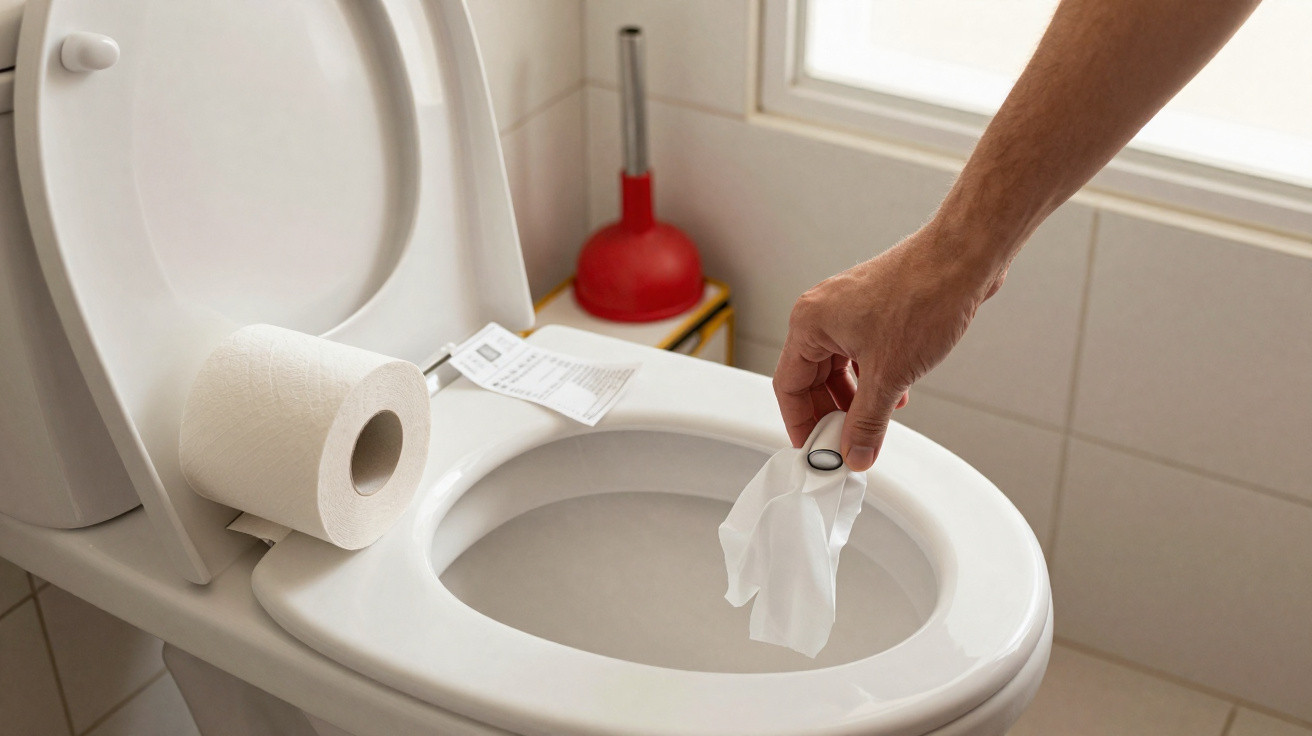
You’ve almost certainly dropped toilet paper into the toilet without a second thought. It’s a reflex-done several times a day. Yet that small habit relies on an entire plumbing and sanitation setup, and knowing the basics can save you a serious headache at home.
The difference nobody told you about Brazilian toilet paper
In many countries, such as the United States, toilet paper is made to break apart quickly as soon as it meets water. In Brazil, a large share of what’s sold in shops is tougher-designed to hold together and not tear during use, rather than to dissolve easily once it’s in the pipework.
Combine that with the fact that plenty of older houses and apartment buildings have plumbing with a smaller diameter-built to handle only a limited amount of solid waste-and you get the perfect conditions for material to build up inside the pipes.
- Narrower plumbing: many older properties have pipework intended for a low volume of solid waste.
- Stronger paper: what’s commonly sold in Brazil doesn’t always break down as fast as in other countries.
- Sensitive septic tank: in homes with a septic tank, too much paper overloads the system faster than most people expect.
- Silent blockage: the build-up can take months to show up-and when it does, it’s already a major problem.
When a habit turns into a headache at home
This isn’t about poor hygiene-it’s about adapting to the reality of the system. A lot of people grew up with a bin next to the toilet for exactly this reason, even though the custom can puzzle anyone who’s never stopped to ask why it exists.
In blocks of flats where several homes share the same vertical soil stack, one blockage can hit more than one flat at once. The result can be expensive call-outs and disruption for neighbours who had no idea what triggered the issue.
The route the paper takes after you flush
Once it goes down the pipe, the material travels through an underground network until it reaches either the city sewer system or a septic tank, depending on the property. Along the way, anything that doesn’t dissolve properly becomes a potential hazard.
Inside the pipes
The journey toilet paper makes to the sewer system
When the paper breaks down well, it moves through the system without trouble, blending into the water with little resistance-that’s how the pipework is meant to work.
When it doesn’t dissolve, it can form small clumps that stick to the inner walls of the pipes. Over time, those clumps grow until they restrict the flow and eventually stop the water passing through.
If the build-up happens further along the network-away from your home-the knock-on effects can reach treatment plants, forcing extra maintenance and higher energy use to keep the sanitation system running as it should.
What this changes for your wallet and your routine
In properties with older plumbing, putting used paper in the bin instead of flushing it can feel like a small adjustment. In practice, it can prevent emergency visits from an unblocking service, which typically cost far more than buying an extra pack of bin liners.
It’s also worth paying attention to how your home is behaving. If water drains slowly or you hear unusual noises from a drain, those are early hints that something may already be forming inside the pipe.
Signs that show up before the problem becomes a disaster
Water that rises slowly, smells coming up from the drain, and a toilet that seems to “choke” when you flush usually appear well before a complete blockage. Noticing them is the simplest way to act in time.
Ultimately, understanding how toilet paper interacts with the toilet and the rest of the sewage system isn’t fussiness-it’s practical care that protects your budget and your home’s infrastructure.
If this made you look at an everyday habit differently, share it with someone who’d also like to understand the reason for that little bathroom bin.

Comments
No comments yet. Be the first to comment!
Leave a Comment