
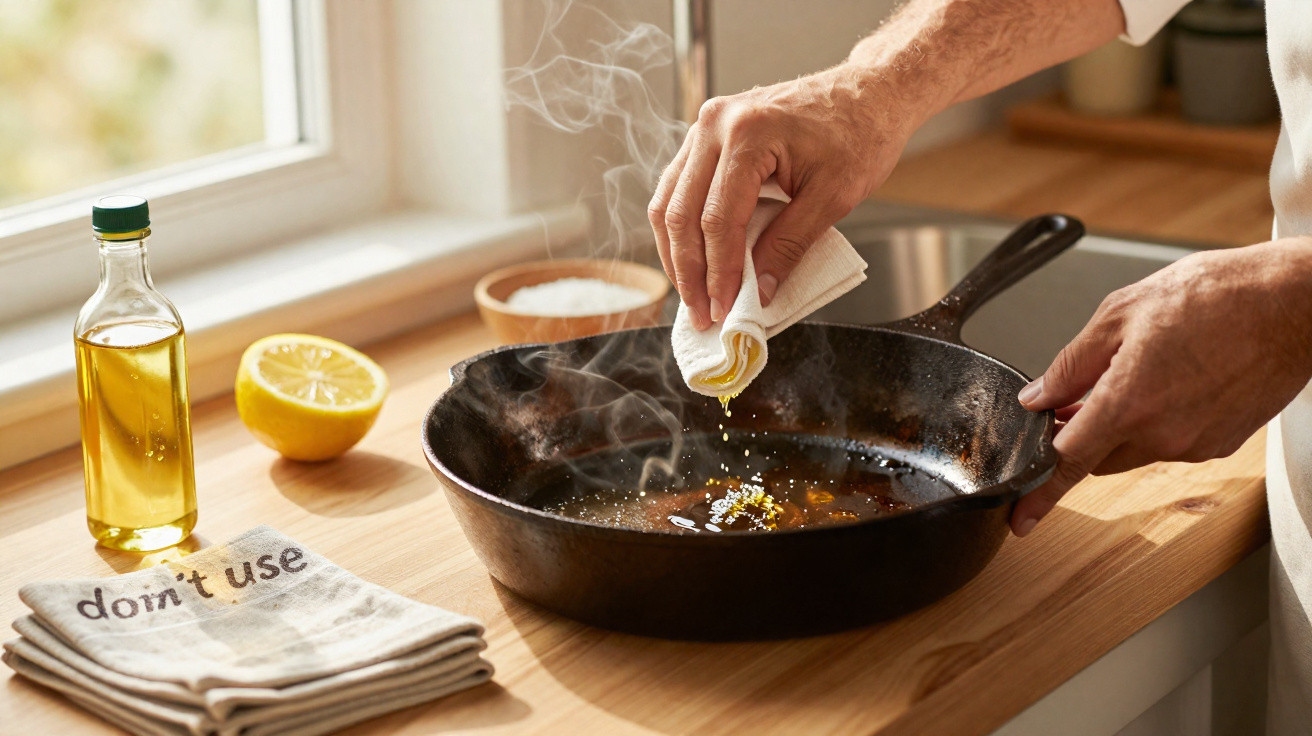
A cast iron pan can last for decades as long as its protective layer stays intact. Lemon, coarse salt and harsh scrubbing can wear that protection away, whereas hot water, a soft brush, immediate drying and a light film of oil help keep the utensil in good condition.
Why do lemon and coarse salt harm a cast iron pan?
The cure-often called seasoning-is created when oil is heated until it turns into a layer that bonds to the metal. It reduces how much water reaches the iron, makes rust less likely, and gradually improves the pan’s non-stick performance.
Acidic ingredients can weaken a thin, newly formed seasoning if they sit on the surface for too long. Coarse salt, when rubbed in with force, works like an abrasive and strips away parts of the layer, leaving unprotected spots that can oxidise easily.
The main risks show up like this:
- Lemon: the acidity can weaken an underdeveloped seasoning.
- Salt: large crystals can wear down the protection when scrubbed.
- Washing-up liquid: strong products remove grease and dry out the seasoned layer.
- Moisture: prolonged water exposure encourages rust to form.
- Drying: low heat removes water before the pan is put away.
What is the seasoning that protects the pan’s surface?
Cast iron is an iron alloy with a high carbon content, valued for its durability and ability to retain heat. Without an enamel coating, however, the surface needs protection from prolonged contact with water and from rust during use.
Seasoning is formed by polymerising a very thin layer of fat under heat. When it develops properly, it bonds into the metal’s pores and irregularities, creating a dark barrier that improves with use and only needs straightforward maintenance.
How do you wash a cast iron pan correctly?
Let the pan cool down from excessive heat, then remove residue with hot water and scrub with a soft-bristled brush. Avoid thermal shock, metal tools and overdoing the force, as these can distort the seasoning or damage the surface.
Hot water, a brush and drying
The routine needs to be quick
Clean it soon after cooking, rather than leaving residues to dry for hours.
The pan should go back in the cupboard completely dry and lightly protected with oil.
After rinsing, set the pan over a low heat for a few minutes-just until all the water has evaporated. Turn off the heat, spread a very thin layer of vegetable oil with kitchen paper, and wipe away any excess before storing.
Clean in this order:
- wait for the pan to cool slightly before washing;
- use hot water and a soft-bristled brush;
- loosen residue without scrubbing with coarse abrasives;
- dry fully over a low heat;
- apply a thin film of oil before storing.
Why should a cast iron pan never be left to soak?
Leaving the pan submerged keeps water in contact with microscopic breaks in the seasoning and encourages orange-coloured staining. On top of that, softened residue can seep into worn areas, increasing rust and bringing forward the need to re-season.
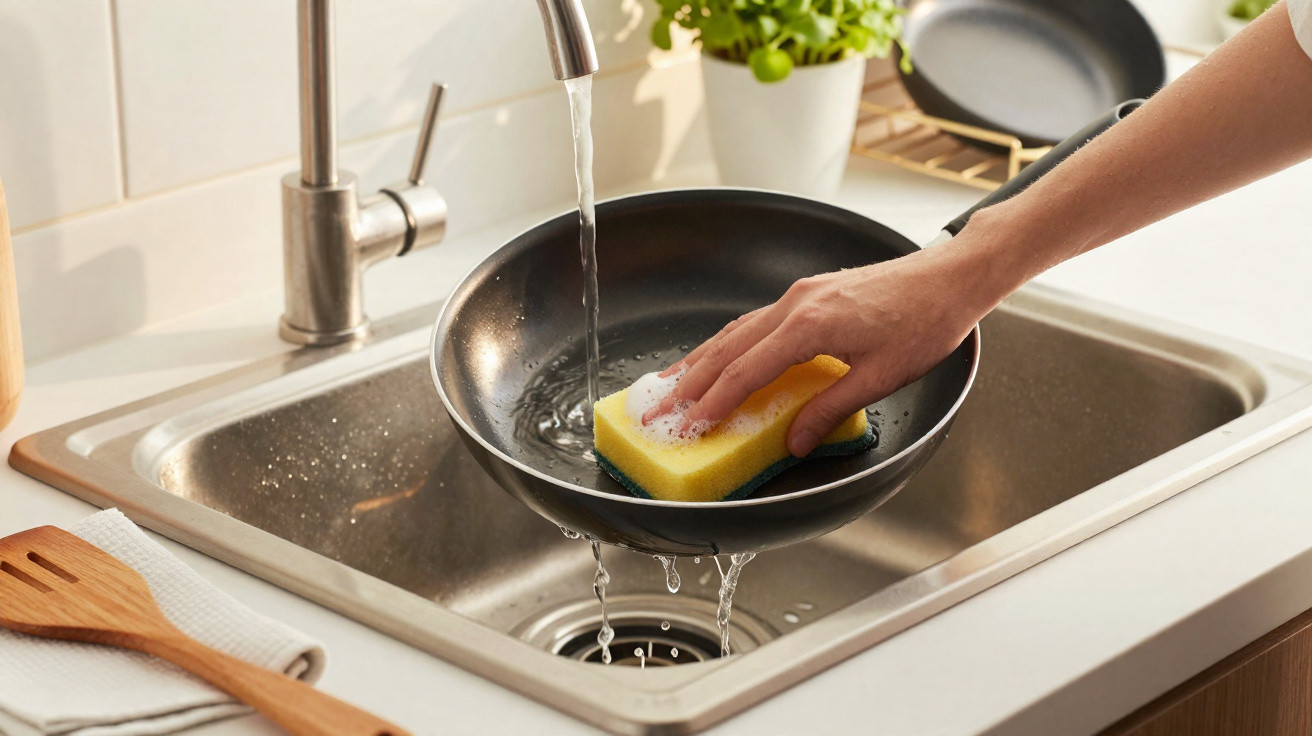
Strong washing-up liquid, the dishwasher, and putting the pan away while still damp also undermine the protective layer. A small amount of mild washing-up liquid can be used occasionally when needed, but the simplest routine prioritises hot water, a soft brush and complete drying.
To protect the seasoning, avoid these mistakes:
- leaving the pan submerged in the sink;
- storing it wet or with droplets still on it;
- using a dishwasher;
- routinely scrubbing with coarse salt or steel wool;
- applying a thick, sticky layer of oil.
How do you restore a pan that has lost its seasoning?
Anyone looking for ways to clean burnt pans without scratching needs to think about the material before trying any trick. With uncoated cast iron, restoring the seasoning means removing rust, drying thoroughly, and rebuilding the protection with oil.
Once you have removed the rust spots, wash the pan, dry it over heat, and coat the whole piece in an ultra-thin film of oil. Heat it following the manufacturer’s guidance, let it cool, and repeat if necessary-rebuilding the barrier and extending its durability.


Comments
No comments yet. Be the first to comment!
Leave a Comment