
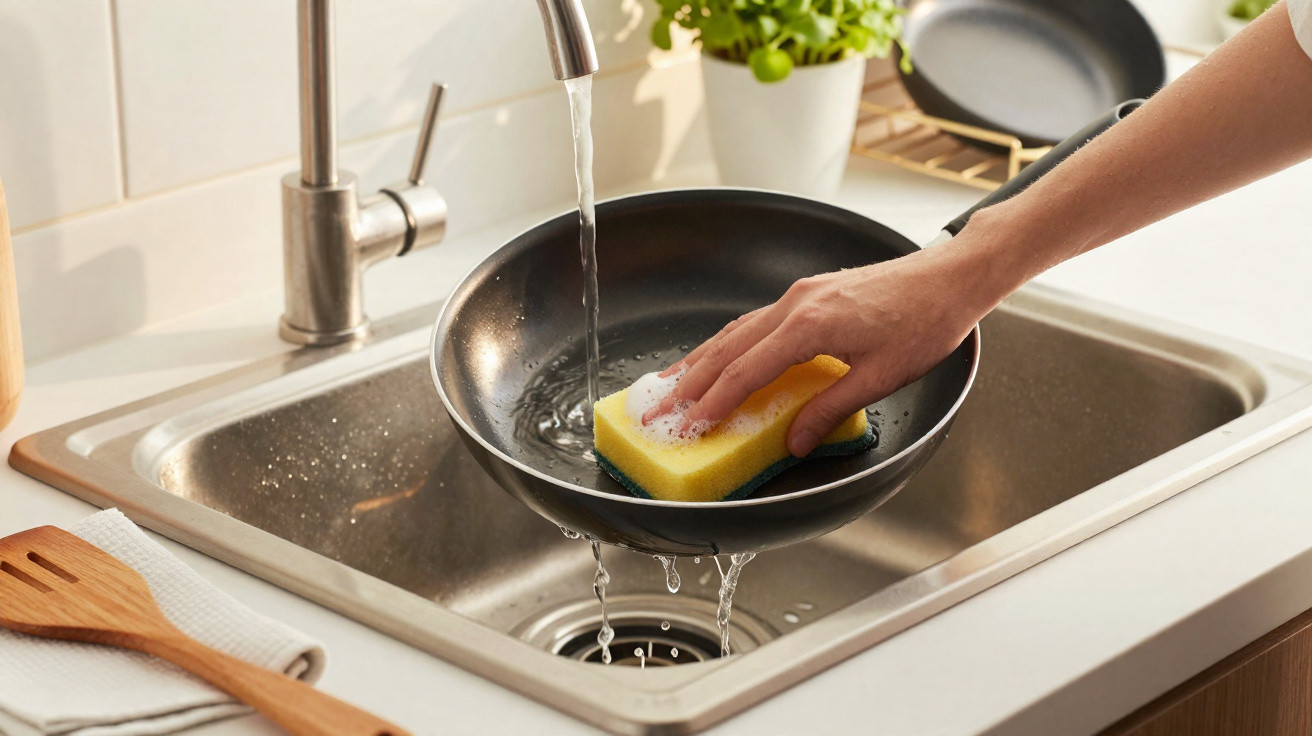
Non-stick frying pans are easily scratched, even by things that seem “natural”. Coarse salt, steel wool and abrasive scourers wear away the coating, whereas warm water, mild washing-up liquid and a soft sponge help protect the surface for longer.
Why do lemon and coarse salt damage a non-stick frying pan?
A non-stick coating forms a smooth barrier between the food and the pan’s metal body. When salt crystals are rubbed over it, they create friction, leave tiny scratches, and gradually weaken the protective layer that stops food from sticking.
Lemon offers no real benefit for this kind of cleaning, and its acidity can reach already-worn patches or any exposed metal. The bigger issue, however, is mixing acid with vigorous scrubbing, which speeds up the loss of the finish and reduces the utensil’s durability.
The main risks of this cleaning approach are:
- Salt: the coarse crystals can scratch the coating.
- Lemon: the acidity is unnecessary and may affect exposed areas.
- Abrasives: steel wool and a rough sponge strip away the protection.
- Sticking: scratches make food cling more easily.
- Wear: flaking patches show the pan has lost integrity.
How does a frying pan’s non-stick coating work?
Polytetrafluoroethylene (PTFE) is a fluoropolymer used as a non-stick coating because it has an extremely low coefficient of friction. That makes cooking with less sticking possible, but it relies on the layer staying intact, which means avoiding sharp tools or abrasive products.
Ceramic coatings work differently from PTFE, yet they also need gentle cleaning to keep performing well. Scratches, overheating and metal utensils can reduce the non-stick effect, leaving the pan rougher and encouraging premature wear in everyday use.
What is the correct method for cleaning the frying pan?
Let the pan cool down before washing to avoid thermal shock, then cover the base with warm water and a few drops of mild washing-up liquid. Leave it for a few minutes so the residue softens without needing to scrub the layer aggressively.
A gentle soak before using the sponge
- Warm water loosens stuck-on residue.
- Leaving it for a few minutes reduces the need to scrub hard.
- Wash using only mild washing-up liquid and the soft side of a sponge.
After soaking, wipe using only the soft side of the sponge with light motions, rinse thoroughly, and dry with a clean cloth. If any food remains stuck, repeat the process rather than reaching for coarse salt, knives, or steel wool.
Clean in this order:
- let the frying pan cool naturally before washing;
- add warm water and a few drops of mild washing-up liquid;
- leave the residue to soften for a few minutes;
- scrub only with the soft side of the sponge;
- rinse well and dry before storing.
What care helps extend the life of the coating?
Protection starts while you cook: choose silicone, wooden or nylon utensils and avoid cutting food inside the pan. Also, do not heat the pan empty for long periods, because excessive temperatures compromise the coating and reduce its non-stick efficiency.
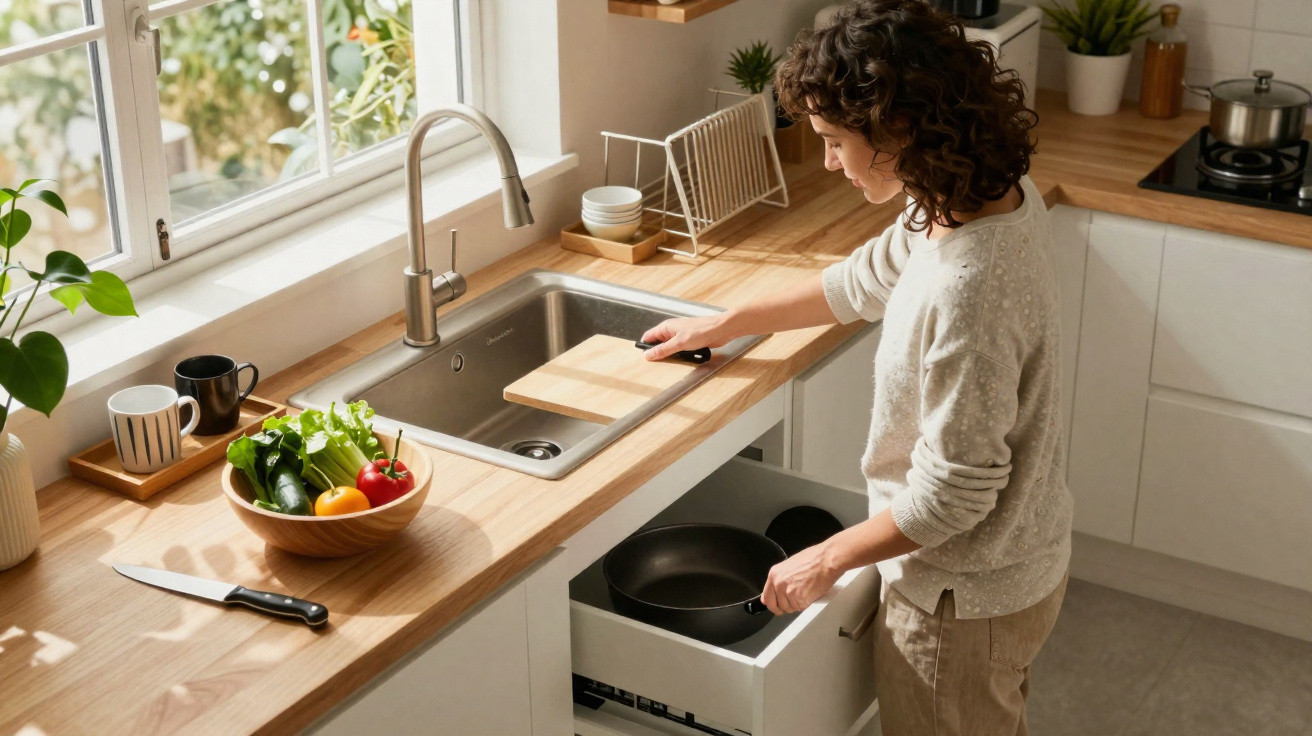
When storing, avoid stacking pans directly on the coated surface, as the bare metal base of another pan can cause scratches. Place a fabric or paper protector between them and keep the frying pan dry, clean and free from impacts inside the cupboard.
To help prevent damage, follow these precautions:
- do not use metal forks, knives or spatulas;
- avoid heating an empty pan over high heat;
- do not cut food directly on the coating;
- place protection between items when stacking;
- do not store the pan while still wet or greasy.
When should a non-stick frying pan be replaced?
Anyone looking for clever hacks to clean pots and frying pans should factor in the type of coating before trying any recipe. Once flaking areas, bubbles or exposed metal appear, the pan has lost its integrity and should be replaced.
Continuing to use a badly scratched or peeling pan makes cooking worse and makes thorough, even cleaning harder. The best way to make it last is to avoid abrasives from the very first use, wash with care, and recognise the right time to replace it.
Comments
No comments yet. Be the first to comment!
Leave a Comment