
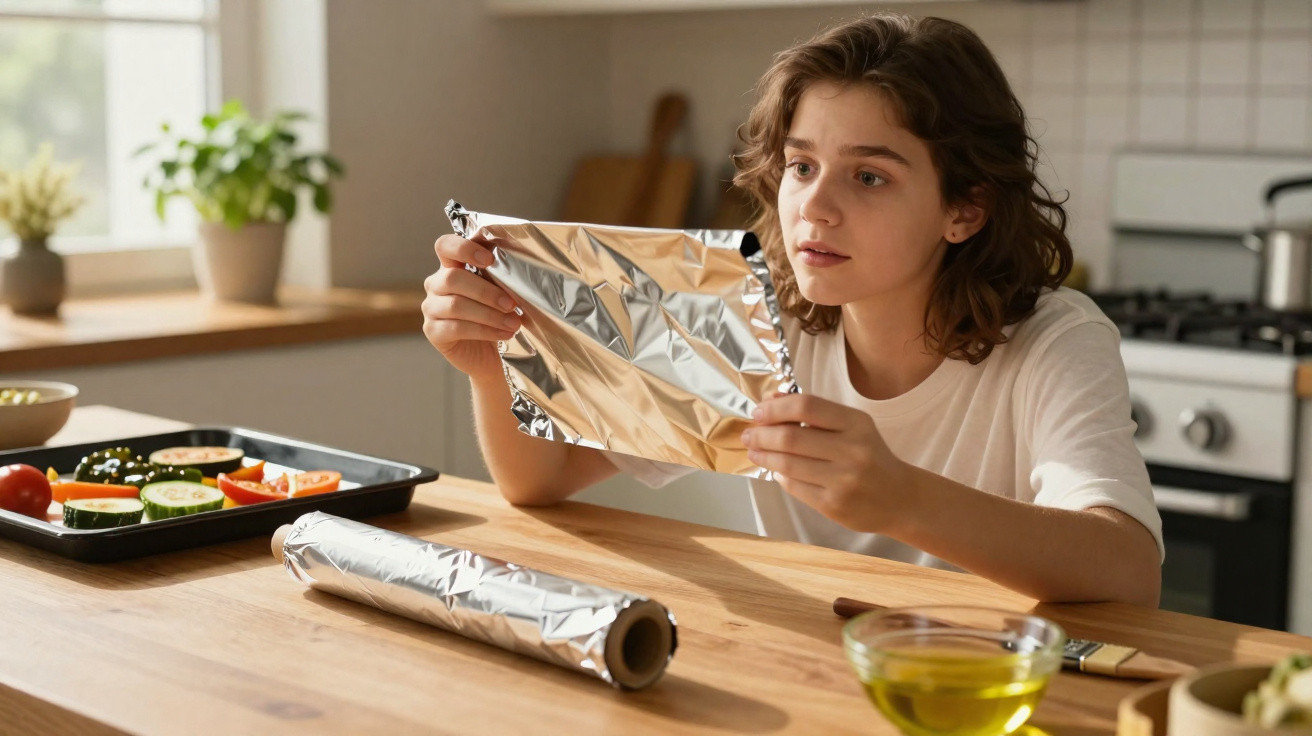
Anyone who regularly uses aluminium foil in the kitchen will have noticed that one side is highly shiny while the other looks duller. That contrast has fuelled plenty of myths - for example, that one side cooks food better or keeps heat in more effectively. In practice, the two finishes were not designed to do different jobs. The difference is simply a by-product of how foil is made and, with standard aluminium foil, it does not change how it performs when cooking or storing food.
Why do the two sides of aluminium foil look different?
In manufacturing, aluminium is passed repeatedly through large steel rollers to thin it down. By the final stage, the sheet is so thin that two layers are rolled together at the same time to stop the foil tearing.
The surface that presses directly against the polished steel rollers ends up with a shiny finish. The surface that sits against the other sheet of aluminium stays matte and looks dull. So the two-sided appearance is just a consequence of the industrial rolling process - not a feature intended to make it cook in different ways.
Is there a correct side to use?
Most of the time, no. The shiny side and the dull side conduct heat in virtually the same way, so you can expect the same results when preparing food.
The usual exception is non-stick aluminium foil. With that product, the manufacturer applies a special coating to only one side, and the correct side is normally indicated on the packaging.
- Standard aluminium foil: either side can touch the food.
- Oven roasts and bakes.
- Food stored in the fridge.
- Barbecue parcels.
- Covering containers.
- Only with non-stick aluminium foil should you follow the manufacturer’s guidance.
What helps aluminium foil last longer?
Although it is fairly hard-wearing, aluminium foil benefits from a few sensible precautions. Avoid using it in the microwave, because metal can create sparks. It is also best not to store very acidic or very salty foods for long periods in direct contact with aluminium, as this can encourage minor reactions on the surface of the material.
By following these tips, aluminium foil remains one of the most versatile kitchen items for baking, shielding and preserving food.
- Do not use aluminium foil in the microwave.
- Reuse clean sheets whenever possible.
- Recycle it when it is clean.
- Avoid prolonged contact with highly acidic foods.
- Keep the roll in a dry place.
- Use non-stick foil according to the instructions on the packaging.
Is it worth worrying about the shiny side?
For everyday use, not really. The visual difference exists only because the sheet goes through a specific rolling process during production. For recipes, oven cooking and storage, performance is essentially the same - as long as you are using standard aluminium foil.
What matters more than choosing a particular side is using the product correctly and following the safety recommendations for each type of preparation.

Comments
No comments yet. Be the first to comment!
Leave a Comment