
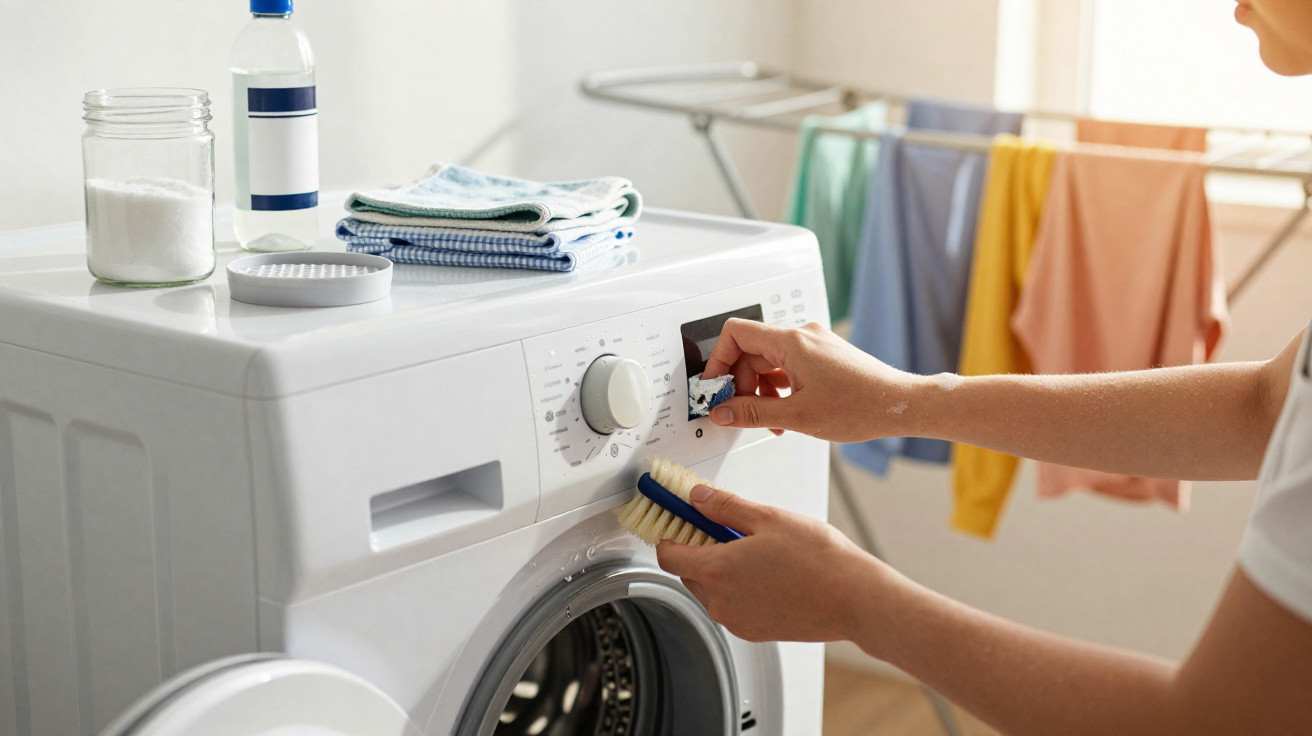
Keeping clothes consistently fresh-smelling depends on day-to-day care of your cleaning appliances. When unpleasant odours start to appear, sanitising the main appliance becomes essential to keep fabrics spotless and to prevent the spread of harmful micro-organisms.
How can you spot dirt build-up in the appliance?
Residue build-up happens slowly with every cycle you run. Quite often, chemical products collect on internal parts and create unpleasant smells, which directly affects the final finish and the scent of your garments after sanitising.
To avoid serious issues with how the machine operates, it is crucial to watch for clear signs of internal contamination. Pay attention to common visual and smell-related clues, as they point to the immediate need for these practical care steps and effective procedures:
- Built-up detergent: Whitish marks that stick to the inner walls of the drum.
- Strange odour: A lingering damp smell that transfers to freshly washed fabrics.
- Dark specks: Small residues that indicate mould in the system.
What do specialists recommend for cleaning?
Preventive maintenance helps extend the service life of internal components and keeps each process far more hygienic. Following a consistent routine keeps persistent bad smells at bay, protecting every textile fibre from residue and built-up bacteria.
Knowing the correct sanitising methods also helps you avoid serious damage to the structure of your main equipment. When you follow professional guidance, the task becomes straightforward and delivers excellent results for caring for your full linen set as well as your delicate clothes.
In the tutorial, the specialist teaches practical techniques for sanitising the drum and removing troublesome chemical residue. Follow the step-by-step demonstrations on the Dr BACTERIA YouTube channel to refresh your main appliance with complete sanitary safety.
How do you clean the detergent drawer properly?
The detergent drawer often develops a thick crust that interferes with proper water flow. This concentrated grime can harbour harmful mould, contaminating the entire cycle and spreading unpleasant smells through your clean clothes and your utility room.
Removing the drawer and washing it carefully
Essential care for stubborn, baked-on residue
Taking the plastic compartment out fully lets you scrub it thoroughly under running water. Use soft-bristled brushes to reach the tight corners where hardened detergent tends to cling.
Cleaning this part often prevents the water-inlet channels from clogging. Keeping it spotless ensures products are released at exactly the right moment in the clothes-sanitising cycle.
Deep-cleaning this removable drawer takes patience and the right mixtures to soften older crusts. To make this essential job easier, here are a few key guidelines to restore the system’s cleanliness with these efficient steps and home solutions:
- Remove the dispenser completely so you can wash it directly in the household sink.
- Use an old toothbrush to scrub the internal corners.
- Apply warm water with bicarbonate of soda to dissolve built-up detergent.
How do you disinfect the filter and the inner drum?
The filtration system traps lint and small items that come loose from fabrics during everyday cycles. Cleaning this part regularly prevents general blockages and stops bad odours returning to your clean items, supporting preventive maintenance.
Sterilising the central metal drum involves running complete cycles with suitable disinfecting products. Understanding which substances best purify the internal structure helps eliminate invisible micro-organisms, as shown in these essential recommendations and practical strategies:
- Manually remove all lint trapped in the protective filter mesh.
- Run a full wash cycle using 1 litre of pure bleach.
- Use white distilled vinegar periodically to neutralise strong odours.
What is the ideal frequency for this full clean?
Setting a regular care schedule prevents heavy build-up of chemical residue and grease from clothes. Keeping sanitising consistent protects mechanical components, helps fabrics stay pleasantly scented, and maintains excellent operational efficiency during every wash cycle.
Specialists advise a deep disinfection once a month to keep the system protected against bacteria. Turning this into a simple habit improves your routine, ensuring perfectly cared-for clothes with less daily effort and greater appliance durability.



Comments
No comments yet. Be the first to comment!
Leave a Comment