
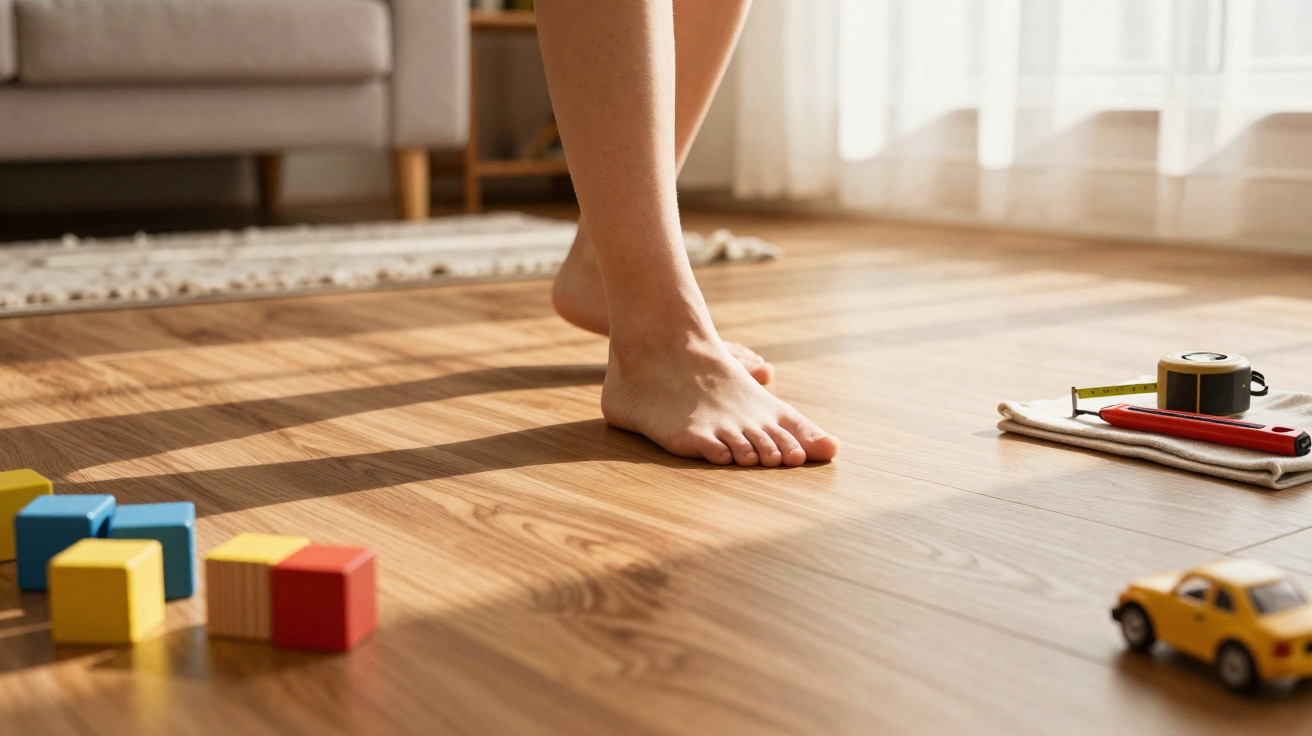
Vinyl flooring with felt backing is becoming an increasingly popular choice for home refurbishments because it feels warmer underfoot, softens the noise of footsteps, and makes walking more comfortable. Unlike tiles and other hard floor finishes, it includes a fibrous underlayer that supports thermal and acoustic insulation without requiring major building work.
Why does this flooring feel warmer than tiles?
The felt layer underneath acts as a buffer between the subfloor and the vinyl surface. This helps cut down the chill that concrete can transfer-something many people notice with tiles, porcelain and ceramic flooring, particularly in winter.
Because the backing has a slight spring to it, it also feels gentler underfoot. That added give tends to make standing more comfortable in kitchens, corridors and other areas where residents spend long periods on their feet.
How does the felt help to reduce noise?
The fibres in the backing absorb some of the vibration caused by walking and by moving objects around. In day-to-day use, common benefits include:
- Less sound travelling through to rooms below;
- Reduced noise from shoes and lightweight furniture;
- A less rigid feel while walking;
- Better acoustic comfort in flats and multi-storey homes.
What makes the floor covering durable for everyday use?
Felt-backed vinyl is built up from multiple layers. On top, a protective finish-often made with polyurethane-helps limit scratches, staining and visible wear. Beneath that sits the decorative printed layer, which can replicate wood, stone and other finishes.
The thickness of the wear layer has a direct impact on longevity. As shown by the structure of this type of floor covering, higher-quality products that are properly looked after can stay in service for many years, even in kitchens, entrance halls and frequently used walkways.
What care is needed before and after installation?
Even though felt can help mask minor imperfections, the subfloor still needs to be clean, dry and level. A few practical steps reduce the risk of bubbles, lifting and surface changes:
- Repair larger cracks and uneven areas before laying;
- Check moisture levels when the base is concrete;
- Leave the material in the room for at least 24 hours before installation;
- Seal the edges in bathrooms and any areas where water may get in;
- Clean with a damp cloth and a pH-neutral product.
When is vinyl flooring with felt backing a good choice?
This floor covering suits anyone who wants to replace tiles without keeping the cold, hard feel associated with ceramic. It can be fitted in bedrooms, living rooms, corridors and kitchens, as long as the chosen model matches the room’s moisture exposure and the expected level of foot traffic.
Service life depends on the quality of the protective layer, how well the subfloor is prepared, and how effectively the edges are sealed. With correct installation and cleaning that avoids harsh products, felt-backed vinyl keeps its finish, lowers footstep noise and remains more pleasant to the touch.



Comments
No comments yet. Be the first to comment!
Leave a Comment