
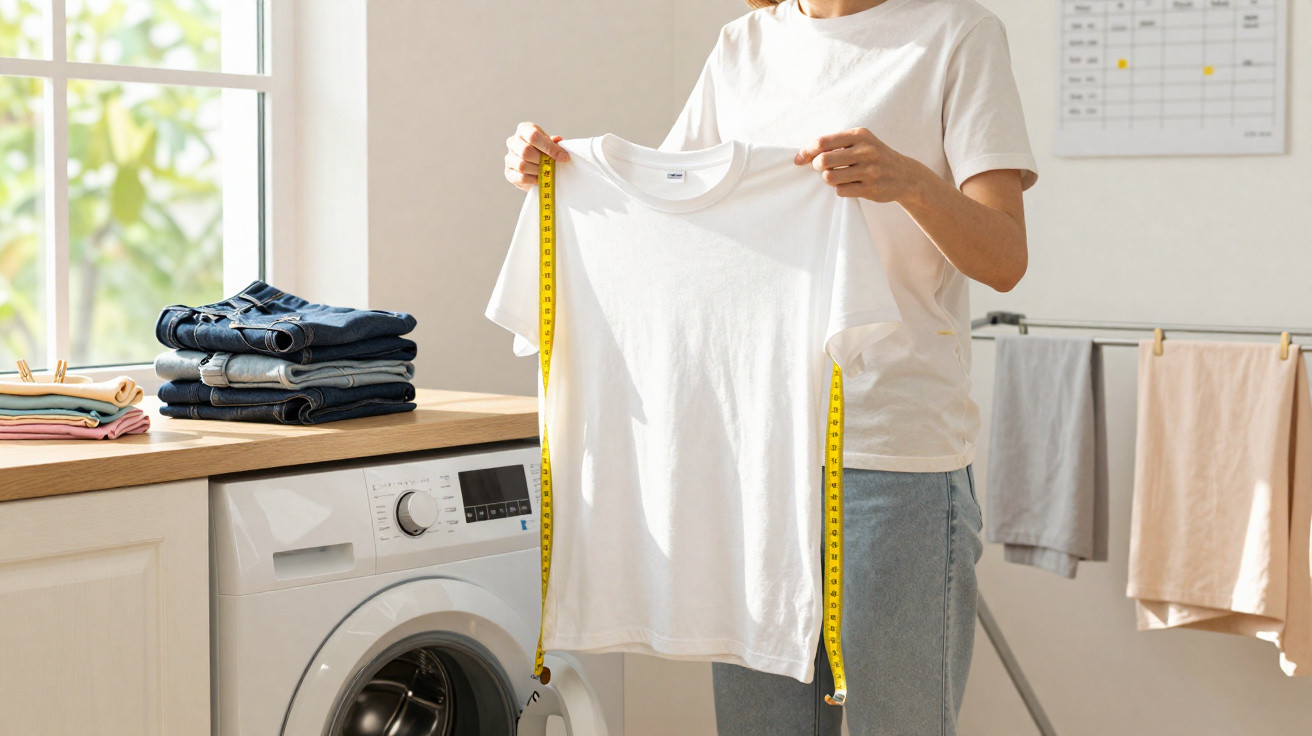
Wearing a favourite garment only to find it has shrunk after cleaning is an all-too-familiar annoyance. This happens regularly because some textiles naturally react strongly under certain conditions.
Why do fabrics change size after the first wash?
During the industrial process used to manufacture clothing, the yarns are held under significant tension so the item keeps its intended shape. Once the garment meets water, that tension relaxes and the weave settles back towards its original size.
This shift is usually more noticeable in the length rather than the width of the clothing. Knowing how this works makes it much easier to choose new pieces and plan daily care. Some of the most sensitive materials include:
- Cotton: It commonly reduces after the first wash because it is plant-based.
- Linen: This more rustic fibre can shrink quite a lot, although it becomes more supple with everyday wear.
- Viscose: Often one of the biggest “shrinkers” due to its man-made structure.
How can you see fabric shrinkage in a practical way?
To avoid losing money on new clothes, it helps to understand how structural fibres behave. Many people buy items without realising that incorrect handling-such as hot water or tumble dryers-can permanently alter the sizing of beloved tops and trousers.
A straightforward, practical habit is to check the recommendations included on the care label before doing any at-home washing. Following these instructions helps keep the perfect drape and prevents unpleasant surprises when you put on your chosen outfit.
In the explanatory content below, you’ll find visual demonstrations of how textile fibres react, along with key tips shared on the La Proni YouTube channel:
What should you do before altering the length?
Getting sewing alterations done immediately after buying a new item is a common mistake that leads to avoidable waste. Before you commit to permanent modifications with scissors and thread, the garment needs to be prepared properly.
Watch out for pre-shrinkage
The golden rule of home sewing Always wash a newly purchased item thoroughly before pinning a hem or cutting off extra fabric.
This simple precaution stops the garment ending up far too short after its first encounter with water and detergent.
Tailoring professionals often recommend preventative steps that provide real peace of mind for anyone who looks after their own wardrobe carefully. Building solid washing routines protects your financial investment through actions such as:
- Soaking the fabric in cold water for a few hours to let the fibres settle.
- Drying the item naturally in the shade, without strong direct heat.
- Pressing the fabric with a warm iron before taking it for final marking.
How can you prevent shrinkage of delicate fabrics in the tumble dryer?
The high internal temperatures of modern appliances can speed up shrinkage in natural cotton and linen fibres quite aggressively. For that reason, controlling heat is the key to keeping clothes consistently impeccable.
By adopting conscious practices in everyday washing, you reduce the chances of ruining special items you’ve just brought home. To maintain the physical integrity of each piece, follow these core protective recommendations:
- Use cold-water wash cycles to avoid stressing plant-based fibres.
- Choose gentle drying programmes with lower temperatures and keep an eye on the load.
- Take garments out while still slightly damp and finish drying on a well-ventilated clothes airer or line.
Why does denim react differently during cleaning?
Denim goes through intensive industrial processes in commercial laundries before it ever reaches shop shelves. This earlier treatment softens the fabric’s natural stiffness and triggers the expected shrinkage in advance.
Because of this, trousers made from this hard-wearing material rarely change size dramatically during normal at-home cleaning cycles. As a result, keeping on top of household organisation and clothing care becomes much simpler.



Comments
No comments yet. Be the first to comment!
Leave a Comment