
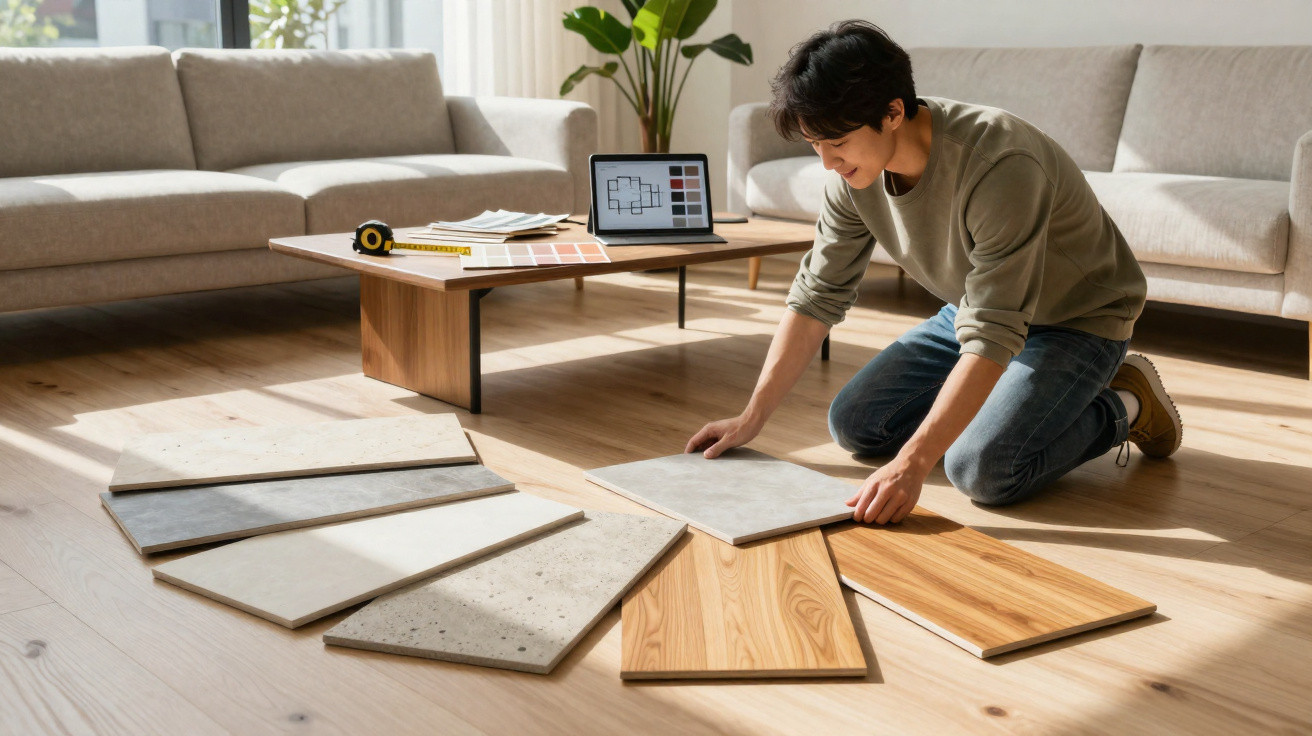
For much of the 20th century, marble flooring held pride of place in home décor, widely linked to luxury and refinement. In 2026, however, the leading priority in interior design is finding the right balance between looks, comfort, practicality and sustainability-creating room for warmer, more flexible options that suit modern day-to-day living.
Which trends stand out for replacing marble flooring in 2026?
Among the alternatives to marble, cement-based finishes, nature-inspired porcelain tiles, high-tech vinyl floors, rustic stone and high-performance timbers are becoming increasingly prominent. Each choice responds to specific needs, such as thermal comfort, a more uniform appearance, resistance to water and easy cleaning in open-plan spaces.
Microcement has established itself as a contemporary option for anyone who wants a seamless effect across floors and even walls, with a matt finish and a gentle texture. In 2026, sandy shades, greige and pale grey remain popular, forming a neutral base for styles ranging from minimalist to contemporary rustic, while helping compact rooms feel larger.
Watch a video on the Grudado YouTube channel about how to fit vinyl flooring to refresh your home quickly over old finishes-without messy demolition:
How do stone- and cement-look floors work in practice?
Today’s porcelain tile that replaces marble is not trying to recreate the natural stone’s high-gloss shine. Instead, it draws on organic references such as travertine, limestone and light slate. In satin or lightly textured finishes, it delivers a refined look, low porosity and stronger resistance to staining, knocks and moisture in busy areas.
A practical advantage is that the same product can often be used indoors and outdoors, maintaining visual continuity from open-plan living rooms to open kitchens and terraces. In these schemes, large-format tiles reduce the number of grout lines and strengthen the impression of broad, clean surfaces that are easy to keep hygienic day to day.
- Key advantages: high durability, a wide range of patterns, and straightforward cleaning.
- Essential considerations: choose the right texture for wet areas and use grout in a shade close to the tile.
- Common uses: living rooms, kitchens, bathrooms, covered terraces and connected open-plan living areas.
Are vinyl floors and engineered timber really replacing marble?
Among finishes chosen to replace marble, new-generation vinyl flooring stands out in flats and smaller homes. Supplied as planks or tiles, it can mimic wood, polished concrete and even stone, while offering a softer, quieter feel underfoot-plus options with good water resistance for kitchens, cloakrooms and utility areas.
Alongside this, wood-look solutions designed to cope better with moisture are gaining ground, such as SPC flooring and laminates with added protection. These options make it easier to bring a timber appearance into open kitchens, larger bathrooms and social spaces that were previously dominated by cold surfaces-creating a more welcoming atmosphere without sacrificing practicality.
- Vinyl flooring: recommended for acoustic comfort, fast installation and easy upkeep.
- SPC flooring: combines a wood look with a rigid core and strong dimensional stability.
- Waterproof laminate: improved versions that handle splashes and damp mopping more safely.
How do you choose the best surface to replace marble?
When weighing up microcement, porcelain tile, vinyl, engineered timber or rustic stone, it helps to consider how much water exposure there will be, how intense the use is, and what level of comfort you want. Looking at sunlight levels, cleaning effort and how the floor will work with furniture and walls can prevent future replacements and spur-of-the-moment decisions.
Professionals advise treating the floor as part of the overall concept of a room, rather than simply the finishing touch. In 2026, materials with a neutral look, a warmer feel and practical maintenance are preferred, reflecting a lifestyle that values homes that are functional, inviting and visually balanced, with reliable durability for everyday use.



Comments
No comments yet. Be the first to comment!
Leave a Comment