
Travelling for a few days is a great way to unwind and regain your energy. The downside is that coming back home can be unpleasant if a strong sewer smell suddenly fills the kitchen or utility area of your closed house.
Why does the sewer bad smell come up through the sink?
In a home’s plumbing, there’s a key component called a siphon (U-bend/trap) that holds water in its curved section. That standing water acts as a constant physical barrier, essential for stopping unwanted sewer gases from rising back up through indoor drains.
When a property is left empty with no regular water use, the trapped water gradually evaporates, and heat speeds that process up. Without that protective water barrier, the pipework loses its seal, allowing the feared bad smell to spread throughout the home.
What is the bathroom drain trying to tell you when the bad smell returns soon after cleaning?
Even after thorough cleaning, if the unpleasant odour comes back quickly, the internal structure of the pipework may be signalling a… Read more
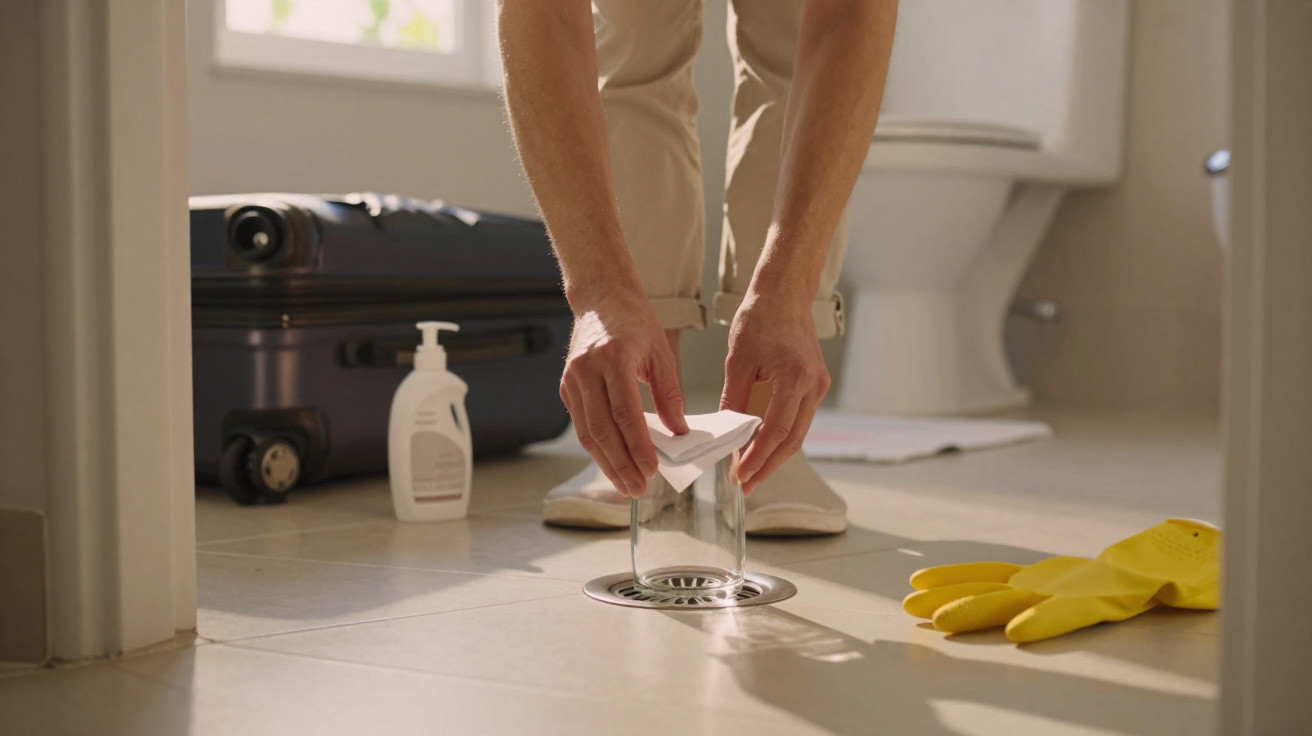
What is the purpose of putting a cup and paper over the drain?
This household trick is simple: lay a single sheet of paper over the opening and place an upturned cup on top. Used together, they form a surprisingly effective temporary mechanical seal-ideal for preventing hygiene issues during a long planned trip.
By covering the kitchen sink drain in this way, you greatly reduce air movement around that point. As a result, the natural evaporation of the water stored in the trap slows down significantly, helping the protective seal keep doing its job.
Below, there is a video from the IFSC channel on YouTube that explores the points discussed in this topic in more detail:
How does the water seal protect your home?
The water seal is simply the amount of water that sits permanently in the curve of the siphon/trap. This barrier physically blocks insects, cockroaches, and unpleasant odours coming directly from the public pipework connected to the kitchen sink drain.
Looking after this basic plumbing feature is important for comfort and hygiene in any unoccupied property. The liquid barrier needs to be preserved, so that moisture loss does not undermine the overall cleanliness of your siphon during your temporary absence.
Drain Protection Kit
Basic items needed
To carry out this simple tip before you travel, make sure you set aside the following items:
- 1
A sheet of kitchen roll or aluminium foil; - 2
A heavy glass or plastic cup; - 3
Water to check the trap’s level.
What are the advantages of this household recommendation?
The biggest benefit of this technique is how straightforward it is, with no cost at all for the homeowner. Using everyday kitchen materials, you can create effective protection against issues that commonly affect your valuable water seal.
It also avoids relying on harsh, expensive chemicals that can damage older pipework. This eco-friendlier approach helps preserve your home’s plumbing and offers peace of mind, so you can enjoy your time away with full sanitary safety.
The main benefits of adopting this preventative step include:
- An effective physical block against the spread of unwanted insects.
- A major reduction in how quickly the trapped water evaporates naturally.
- Better indoor air quality with no financial outlay.
What should you do when you return home after travelling?
After opening the windows to air out the house, carefully remove the improvised cover. If you notice the water level has dropped slightly, run the kitchen tap for a few seconds to fully restore protection for your kitchen sink drain.
This quick step ensures the odour barrier continues to work properly day to day. With these easy habits, coming home becomes pleasant again-free from nasty surprises caused by unwanted sewer gases from the shared drainage system.



Comments
No comments yet. Be the first to comment!
Leave a Comment