
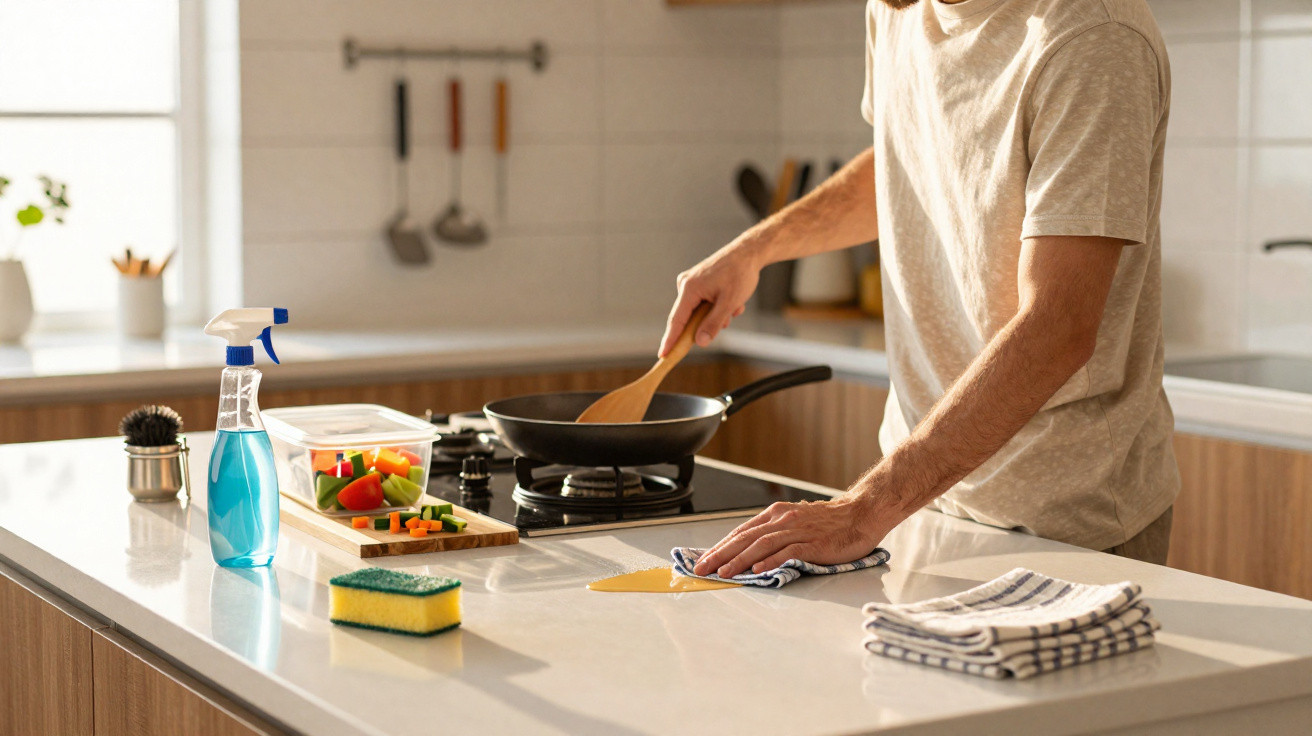
Keeping the home organised day in, day out takes steady commitment from whoever is in charge of the hob. Getting into the habit of wiping down surfaces straight after cooking stops heavy dirt from building up, making the whole routine far easier.
How does the post-cooking cleaning method work?
This approach is about tidying small areas while the pans are still on the heat. Clearing away oil splashes immediately prevents them from cooling and sticking to the hob, so surfaces stay shiny without the need for intense scrubbing at the weekend.
Many people choose to postpone worktop maintenance, which only creates unnecessary, built-up stress. By doing small bits of cleaning as soon as each dish is finished, you keep a calm cooking space-free from unpleasant smells and stubborn marks that are hard to remove quickly.
How to remove baked-on grease from the hob easily?
There is a surprising homemade solution that removes all ingrained grime quickly, leaving the area completely… Read more
What are the benefits of cleaning the tiles immediately?
Vertical surfaces are constantly hit by greasy vapour produced by everyday frying. Wiping these areas with a damp cloth straight after cooking stops oil turning into a sticky film, helping the wall covering keep its shine for much longer.
Leaving this job until the weekend often means resorting to harsh chemical products. Cleaning straight away protects the surfaces and saves valuable money, making overall house upkeep genuinely gentle and pleasant.
Below is a video from the Clean My Space channel on YouTube that explores the points discussed in this topic in more detail:
How can you keep the worktop clean during meals?
The area around the sink easily collects organic residue while you handle ingredients. Keeping a small container for scraps streamlines your workflow and helps prevent acidic stains from dulling the natural sheen of the marble or granite on your worktop.
Using damp cloths lifts crumbs and splashes before they dry onto the surface. This habit dramatically cuts the time spent on later chores, leaving a cooking area that is always hygienic, looks inviting, and is fully ready for the next daily use with complete comfort.
Quick Cleaning Tools
Essential element: Set these items aside to make your kitchen routine easier:
- 1
Effective mild washing-up liquid for removing fresh grease; - 2
Highly absorbent microfibre cloth for surfaces; - 3
Spray bottle with warm water to soften residue.
Why adopt the clean as you go concept?
This philosophy centres on continuously keeping the space in order while you cook. Washing used utensils right away frees up sink space and prevents huge piles of washing-up that would discourage any cook after a delicious meal prepared with care and attention.
This behavioural shift makes everyday cooking feel more enjoyable. By tackling traces of mess as you go, you protect your units and maintain a high standard of hygiene throughout the kitchen without expending wildly excessive physical effort.
Below are the main habits recommended for putting this concept into practice successfully:
- Wash chopping boards straight after cutting proteins;
- Put seasonings away immediately after use;
- Clean small splashes on the floor there and then.
How can these small actions help you optimise time?
You save time when you break big tasks into small daily blocks. Spending five minutes after lunch to wipe down the hob can save exhausting hours that would otherwise be spent scrubbing old, hardened grease during the planned weekend rest that everyone looks forward to.
Building these small actions into your routine creates a strong sense of control at home. Once you notice the space stays spotless without stressful deep-cleaning sessions, you find a new way to experience cooking with lightness, organisation and practicality-supporting a truly harmonious everyday family life.

Comments
No comments yet. Be the first to comment!
Leave a Comment