
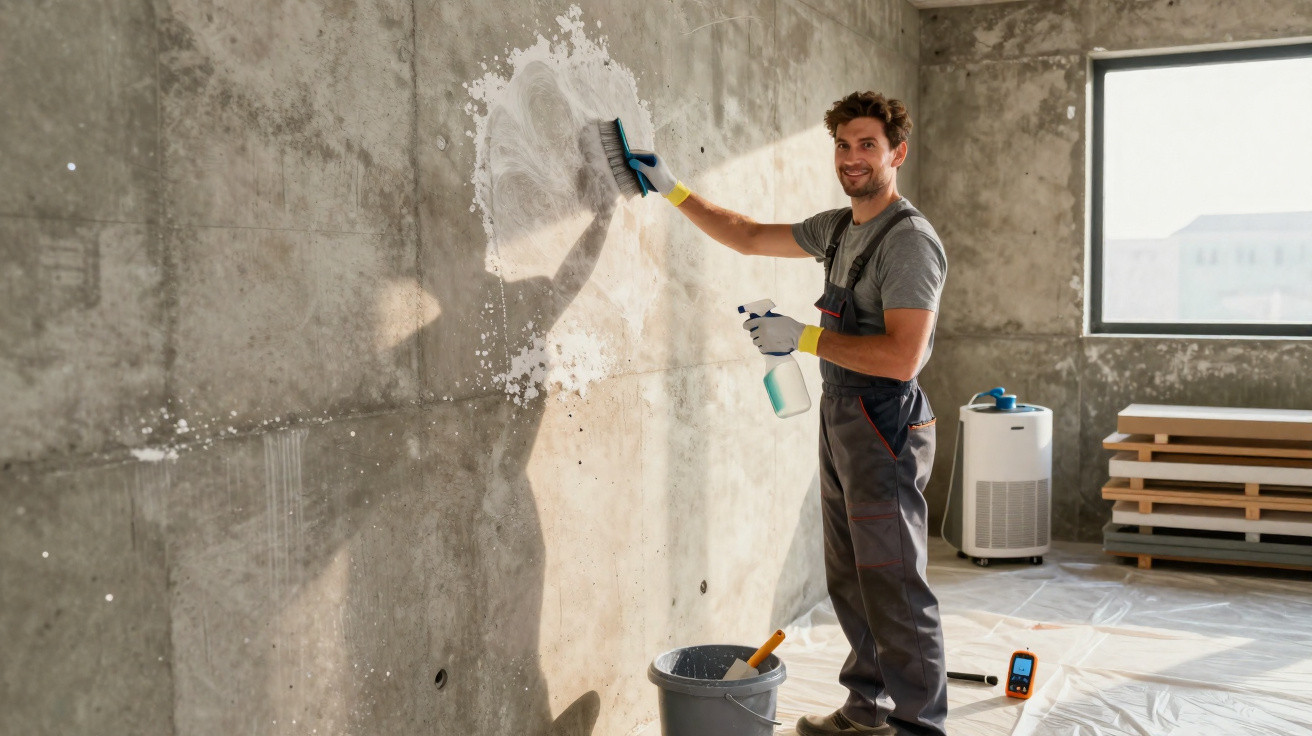
Saltpetre on concrete walls typically shows up as white staining, crusty patches or a fine powder that comes back even after you clean it. This issue-known as efflorescence-happens when water passes through cement, plaster or masonry, dissolves salts contained within those materials, and then leaves them behind on the surface as the moisture evaporates.
Why do white stains appear on concrete?
These marks only form when three conditions come together: soluble salts within the material, the presence of water, and a route that lets the salty solution travel to the surface. Once the dampness evaporates, the salts remain on the wall, creating the saline efflorescence seen on concrete surfaces.
The deposit is usually whitish and may keep returning for as long as water continues to enter. Before you start cleaning, it helps to look for clues that point to where the moisture is coming from:
- Staining close to the skirting-line can suggest damp rising from the ground.
- Marks beneath windows often indicate failed sealing.
- Areas near bathrooms may point to leaks.
- Spots that worsen after rainfall can indicate external cracks.
- Blistered paint is a sign there is water trapped behind the finish.
How to remove saltpetre step by step
Removing salt deposits should begin with dry cleaning, and it should only be considered finished once the wall is completely clean and fully dry. For small, shallow marks, follow this order:
- Protect your eyes and hands, and keep the space well ventilated.
- Scrape away flaking paint and crusted deposits using a scraper.
- Brush off the powder with a stiff-bristled brush and collect the debris.
- After testing an inconspicuous spot first, apply a 50/50 mix of water and white vinegar.
- Rub gently, then rinse to remove the solution.
- Wait until the surface is completely dry before applying any finish.
Why doesn’t simply cleaning and painting solve it?
Cleaning gets rid of the visible crystals, but it does not stop salts being carried through the wall from within. If there is a leak, water ingress through the façade, or rising damp, fresh particles will reach the surface and can cause the paint applied over the area to peel.
The source of moisture must be fixed before repainting. That may involve repairing pipework, sealing cracks, fixing gutters, or installing waterproofing on the side where water is entering. Applying a waterproof layer only to the internal face can temporarily mask the staining while pushing the problem to another area.
What precautions prevent the salts from returning?
Once water entry has been stopped, allow the concrete to release the moisture it has built up and choose products that suit the surface. Prevention relies on the following actions:
- Fix leaks and cracks before redoing the finish.
- Improve ventilation in damp rooms.
- Avoid painting plaster or concrete that is still drying.
- Fully remove dust, loose paint and any crumbling material.
- Apply a suitable primer/sealer to a dry substrate.
- Use a coating appropriate to that wall’s level of exposure.
Persistent deposits need a more careful assessment
If saltpetre returns quickly, the plaster starts to break down, or the wall stays damp, the cause is more than surface-deep. A professional can check pipework, rising damp, waterproofing, and possible internal damage before any new materials are applied.
A dry wall is the essential condition for a repair to last. Brushing, washing and painting may improve appearance, but only correcting the water pathway will stop the salts migrating and prevent the white marks from pushing back through the finish.





Comments
No comments yet. Be the first to comment!
Leave a Comment