
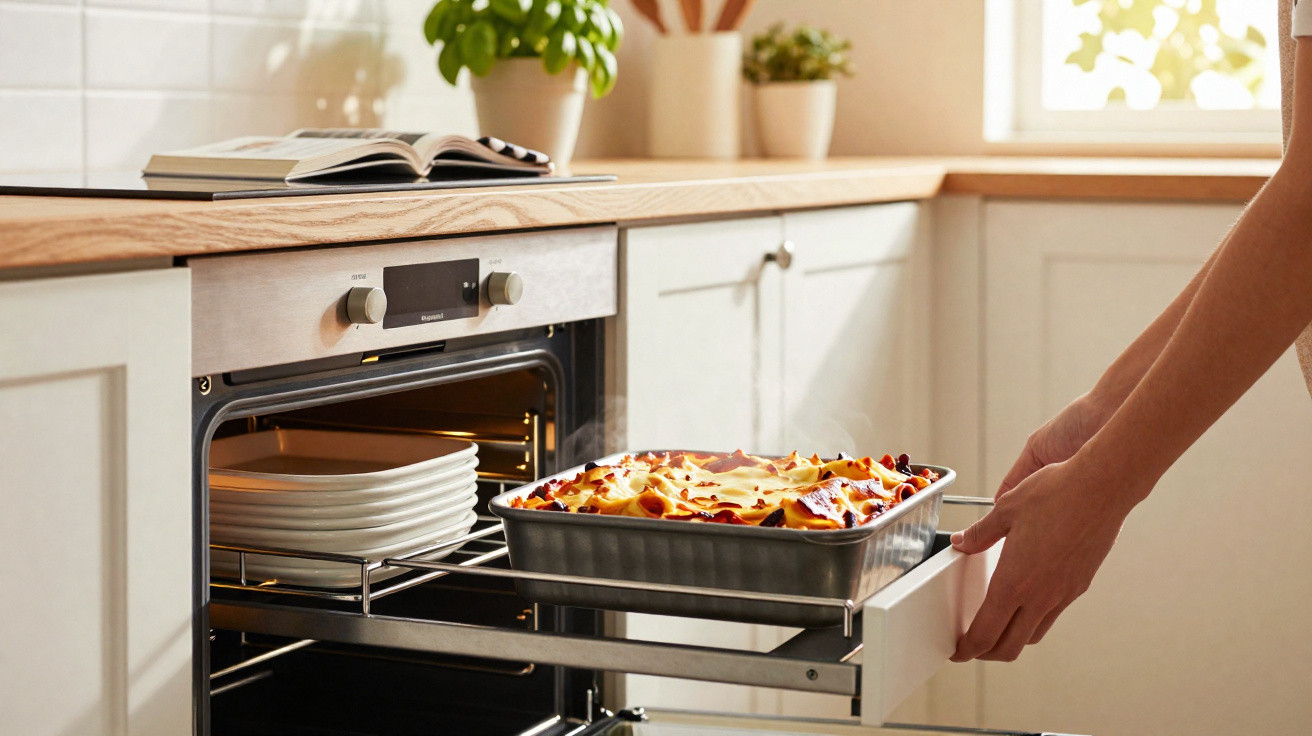
The drawer beneath the oven is one of the most misunderstood features in a domestic kitchen. Many people treat it simply as a place to store baking trays, roasting tins and pans, without being sure what the manufacturer intended it for. Depending on the appliance, it may be designed to warm cooked dishes, it may be nothing more than a storage compartment, or it may work as a secondary warming area that benefits from heat coming off the main oven.
What is the drawer under the oven for?
The lower drawer generally falls into one of three roles: warming food, keeping finished dishes hot, or storing kitchen equipment. Which applies depends on the cooker type, the oven’s construction, and any extra features built in by the maker.
On more up-to-date cookers-particularly imported or premium-range models-this space is often a dedicated warming drawer, intended to hold already-cooked food at a suitable temperature until you are ready to serve. On simpler models, it is more likely to be just an extra storage area for utensils, with no separate heating system.
How to tell whether the drawer is for warming or storage
Knowing the drawer’s real purpose helps you avoid both underusing it and creating safety issues. The most reliable approach is to check the product manual, but a few practical clues can also indicate whether it is meant for warming food or merely for keeping items out of the way.
When you look over the cooker, pay attention to the finish, any controls on the panel, and how warm the drawer becomes while the oven is running. Common signs that help you distinguish between the two include:
- Whether the control panel shows a temperature setting or warming function (or not);
- The manual describing it as a “warming drawer” versus a “utensil/storage drawer”;
- The presence of an electric heating element or specific insulating materials within the drawer;
- The drawer heating up strongly and consistently during extended oven use.
How to use the drawer under the oven safely
Whether it is a warming drawer or a storage drawer, a few habits will help keep both your cooker and your kitchen safe, and extend the appliance’s lifespan. Most importantly, do not treat the drawer as a second oven unless the manual explicitly states that it is designed for that.
It is also worth noticing how heat builds in the lower area, because excessive warmth can damage items you have stored there. With that in mind, the following everyday precautions are sensible:
- Keep plastics, paper and other flammable items out of the drawer, especially on models that get very hot;
- Do not store raw food or delicate packaging in that space;
- Clean the drawer regularly, removing food debris and grease;
- Make sure you are not blocking any air outlets or ventilation paths on the cooker.
Practical tips to get more out of the oven drawer
Used properly, the drawer under the oven can make meal preparation and kitchen organisation easier. On models with a warming function, it lets you keep dishes ready to serve at the right temperature while other items finish cooking, making it simpler to bring everything to the table at the same time.
If your cooker’s drawer is storage-only, it is often best used for frequently needed roasting tins, baking trays and metal lids, freeing up room in cupboards elsewhere. Paying attention to how much heat reaches the drawer, following the manual, and periodically checking what you have stored there are simple steps that make this compartment more useful, safer and more practical in day-to-day cooking.


Comments
No comments yet. Be the first to comment!
Leave a Comment