
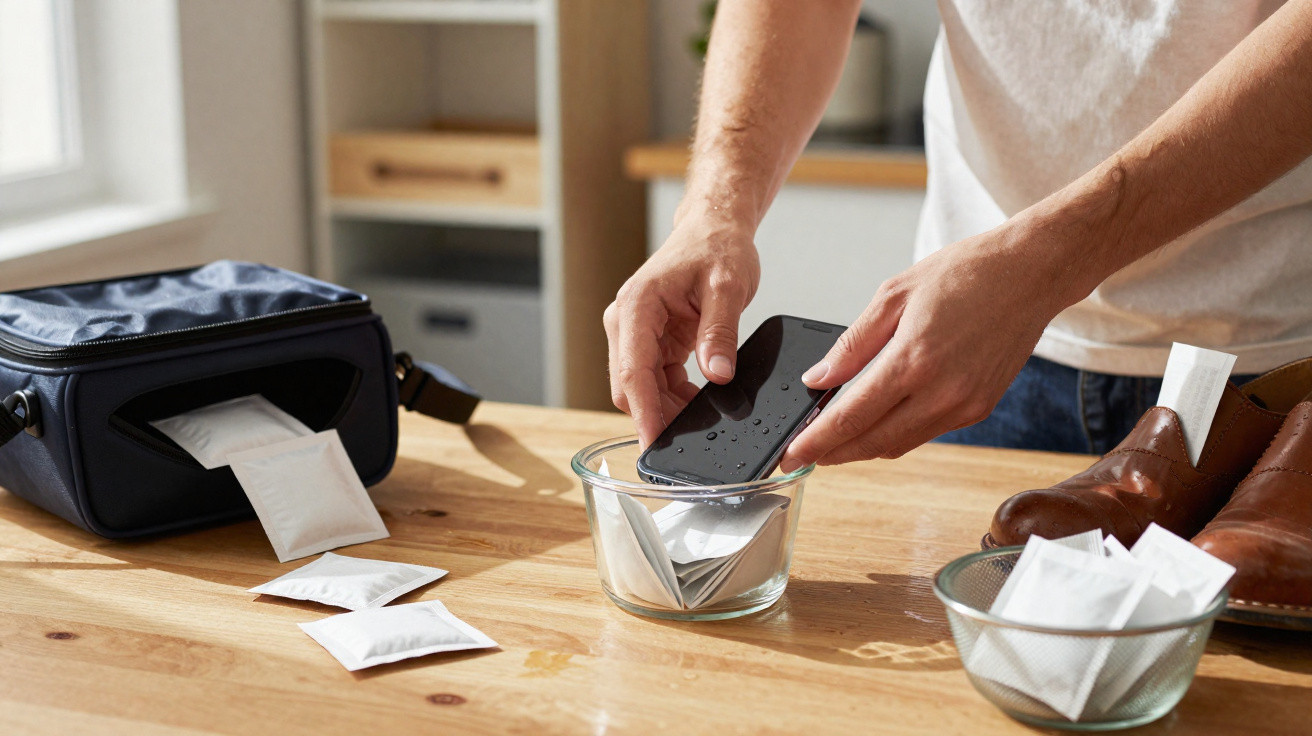
The plain little sachets turn up in almost every new shoebox, and in the packaging for electronics or dietary supplements. Most people rip the box open, put the contents away - and the small packet goes straight into the bin. In doing so, they throw away a handy helper that can sort out a surprising number of everyday household issues.
What’s actually inside the white sachets
These packets contain silica gel: a granular form of silicon dioxide. The material is porous and works like a tiny sponge for moisture in the air, taking up water without any obvious visible change.
"Silica gel sachets protect products from moisture - and they can do the same for you at home."
Manufacturers add these desiccant sachets to packaging so shoes don’t start smelling musty, powders don’t clump, and electronics don’t suffer moisture damage before they’re even used. That same moisture-absorbing ability can be put to work once you’ve finished unboxing.
Rescuing tech: how the sachets help with moisture damage
Moisture is one of modern electronics’ biggest enemies. A sudden downpour or a bit of condensation in your rucksack can be enough to damage cameras, headphones or batteries. This is exactly where silica gel packets can help.
First aid for damp devices
If a device has got wet, speed matters. Do the following:
- Switch the device off immediately and stop using it.
- Remove any detachable parts such as cases, batteries (if removable) and memory cards.
- Pat the outside dry with a soft cloth.
- Put it into an airtight bag or sealed container.
- Add several silica gel sachets - the more, the better.
- Seal the container and leave it for 24 to 48 hours.
Which devices is this approach particularly suitable for?
- Digital cameras and lenses
- Smartphones and tablets (for dampness, not after being fully submerged in water)
- Headphones and in-ear buds
- Power banks and batteries
- External hard drives and SSDs
- Handheld consoles such as Nintendo Switch
Important: the well-known rice trick is now considered outdated. Rice absorbs far less moisture from the air and often leaves dust behind inside the device. Silica gel is designed for this job - and is much more reliable.
Using them day to day: where silica gel packets really shine
If you keep the sachets rather than chucking them, you can use them in plenty of places around the house. Often, a single packet is enough to noticeably reduce a problem.
In the wardrobe and in shoes
In closed cupboards, moisture can build up. That leads to stale air and can damage materials over time.
- A sachet in a storage box with winter clothes helps fabrics stay fresher for longer.
- In a shoe cupboard, it helps reduce odours and mildew spots.
- In training shoes, it supports drying from the inside after a workout.
Protection for your camera bag and rucksack
Camera bags, photography backpacks and gadget cases are prone to condensation - for instance, when you move from the cold outdoors into a warm room in winter. Placing one or two sachets in each compartment lowers the risk of fogged-up lenses and corrosion.
They’re also useful in laptop bags or rucksacks where tech is carried next to water bottles. A slightly leaking bottle is often only noticed when the damage has already been done.
Handy in the kitchen and pantry
Dry foods and powders are sensitive to humidity. The result is clumping and a shorter shelf life.
- In opened tubs of protein powder or instant drinks, a sachet can help prevent clumps.
- In a container holding baking powder, gelatine or cornflour, powders stay free-flowing for longer.
- In the spice cupboard, a sachet can reduce small clumps forming in salt or paprika.
Important: never tear the packets open or mix the contents with food. Keep them inside the tin or packet but out of the direct contact area.
How to prepare used sachets for reuse
Silica gel only absorbs moisture up to a point. Once the granules are saturated, they stop working properly. The upside is that you can dry the sachets out and use them again.
Regenerating them in the oven
You can refresh the little packets with a simple process:
- Preheat the oven to about 120°C (conventional / top and bottom heat).
- Place the sachets on a baking tray, ideally on baking paper.
- Leave them to dry for around 60 minutes.
- Turn the sachets once after 30 minutes.
- Let them cool completely before using them again.
If you have children or pets at home, store the sachets safely after drying. The warnings on the packets are there for a reason: the contents are not edible and should not end up in curious mouths.
Other places the sachets come in handy
Many household items react badly to damp. With a bit of creativity, you’ll keep finding new spots where they help.
- Toolbox: less rust on pliers, drill bits and driver bits.
- Photo albums and collectible cards: protection against warping and mildew.
- Musical instruments: inside guitar or wind-instrument cases to help keep conditions more stable.
- Document folders: important papers such as contracts and certificates stay dry.
- Windowsill in winter: in closed boxes near heavily misted-up windows as a small extra boost.
| Place | Benefit of silica gel sachets |
|---|---|
| Shoe cupboard | Less smell, drier conditions in closed compartments |
| Camera bag | Protection against condensation and corrosion |
| Storage container with powder | Prevents clumping, longer shelf life |
| Tech rucksack | Lowers the risk from small leaks or rain damp |
| Toolbox | Less rust and surface corrosion on metal parts |
How silica gel works - briefly explained
Silica gel is made up of countless tiny pores. Water molecules attach themselves inside those pores. This is called adsorption, not absorption: the water doesn’t soak into the material, but binds to its surface.
"Thanks to its enormous internal surface area, a small amount of granules can bind a surprising amount of water."
That’s exactly why silica gel is so useful in packaging. The sachets take up moisture without becoming sticky or losing their shape. And when heated, they release the trapped water again - which is why the oven method lets you reuse them multiple times.
Where you need to be careful
As useful as these packets are, a few basic rules still apply:
- Never cut a sachet open; the granules should not be loose around the home.
- Keep them out of reach of small children and pets.
- Don’t let them come into direct contact with food.
- For serious water damage to electronics, continue to rely on a qualified repair shop.
Silica gel isn’t a replacement for professional building dryers, proper ventilation, or a reputable repair service. It’s simply a helpful tool that eases small everyday problems - and, in an emergency, can sometimes save a device before it finally gives up.
If you collect the sachets deliberately instead of throwing them away on autopilot, you’ll build up a small stash over time. Then you’ll have quiet little helpers ready in a drawer or the tool shed - and they can do far more, at the right moment, than their unremarkable appearance suggests.

Comments
No comments yet. Be the first to comment!
Leave a Comment