
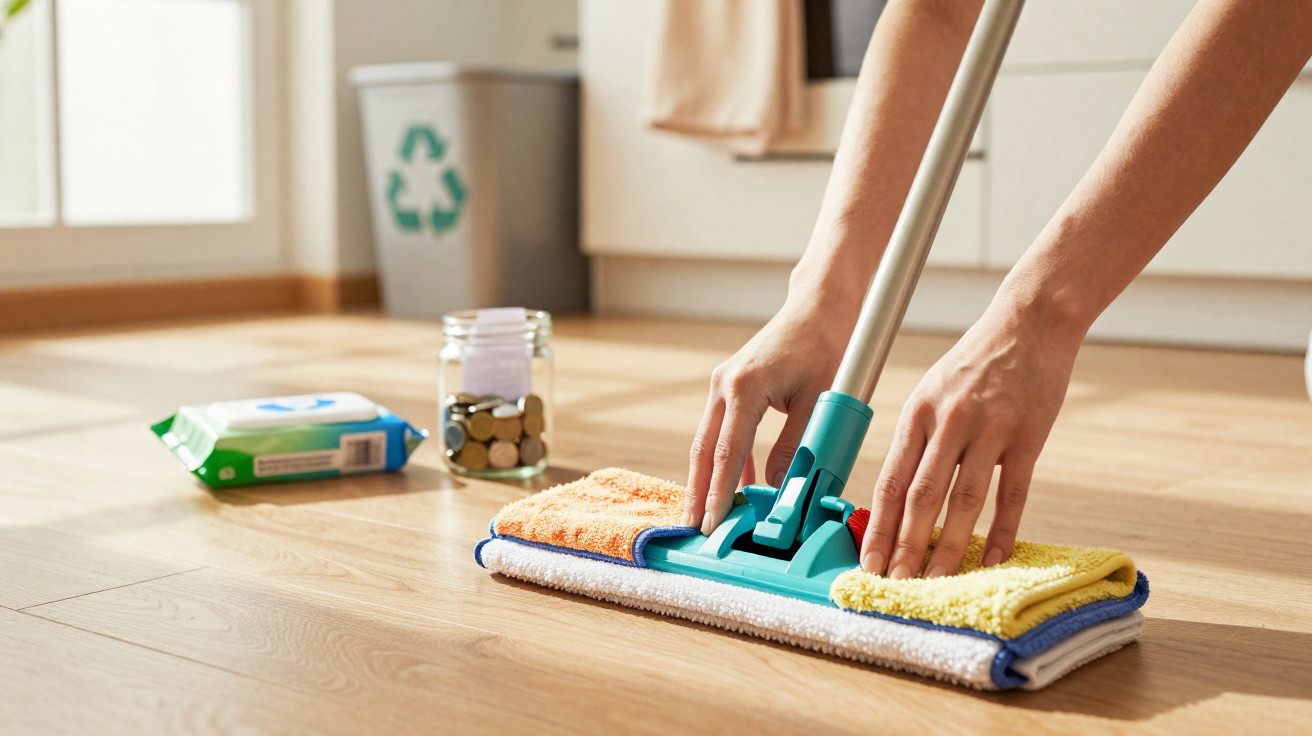
Many households throw away worn-out terry towels or, at best, relegate them to being garage rags. Yet that thick cotton fabric has huge cleaning potential - especially for anyone using a flat mop à la Swiffer and getting fed up with constantly buying new disposable pads.
Why an old towel cleans better than many disposable wipes
Terry cloth is made up of countless tiny cotton loops. Think of it like a carpet of mini hooks - and that’s exactly what makes it so useful around the home.
"The loops grab dust, hair and crumbs, while also soaking up moisture - a double effect that many disposable wipes simply don’t offer."
Cotton is hydrophilic - it loves water. Dirt particles get trapped deep in the fibres instead of being pushed around the floor. Many disposable cloths made from synthetic fibres tend to repel moisture; they can work well for dry dusting, but they reach their limits much sooner when dealing with wet marks.
In professional settings - such as hotels and clinics - reusable mops, fringe heads and washable pads have been standard for years. The logic is simple: plenty of textile, strong absorption, into the washing machine, done. Repurposing a bath towel follows the same principle, just as a budget-friendly, at-home version.
Disposable pads quietly cost a small fortune
Anyone who cleans floors regularly with a flat mop knows the catch: without the right disposable pads, you can’t really get started - and after each clean they go straight in the bin.
If you do the maths, the price of that convenience becomes clear:
- 2 cleaning sessions per week
- 2 disposable pads each time
- equals roughly 208 pads per year
- cost per pad: approx. €0.30 to €0.40
By the end of the year, that adds up to €60 to €80 spent purely on throwaway wipes. It’s not always obvious day to day, but you feel it in your wallet - and you see it in the rubbish bag.
A large bath towel of around 70 × 140 centimetres, by contrast, can be cut into plenty of pieces: several covers for a flat mop, or a whole stack of square cloths. All of them can be washed at 60 °C and reused again and again.
In four simple steps: turn a towel into a mop cover
You don’t need a sewing machine or any special craft skills for this. A flat mop, an old terry towel, a pen, and a pair of scissors are enough.
Step 1: Take the measurements
Place the mop head plate in the middle of the towel. Using a pen or tailor’s chalk, trace a rectangular outline, allowing an extra 5 to 7 centimetres all the way around. This margin is what lets the finished cover wrap neatly around the plate later.
Step 2: Cut it out
Cut out the marked rectangle with sharp scissors. If you want more than one cover, it’s best to measure with a tape measure and mark the same dimensions several times across the towel.
Step 3: Add corner slits
Next, make a short cut at each of the four corners - around 2 centimetres long. These small slits make it much easier to push the thick terry cloth into the mop’s clips without having to force it.
Step 4: Fit the cover onto the mop
Put the mop plate in the centre of the cut piece. Fold each edge over the plate and press it into the existing rubber tabs or clamp openings - the same places where disposable pads would normally be secured. Thanks to the slits, the terry cloth sits neatly around the corners; it holds firmly, yet can still be removed quickly.
"The homemade cover fits tightly, doesn’t slip, and after you’ve finished it goes straight into the laundry basket instead of the general waste."
How to use the terry cover properly day to day
Depending on how dirty the floor is and what type of surface you’re cleaning, the terry cover can be used in different ways to best effect.
Dry, slightly damp, or properly wet?
- Dry: Great for picking up dust, hair and light crumbs - similar to a static disposable cloth.
- Slightly damp: For everyday dirt on tiles, laminate and vinyl. Wring it out well so you don’t leave puddles.
- Barely damp on parquet: Wood only tolerates minimal water, so the cover should be only lightly moistened.
In high-traffic zones - kitchen, hallway, pet areas - a two-stage approach is often worth it: first mop dry to remove loose debris, then do a second pass with a lightly damp cover.
A practical cleaning mix for quick use
If you like being able to start mopping "at the push of a button", you can prep several covers in advance. A screw-top jar or a lidded container is all you need. Add a simple mixture:
- 1/3 household vinegar (clear, colourless)
- 2/3 distilled water
- a few drops of lemon oil for fragrance and grease-cutting
Put the covers into the liquid so they soak it up and sit ready in the cleaning cupboard. Before mopping, give one a quick wring-out; after use, put it straight into the dirty laundry. This mix works particularly well for tiles and vinyl, but for sensitive wooden floors you should avoid vinegar.
Washing, care and reusing - keeping the cover effective
A little care helps terry cloth keep its absorbency. It doesn’t need to be complicated: just wash the cover along with your normal household laundry.
| Step | Recommendation |
|---|---|
| Wash temperature | 60 °C for hygienic cleaning |
| Detergent | Biological or colour detergent, no fabric conditioner |
| Drying | Air-dry or use a gentle tumble cycle to keep terry nice and fluffy |
| How often to change | After every use, especially in kitchen and bathroom |
Fabric conditioner is best avoided altogether. It coats the fibres like a film and noticeably reduces absorbency. If you have very hard tap water, it can help to run an empty cycle with washing machine cleaner now and then so limescale and detergent residues don’t build up in the terry.
How much does the rubbish actually shrink?
If you’ve been buying disposable pads regularly, you’ll usually notice a change in your general waste within a few weeks. Those firm, slightly damp wipes disappear from your bin routine, leaving more space for other rubbish.
At the same time, demand drops for newly manufactured disposable items. Every pack you don’t buy means less packaging, less transport, and fewer plastic fibres. It can feel like a small change day to day, but over the course of a year the impact becomes clear - especially if lots of households do the same.
Where else homemade terry helpers are useful
Once you start cutting up the first towel, you often end up with more pieces than a single mop will ever need. The leftovers are ideal for other cleaning jobs:
- small cloths for sinks and taps
- sturdy wipes for window frames and door handles
- extra floor cloths for particularly dirty spots, such as a dog corner or shoe area
If you have a steam cleaner with a cloth attachment, you can cut matching covers from the same material. That way, a single old towel becomes a coordinated set of cleaning textiles.
Risks, limits and sensible add-ons
Even with this clever hack, you still need to consider the floor type. Unsealed parquet, oiled boards, and delicate natural stone can react badly to cleaning agents and excess water. For these surfaces, use suitable products and make sure the cloth is only lightly damp.
On very heavily soiled areas - for example after renovation work - terry covers have their limits too. Dust and fine particles from tile adhesive, plaster or paint should be removed roughly first with a broom or vacuum, otherwise the fibres can clog up.
Even so, in everyday life the picture is clear: for routine maintenance cleaning, a repurposed towel is more than enough for most households. Combined with a classic bucket or a system with a wringer, it creates a flexible setup that can make many bought products unnecessary.
If you want to take the idea further, take a critical look in your bathroom cupboard. It’s common to find several old towels that nobody uses anymore. With a few snips, they turn into dozens of long-lasting cleaning helpers - and what looked like something to throw away becomes a durable tool for a more economical, more practical home.

Comments
No comments yet. Be the first to comment!
Leave a Comment