
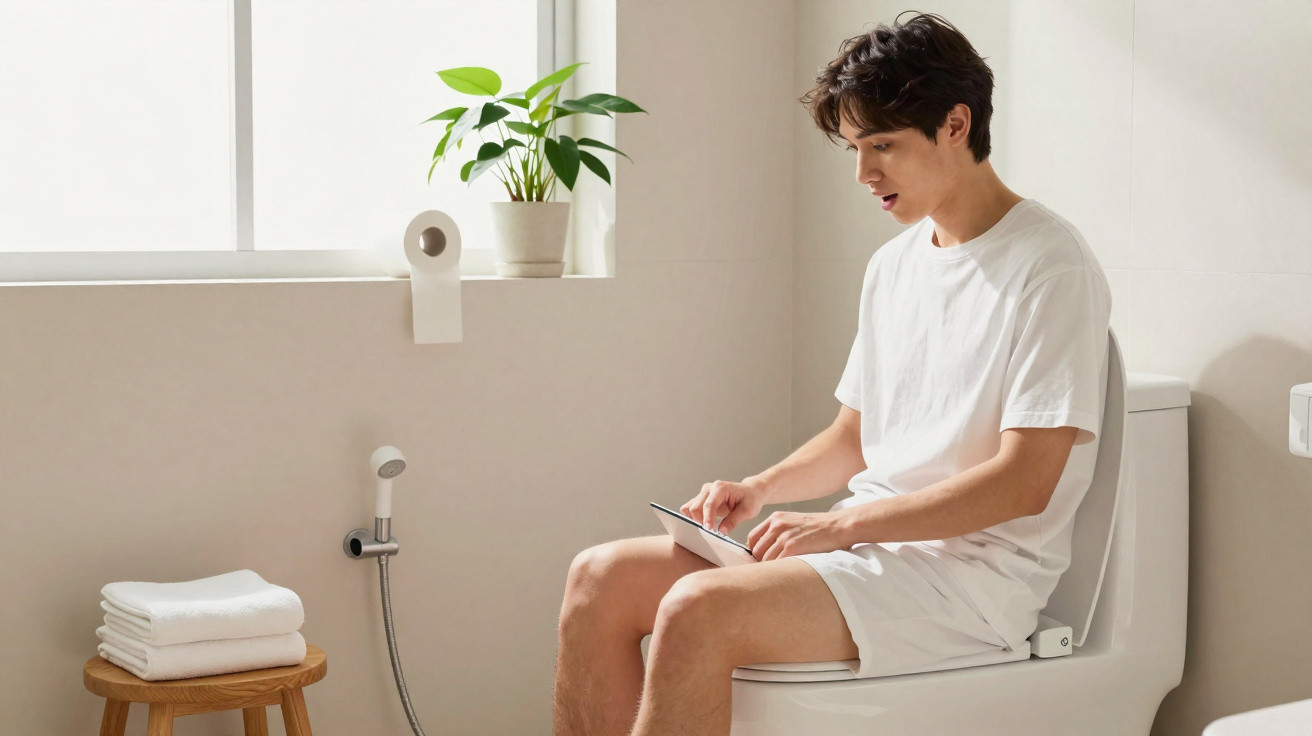
Toilet paper was treated as a household essential for decades - until shortages, rising prices and the climate crisis cast the humble roll in a very different light. Rethinking what we use can cut day‑to‑day costs, reduce waste, save resources and, in many cases, improve hygiene too.
Why toilet paper is suddenly a problem
In Germany, each person sends several kilograms of toilet paper down the drain or into the bin every year. Making it requires vast quantities of wood, water and energy. On top of that, the rolls arrive at supermarkets wrapped in plastic, are hauled around the country by lorry, and in frantic periods are even stockpiled.
"Toilet paper seems harmless - but in total it puts a significant strain on forests, the climate and waste systems."
For years, the German Environment Agency has highlighted that paper consumption noticeably increases the volume of waste. With toilet paper there is an additional issue: it cannot be recycled, because after use it ends up straight in the wastewater.
Supply problems also make headlines from time to time. At the latest, that is when many people realise how dependent they are on a product that has long had workable alternatives. It is hardly surprising, then, that interest in paper‑free options is growing.
Wet wipes, kitchen roll and the rest: why they are not a real alternative
For convenience, many people reach for wet wipes when they want to avoid standard toilet paper. Those wipes are precisely what repeatedly causes trouble in sewage treatment works. Even versions labelled “flushable” break down more poorly than toilet paper and can combine with fats to form thick blockages in the sewer network.
The German Environment Agency has therefore warned for years against disposing of wet wipes in the toilet. The consequences include:
- Blocked pipes in rented flats and owner‑occupied homes
- Higher costs for local authorities due to intensive cleaning work
- Damage to pumps and screens in sewage treatment works
- More plastic and fibre residues entering rivers and seas
Kitchen roll, tissues and other household papers are not a solution either. They disintegrate far less effectively in water, swell up and can clog pipework. Many types also contain additives that have no place in wastewater.
Bidet and shower toilet: how cleaning with water works
In many countries - including parts of Asia and southern Europe - toilet paper was never the first choice. There, cleaning with water is simply part of everyday life. That is also the direction the trend is taking in German‑speaking countries: away from paper and towards the bidet and the shower toilet.
"Water removes residue mechanically - and generally more thoroughly than dry rubbing with paper."
The main options at a glance:
Classic bidet in the bathroom
A traditional bidet is a low basin positioned next to the toilet. You sit or squat over it and clean the intimate area using a stream of water. The upside is very thorough cleaning, often with adjustable temperature. The downside is the space requirement, which is why it is more common in larger bathrooms.
Shower toilet with integrated bidet function
Shower toilets combine a toilet and bidet in a single unit. Beneath the rim is a retractable spray nozzle that starts at the touch of a button. Depending on the model, you can adjust the pressure, temperature and position of the water jet.
Many users report that it feels noticeably cleaner and more comfortable than using toilet paper. After rinsing with water, most people do a quick dry - either with warm air (on more expensive models) or with a cloth.
Bidet shower as a space‑saving compromise
If space is tight, a bidet shower can be fitted. This is a small hand sprayer next to the WC, connected to the water supply. It resembles a kitchen spray hose and can be aimed flexibly.
Benefits of this approach:
- Lower purchase costs compared with a shower toilet
- No extra space needed as with a classic bidet
- Installation is often possible even in existing bathrooms
- Little technology, so relatively low maintenance
Travel bidet and mobile solutions for when you are out and about
Anyone who wants to try the idea first often starts with a travel bidet. These usually look like small bottles or soft containers with a nozzle. You fill them with water, turn them upside down and create a fine spray by squeezing.
Travel bidets offer several advantages:
- No installation and no tools required
- Ideal for renters, camping or travel
- Low cost for testing the method
- Also suitable for sensitive skin or after operations
Many people who first switch to water instead of paper on holiday keep the habit once they are home - and then invest in a fixed bathroom solution.
Is water really enough? What WHO and experts say
The question asked most often in German bathrooms is: is water alone enough to be properly clean? According to the World Health Organization (WHO), cleaning with clean drinking water is hygienically safe when done correctly. The water jet loosens and removes residue mechanically, without heavy rubbing.
"Medical professionals often see advantages in water-based cleaning for the skin - particularly in the sensitive anal and intimate area."
People with haemorrhoids, eczema or very sensitive skin, in particular, benefit from the gentler approach, because paper can quickly chafe and irritate. The key is not to set the water jet too strongly and to use only clear water with no harsh additives.
Drying without disposable paper: the options
After washing, the next question is obvious: how do you dry yourself if you want to avoid toilet paper as far as possible? Several approaches are possible:
| Method | Advantages | Disadvantages |
|---|---|---|
| Standard toilet paper | Immediately available, no washing needed | High consumption, strains resources, more waste |
| Small towels | Reusable, soft, easy to clean | Requires laundry planning and a hygiene routine |
| Cotton cloths / flannels | Very durable, particularly sustainable | Must be collected separately and washed hot |
| Warm-air function in a shower toilet | No extra materials, very comfortable | Only available on more expensive models, needs electricity |
If you choose reusable cloths, it helps to set clear household rules: use once only, then put into a closed container and wash regularly at at least 60°C with biological powder.
How big the environmental benefit really is
Paper‑free methods do not only save pulp; they also cut packaging waste, transport effort and the energy demand of production. There is an additional benefit: the less paper that enters the sewer system, the fewer solids sewage works must separate and dispose of.
The German Environment Agency points out that paper manufacturing is one of the more resource‑intensive industries. Virgin‑fibre toilet paper is especially problematic, because it often involves felling entire trees that would otherwise act as CO₂ stores.
Practical tips for switching in everyday life
If you want to use less toilet paper - or stop using it altogether - it is often easier to change gradually rather than overhaul the bathroom overnight. A few tried‑and‑tested approaches:
- Buy a travel bidet first and use it for only some toilet visits.
- After rinsing with water, still use a small amount of paper at the start for drying, then reduce usage step by step.
- Later, switch to small towels or flannels once everyone feels comfortable.
- If you are buying a new toilet, plan for a model with a shower function.
- Involve housemates openly and agree clear hygiene rules.
Many people find that the new routine feels normal after only a few days. Those with skin issues, in particular, often report less itching and fewer flare‑ups.
Common concerns - and how justified they are
One common objection is whether more water use in the bathroom raises humidity and therefore the risk of mould. In practice, a quick airing after using the toilet is usually enough. If you already pay attention to indoor air quality, you can also use small tricks - such as placing a damp sponge on the radiator, which over time can help keep humidity a little more balanced.
Worries about higher water use also look different when you examine the numbers more closely. The extra litre used with a bidet is barely significant compared with the amount of water consumed behind the scenes in paper production. Anyone who prioritises recycling in other areas can reduce their environmental footprint further.
For many households, some residual toilet paper use will remain realistic. Even so, halving consumption makes a huge difference when multiplied across millions of people in German‑speaking countries - for forests, wastewater infrastructure and personal budgets alike.
Comments
No comments yet. Be the first to comment!
Leave a Comment