
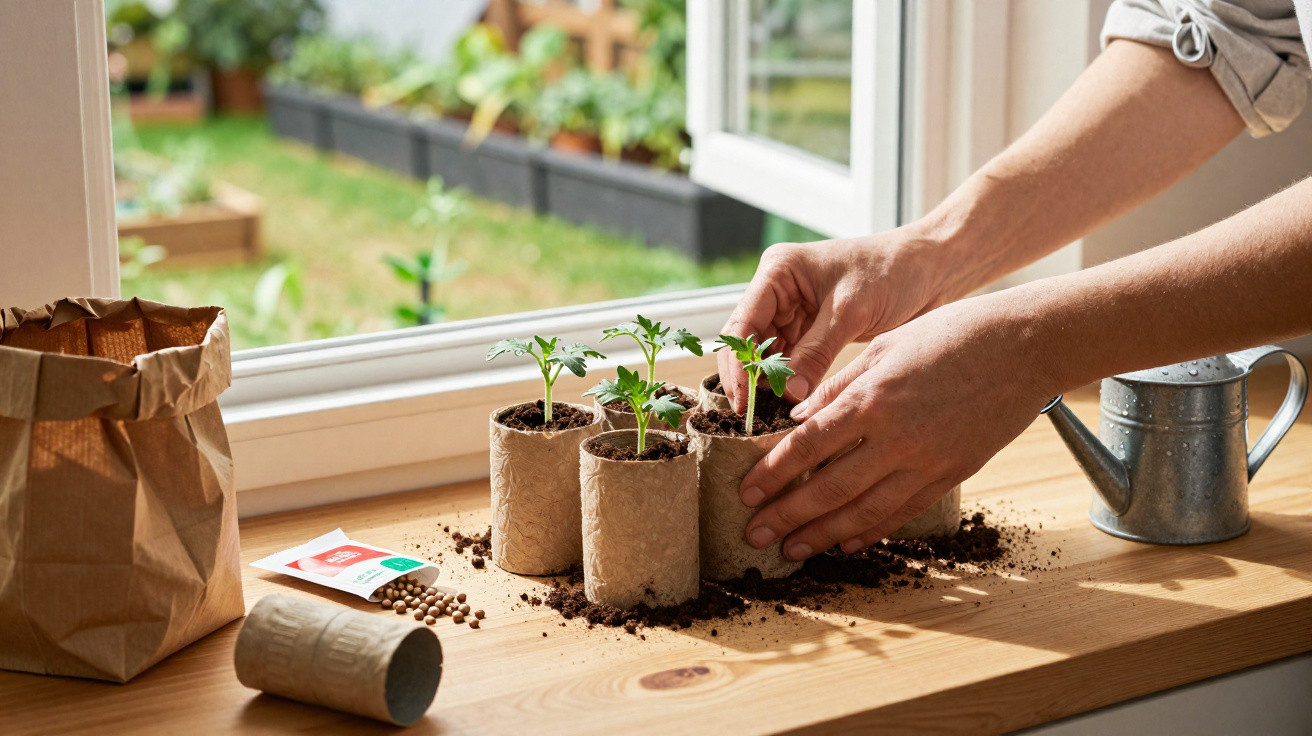
In many homes, empty toilet paper rolls go straight into the bin without a second thought. A gardener on the internet sees them very differently: not as waste, but as ideal mini pots for seedlings. His straightforward idea is currently doing the rounds on TikTok - and it is prompting plenty of people to look at what they throw away in the bathroom in a completely new way.
From toilet paper roll to a tomato patch
The action does not start in the garden, but in the bathroom. That is where the gardener collects his empty paper rolls in a box. What most people would discard ends up on his windowsill later on - as the starting point for the next tomato or courgette harvest.
The method itself is surprisingly easy. In a short TikTok clip, he places a larger cardboard box on the table, cuts a rectangular “window” into one long side, and makes an additional smaller opening. This small hole is later used for watering, so the whole box does not need to be moved.
Next, he lines up several clean toilet paper rolls tightly inside the box. Each roll is filled with loose seed compost and topped with a few seeds - tomatoes, courgettes, or herbs such as basil and parsley. Within minutes, a complete mini nursery is ready to go.
"What looks like leftover rubbish turns into a small, organised seedling station - practical, free and fully compostable."
The box is then placed at a bright window or out on the balcony. The rolls stay upright and stable there until the first shoots appear. Once the young plants are strong enough, the gardener plants them out with the entire roll still around the root ball. The cardboard gradually breaks down in the soil, while the roots simply grow straight through. That way, the plants avoid transplant shock - and he avoids using a pile of plastic pots.
Why the method is proving so popular
In the comments under the video, users are full of praise. Many say they want to try it themselves next spring. For a lot of hobby gardeners, the approach tackles several issues at once: less waste, lower costs, and a genuine sense of achievement when the first home-grown tomato is ready to pick.
There is also a benefit that is often overlooked. People who garden regularly often feel more balanced. Studies show that those who spend time in the garden almost every day tend to feel better and experience less stress than people who never garden. The small ritual of filling the rolls with compost and watching seeds germinate can feel almost meditative.
Step by step: turning rolls into sturdy plant pots
If you want to copy the trick, you do not need specialist tools. A few simple steps are enough.
Materials most people already have at home
- Empty toilet paper rolls, ideally unperfumed and with minimal printing
- A cardboard box (for example, an old delivery box)
- Sharp scissors or a craft knife
- Seed compost or fine, crumbly potting compost
- Seeds of your choice (tomatoes, peppers, lettuce, herbs)
- Water for gentle watering
Preparing the rolls and making them stable
For neat, manageable pots, cut each roll in half. This creates small cylinders around 6–8 cm high. That gives roots some room to develop, while still fitting comfortably on a windowsill.
If you want even more stability, make four short cuts on one end of each roll and fold the resulting flaps inwards to form a base. This helps the rolls stand more securely and makes them less likely to lose their shape when watered.
Arrange the prepared rolls snugly next to one another in a larger cardboard box. Cut a wide opening in one long side so light can enter from the side and you can keep an eye on the seedlings. A smaller opening works well for watering into the box, allowing the rolls to soak up moisture from below.
Sowing properly: keeping seedlings happy
Next, fill each roll with seed compost. This compost is very fine, low in nutrients and free-draining, so seeds germinate evenly and young roots are not “burnt”.
Method:
- Fill the rolls with compost to just below the rim.
- Press the compost down lightly so there are no large air gaps.
- Depending on the plant, add one to two seeds per roll.
- Cover with a thin layer of compost; 1–2 mm is usually enough.
- Moisten with a spray bottle or a very gentle pour.
Place the box somewhere bright but out of harsh midday sun. The compost should remain slightly moist at all times, but never soaking wet. The cardboard also gives a useful visual cue: it darkens a little as it absorbs water.
From windowsill to bed: planting out successfully
As soon as the seedlings have formed two to three true leaves and look sturdy, it is time to move them on. The big advantage of using rolls is that the plant does not need to be pulled out of a pot. You simply lift the entire roll from the box and set it straight into a garden bed or container.
The roll should be planted almost completely under the soil, with the top edge still just visible. Rain and soil organisms gradually break the cardboard down. In the meantime, the roots push through without difficulty and continue growing.
"The young plant keeps growing without transplant stress because the root ball remains undisturbed - a crucial point for sensitive crops such as tomatoes."
Why this method scores on multiple fronts
| Benefit | What it means in practice |
|---|---|
| Cost saving | No need to buy plastic pots, as rolls are available anyway. |
| Less waste | Cardboard is composted in the garden rather than ending up in general waste. |
| Gentler on plants | No repotting shock because the root ball stays in its “pot”. |
| Space-saving | Lots of seedlings fit closely together in a single box. |
| Relaxing routine | Regular care and watching growth can have a calming effect. |
What to watch out for when using toilet paper rolls
As simple as the idea is, it is not entirely fool-proof. If the rolls get too wet, they can soften quickly and topple over. A sturdy outer box and a cautious approach to watering make a big difference.
Rolls with heavy coloured printing or added fragrances are best avoided, so as few unwanted substances as possible end up in the soil. In most households, standard rolls are perfectly suitable.
It is also sensible not to raise every type of plant in cardboard rolls. Fast-growing plants with strong roots - such as pumpkin - may do well at first, but they generally need larger containers relatively quickly or a direct spot in the bed.
More ideas for relaxed, resource-conscious gardening
The toilet paper roll method fits neatly into everyday life for people trying to cut down on plastic and reuse materials. Similar approaches work with kitchen roll tubes, old egg cartons, or uncoated cardboard cups.
For beginners in particular, this style of gardening makes it easy to get started. You do not have to invest in expensive equipment straight away, you see results quickly, and you can test which plants thrive on your balcony or in a small patch of soil using simple materials.
Anyone who explores the topic further will soon come across terms such as “seed compost”, “pricking out” or “direct sowing”. Seed compost is a lightly fed, very loose compost that helps seeds germinate well. Pricking out means carefully separating crowded seedlings so each has more space. With the toilet paper roll method, this step is often unnecessary, because you sow just one or two seeds per roll right from the start.
At its core, the viral trick makes one thing clear: gardening does not have to be expensive or complicated. With a bit of creativity, the bathroom becomes a quiet supply station for the next summer of vegetables - without buying new plastic and with a noticeable boost in satisfaction.
Comments
No comments yet. Be the first to comment!
Leave a Comment