
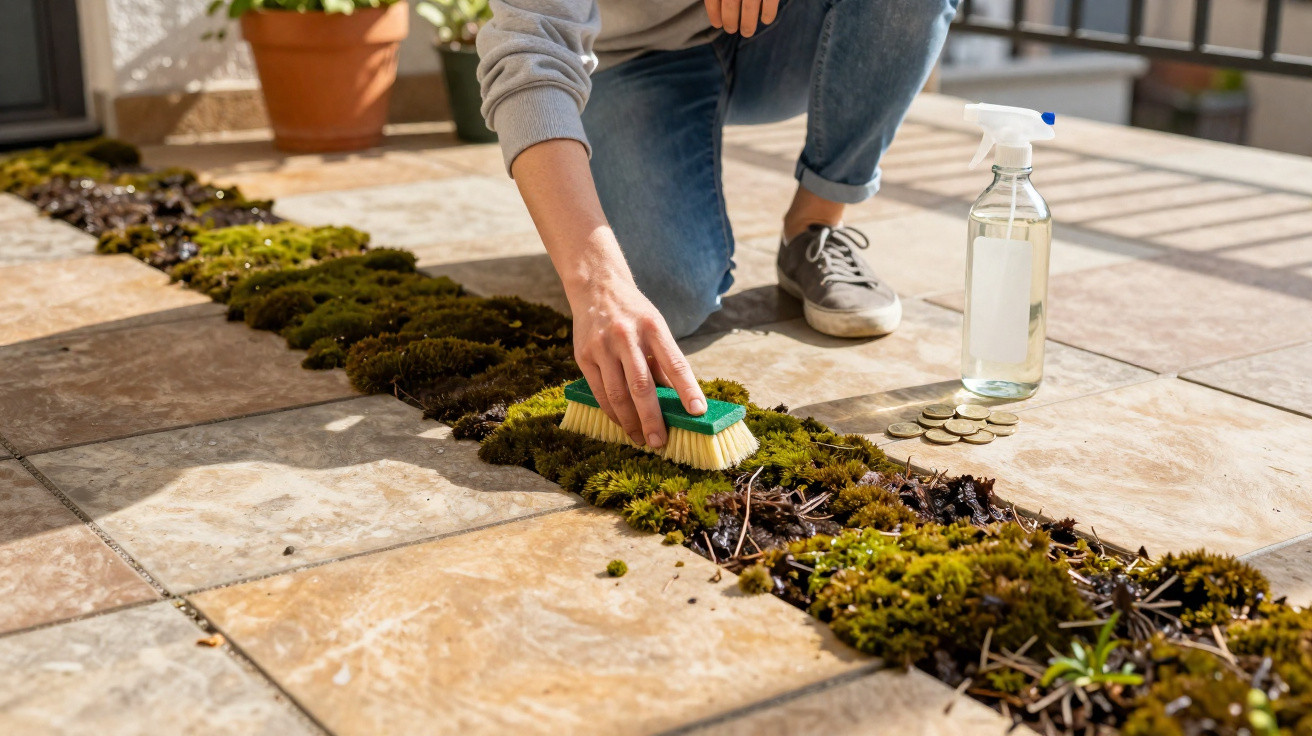
Many homeowners know the scene: as soon as spring arrives, the patio looks more like a bog than a place to relax. Green film, moss and slippery patches turn every step into a gamble. Instead of dragging out a pressure washer or paying for pricey specialist cleaners, a basic kitchen staple often does the job - for just a few pence.
Why moss takes over patios after every winter
Moss and algae thrive in damp, shaded corners. After months of rain, frost and weak sunlight, a typical patio becomes ideal for growth. Porous concrete slabs soak up water, plant pots sit in the same spot for weeks, and puddles take ages to dry out.
It is not just an eyesore. That green layer can make tiles, steps and paths extremely slippery. Children, older people, and anyone who feels unsteady on their feet can be at real risk of a fall.
That is why many guides suggest a pressure washer or chemical cleaners from a DIY shop. Both take time and money - and pressure washing often brings its own frustration, because the spray mist ends up everywhere and can scour out the joints.
"A simple kitchen classic that costs around 30p in the supermarket can loosen moss, algae and light dirt in about an hour - without any equipment at all."
The unexpected helper: simple white vinegar
The method relies on something many people already keep in the cupboard: clear, distilled white vinegar. In UK supermarkets, a bottle works out at roughly 30p, and it is also widely available for very little elsewhere.
The benefit is straightforward: the acetic acid it contains attacks the cell structure of moss and algae. They dry out and become much easier to brush away. At the same time, the solution can work as a contact treatment for fine weeds growing in the joints.
Compared with many harsh chemical cleaning products, this approach is relatively gentle - provided you use it sparingly and protect the surrounding area. Another bonus is avoiding the noisy pressure washer, which also saves electricity and water.
Step-by-step: lifting moss from a patio with vinegar
For an average patio area you do not need specialist tools or complicated mixes. Often, a free morning is enough.
What you will need
- 1 bottle of clear, distilled white vinegar
- A bucket of cold or lukewarm water
- A stiff broom with firm bristles or a scrubbing brush
- Rubber gloves to protect your hands
- Optional: a watering can or scoop to distribute the solution
What to do
- Clear away loose debris: Start by sweeping up leaves, twigs and loose dirt thoroughly. The cleaner the surface, the better the vinegar solution can work.
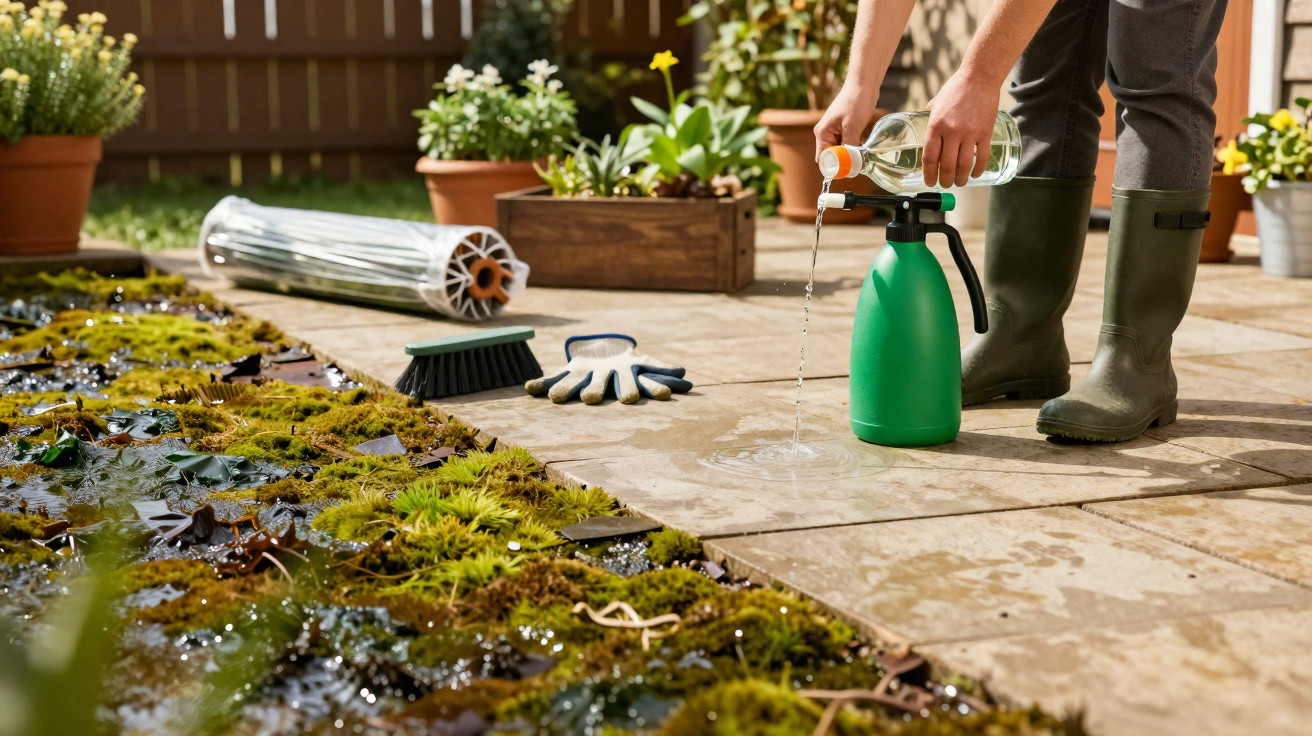
- Mix the solution: In a bucket, combine vinegar and water in a 1:1 ratio. The water should not be hot; lukewarm is fine.
- Wet the surface: Spread the mixture evenly over the patio. Either scoop it straight from the bucket or pour it into a watering can. Dampen stubborn green patches and joints more heavily.
- Allow it to work: Leave the solution on the surface for about one hour. During this time the coating loosens visibly, and the area may look darker at first.
- Scrub: After the waiting time, scrub the slabs firmly with the stiff broom. Remaining moss, algae and grime will lift and can be swept away easily.
- Rinse (optional): If you have pets or children who play outside, rinse the area at the end with clean water so no vinegar residue remains.
"In day-to-day use, half a bottle of vinegar is often enough for a standard patio - bringing the cleaning cost down to just a few pence."
Where vinegar works well - and where it does not
Vinegar is acidic. On many common concrete slabs and basic paving blocks, an occasional spring treatment has no noticeable downside. Sensitive natural stone is a different matter.
| Material | Suitable for vinegar? | Note |
|---|---|---|
| Concrete slabs | usually yes | Use a diluted solution; do not apply too often |
| Basic paving (concrete) | usually yes | Keep an eye on joints; avoid areas that are already heavily washed out |
| Sandstone | risky | Acid can attack the surface; better to avoid |
| Limestone | risky | Reacts strongly with acid; choose gentler products instead |
| Old joints / crumbly mortar | with caution | Test only in a hidden spot; do not use regularly |
If you are unsure, always test a small, inconspicuous area and wait a few days. If the stone discolours or feels rougher, vinegar is not suitable for that material.
How vinegar tackles moss
White vinegar works because of acetic acid. It disrupts the metabolism of moss and algae cells, dries them out, and reduces how firmly they cling to rough surfaces. Unlike strongly alkaline patio cleaners, it does not require a high concentration.
The solution can also scorch small wild plants growing in the joints. The key point: if too much vinegar runs into nearby borders or onto the lawn, it can damage plants you actually want to keep. For that reason, do not clean right up to flower beds, or arrange things so any run-off flows away from planted areas.
How to slow down moss returning
A single spring clean rarely solves the problem for good. With a few simple habits, you can keep green build-up away for longer.
Simple measures to prevent persistent green film
- Let in more light: Trim back overhanging shrubs and branches slightly. Every extra hour of sun helps the surface dry.
- Stop water pooling: Check where puddles remain. Sometimes it is enough to reset a slab slightly or top up with a bit of sand underneath.
- Do not leave furniture in one spot for months: Move large pots or seating occasionally so the surface and joints are not constantly shaded.
- Get into a sweeping routine: Clearing leaves and dirt every few weeks removes the material moss and algae feed on.
Where a surface is very delicate, or vinegar is not an option, many gardeners choose mild patio cleaners based on surfactants, or slow-acting spray-on solutions that work without heavy scrubbing. For particularly stubborn patches, a pressure washer with a wide fan spray can help if you keep enough distance and take care not to damage the joints.
What to consider for safety and the environment
Although vinegar is an everyday product, it can irritate skin and eyes when used in more concentrated form. Rubber gloves help protect your hands, and children and pets should be kept away from the area during the waiting time.
If rain is forecast, it is better to postpone. Heavy showers dilute the mixture too quickly, reduce the effect, and spread the run-off unnecessarily around the garden. A dry, overcast morning is much more suitable.
Some councils apply stricter rules to pavements outside your home. Cleaning liquids - even simple vinegar solutions - may not be allowed to enter street drains. A quick check of local guidance, or a word with your property management company, can prevent problems.
Practical extras for low-stress patio care
If you keep an eye on your patio, you will often only need the big spring clean once a year. Smaller touch-ups in between are usually enough. Useful tools include a hand joint scraper for the odd blade of grass or small moss patches, and a stiff hand brush for the steps by the door.
For allergy sufferers, a cleaner patio can feel like a real relief because fewer spores collect in thick moss cushions. Families with young children also reduce the risk of falls by keeping the surface slip-resistant.
Vinegar is not a substitute for proper repairs: if slabs are loose, joints are completely washed out, or the patio falls the wrong way, the only lasting fix is structural work. As a quick, low-cost helper to kick off the gardening season, though, this kitchen classic can still deliver impressive results - as long as the material and surroundings are suitable.
Comments
No comments yet. Be the first to comment!
Leave a Comment