
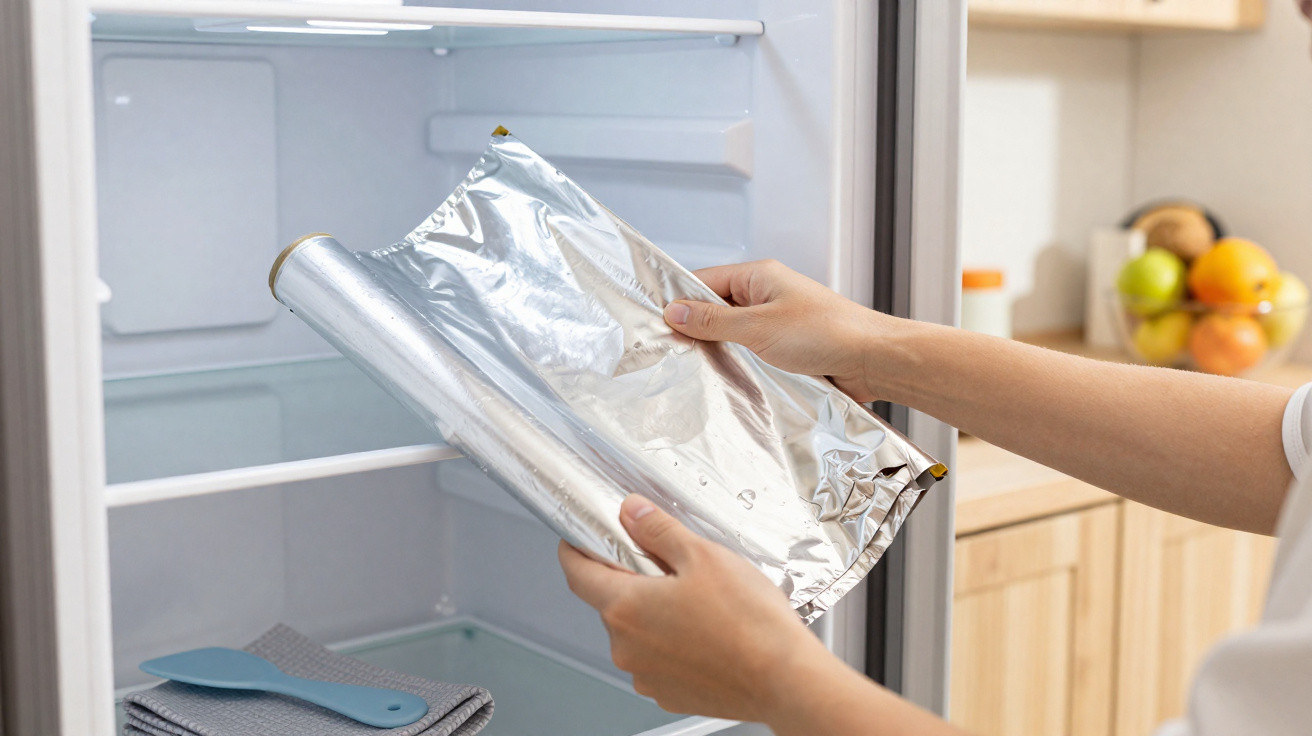
A single roll of aluminium foil can make all the difference.
Many people know the pattern: it starts with a thin film of frost, and before long there is what feels like half a glacier clinging to the inside of the freezer. Drawers begin to stick, the door won’t shut properly, and electricity use creeps upwards. Even so, defrosting keeps getting pushed back. A small aluminium-foil trick won’t stop ice from forming entirely, but it does mean the build-up comes away far more easily - without force and without specialist tools.
Why ice in the freezer is more than just annoying
What looks like harmless frost can end up costing real money over time. Each time the door is opened, warm air enters the freezer. The moisture in that air settles on the freezing-cold interior surfaces and then freezes. Layer by layer, a thick crust of ice builds up.
"The thicker the ice, the harder it is for the cold to circulate inside - the appliance has to run for longer and uses more electricity."
In day-to-day use, that can mean:
- The compressor switches on more often and runs for longer.
- Your electricity bill rises over the long term.
- The appliance’s lifespan may be reduced.
- Drawers and compartments become harder to use.
- Packaging can tear when you pull it past ice that has frozen solid.
There’s another knock-on effect that is often underestimated: if ice prevents the door from closing properly, warm air keeps leaking in. Ice then forms even faster, the internal temperature fluctuates, and frozen food can partially thaw and refreeze - which affects both quality and flavour.
How aluminium foil stops ice sticking to the walls
The idea is straightforward: ice grips best on rough, slightly porous surfaces - the sort found in many freezer compartments. Aluminium foil, by contrast, is smooth and non-porous, so frost cannot “lock in” to the surface in the same way.
"Aluminium foil acts like a separating layer: the ice sits loosely on the foil rather than bonding firmly to plastic or metal."
When the frost layer gets thick enough, or you simply need the space back, you can pull away the foil with the ice in one go - a bit like peeling off wallpaper. It saves time and frustration, and it lowers the risk of damaging the interior by using a knife or scraper.
How to apply aluminium foil correctly inside the freezer
For the trick to work properly, the preparation matters. A few careful minutes at the start can prevent a lot of hassle later.
Step-by-step instructions
- Empty the freezer completely and unplug it.
- Remove any existing ice in full - ideally by letting it defrost in a controlled way.
- Dry the interior thoroughly, especially the walls and ceiling.
- Cut aluminium foil to size for the back panel, the top, and any areas that regularly ice up.
- Press the foil on smoothly, push out air bubbles, and firmly smooth down the edges.
Water and lingering damp are the biggest enemies here. If you apply foil to a wet surface, it will quickly lift, and ice will form between the foil and the wall. A fully dry interior is therefore essential. If you want to speed things up, use a soft cloth - or a hairdryer on a low, lukewarm setting (keep your distance) to help.
Where aluminium foil is most worthwhile
Not every part of a freezer causes the same amount of trouble. A quick look inside will usually show where foil will have the biggest impact.
| Area | Typical problem | Benefit of foil |
|---|---|---|
| Back wall | Heavy frost build-up, bags freeze in place | Ice can be removed in one piece; no more frozen-in bags |
| Upper section | First thick layer of ice; drips freeze | Less effort when defrosting; the layer releases more easily |
| Near ventilation slots | Air passages block; uneven cooling | Ice is less likely to keep openings blocked |
If you only have a small amount of foil available, focus on the back wall and the ceiling. Ice usually starts there and then spreads outwards into the compartment.
How often you should replace the foil
This approach won’t make a freezer maintenance-free, but it does make the job far more manageable. It’s sensible to take a quick look inside regularly - ideally when you are checking what food you have stored.
At the latest, when:
- clear tears or holes appear in the foil,
- a thicker layer of ice is hanging on it,
- or the edges start lifting and curling,
you should replace the foil layer. Many households find changing it every few months works well. If you freeze a lot, open the door frequently, or have an older appliance, you will probably need to do it more often.
Protecting the appliance’s interior lining
One advantage that often gets overlooked is that the foil also acts as a protective film for the real inner wall. If you attack ice with a spoon, knife, or hard scraper, it is easy to leave fine scratches in plastic or the coating.
"Every scratch makes the surface rougher - and therefore the perfect base for new frost."
With foil in place, tools are less likely to touch the original surface at all. Even if you need to help a little when peeling the ice away, the actual wall remains protected. Over time, the compartment stays smoother, and future ice is slightly less likely to cling as firmly.
How to reduce ice build-up even further
Aluminium foil does not remove every cause of frost; it mainly reduces the consequences. If you want to go a step further, a few everyday kitchen habits can help.
- Wrap food properly: Open containers add extra moisture to the freezer.
- Avoid constantly opening the door: Try to put items in or take them out in one go.
- Don’t freeze hot food: Let it cool completely first, then place it in the compartment.
- Check the door seal: Worn or split seals let warm air in.
If you already keep an eye on how long opened foods remain safe in the fridge, use that routine to glance into the freezer as well. Less overfilling means the door closes more easily, air can circulate better, and ice accumulates more slowly.
When aluminium foil is less suitable
In some appliances, this trick is only useful to a limited extent. No-frost freezers, for example, rely on air circulation and automatic defrost cycles. Loose foil can interfere with airflow or create noise. In those cases, only apply foil where it cannot cover ventilation slots.
Very small freezer boxes inside a fridge can also leave too little room to press the foil on neatly. If you use foil there, take extra care to keep it smooth and free of wrinkles so packaging does not snag or tear on sharp edges.
A low-cost trick with a noticeable effect
A roll of aluminium foil is already a kitchen staple in most homes. Used in the freezer, it becomes a simple way to deal with thick ice build-up, sticking drawers, and overworked compressors. The science is basic, but the day-to-day benefit is clear: less scraping with bowls and tools, more usable storage space, and a freezer compartment that is much easier to keep clean.
If you put in a little patience during the initial set-up, you will benefit every time you open the compartment afterwards. Once it is in place, you typically only think about the foil again when the frost lifts off like a thin sheet - in seconds rather than during a rainy Saturday spent with towels, a hairdryer, and an ice scraper.




Comments
No comments yet. Be the first to comment!
Leave a Comment