
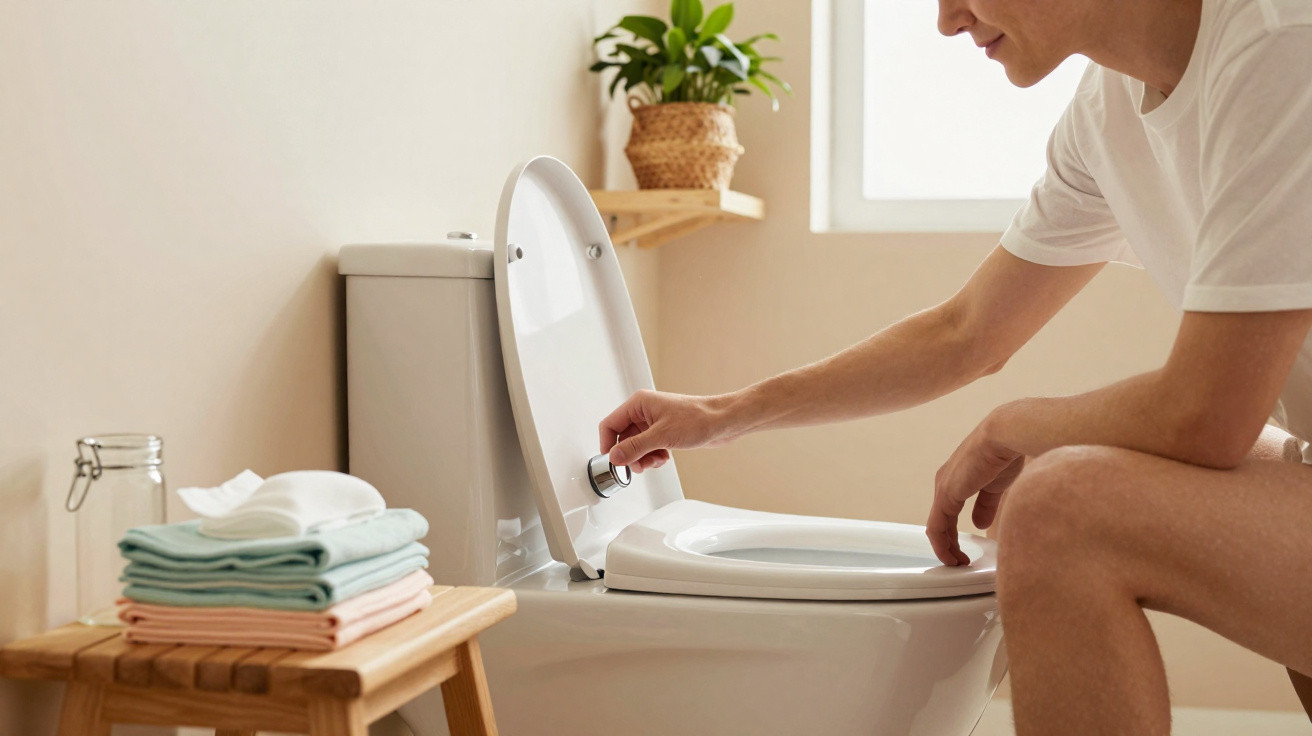
Toilet paper was long seen as non-negotiable. But after supply shortages, rising prices and increasingly heated arguments about resource use, more and more people are asking a fair question: can this be done more cleanly, more cheaply and with less waste? Yes - and most alternatives are far less unusual than many assume.
Why toilet paper is on the way out
Toilet paper may look innocuous, but it carries a striking environmental footprint. Manufacturing it consumes vast amounts of timber, water and energy. On top of that come plastic packaging, transport emissions and the burden it adds to wastewater systems.
"Anyone who stops using toilet paper - or cuts back significantly - reduces pressure on resources, saves money and often even improves their intimate hygiene."
According to the German Environment Agency (Umweltbundesamt), heavy paper consumption noticeably increases both waste and resource strain. Each roll is used up within days - and ends up not in a bin, but in the sewer system. While the cardboard tube can be reused, the true issue remains the sheer volume of paper being flushed away.
Wet wipes and kitchen roll? A bad idea
When toilet paper runs low, many people quickly switch to wet wipes, especially if they believe it leaves them feeling “cleaner”. Specialist authorities, however, clearly advise against this approach.
- Wet wipes break down very slowly in water.
- They can block pipes and pumps.
- Wastewater treatment works have to filter out contaminants with considerable effort.
- Disposal pushes up operating costs for sewage utilities.
Even products marketed as “flushable” are, in real-world use, often problematic. The German Environment Agency strongly recommends not disposing of wet wipes via the toilet. Tissues, kitchen roll and other household wipes are similarly unsuitable: they belong in general waste, not down the loo - and they are neither an environmentally sound nor a hygienic long-term substitute.
Bidet instead of a roll: how cleaning with water works
The most effective alternative to toilet paper uses no paper at all: water. In many countries, rinsing with water has been the norm for decades. In Germany, bidets and dedicated shower toilets (wash-and-dry toilets) have only become noticeably more common in bathrooms in recent years.
The concept is straightforward: after using the toilet, a jet of water rinses the area, removing residue gently through mechanical action. When used correctly, the World Health Organization considers this method hygienically safe - and in many situations more thorough than dry wiping with paper.
"Cleaning with water is often kinder to the skin, reduces irritation and lowers the need for care products."
Which bidet options are available?
Depending on your home set-up, there are solutions ranging from permanently installed fixtures to compact options you can pack for travel.
| Option | Suitable for | Benefits |
|---|---|---|
| Standalone bidet | Larger bathrooms with spare space | Comfortable, often with temperature control |
| Toilet with bidet function (shower toilet) | New builds, bathroom renovations | All-in-one unit, high comfort, sometimes with drying |
| Bidet attachment for an existing toilet | Rented homes, budget options | Cheaper, retrofit-friendly, usually no major alterations |
| Bidet spray / handheld shower | Small bathrooms, flexible installation | Space-saving, quick to fit, minimal technology |
| Travel bidet | On the go, camping, hotels | Portable, no installation required, ideal for trying it out |
Bidet attachment on your existing toilet: making the switch day to day
If you do not want to overhaul half the bathroom, most people begin with either a bidet attachment or a handheld spray. Both can often be connected to the toilet’s existing water supply without much effort.
A handheld spray is fitted beside the toilet, similar to what is common in many South-East Asian countries. A lever controls the water pressure, allowing you to direct the stream precisely where needed. Depending on the model, installation can take just a few minutes and is well suited to compact bathrooms.
Bidet attachments sit directly on the existing toilet bowl. Some versions work without electricity, while others offer heated seats, adjustable nozzles or automatic cleaning programmes. Prices range from basic plastic attachments right through to high-end shower toilets.
Cleaning with water: is it really enough?
The key question for many sceptics is whether water alone genuinely feels clean. Research and everyday experience suggest it does. Water loosens residue efficiently, reaches skin folds and is far less harsh on sensitive mucous membranes than vigorous rubbing with paper.
Dry wiping often removes only part of the soiling. People with sensitive skin, haemorrhoids or chronic bowel conditions in particular frequently find water-based cleaning far more comfortable.
"In practice, many people use water for cleaning and only a minimum of paper or cloth for drying."
Drying without disposables: cloth instead of paper
Many people do not want to skip drying altogether. Toilet paper can be used for that, but it can also be replaced. Anyone aiming to be consistently resource-efficient can switch to small towels or soft cotton cloths.
- Keep several small cloths ready, for example on a shelf or in a basket beside the toilet.
- Collect used cloths in a sealed container.
- Wash them regularly at at least 60°C.
This cuts paper use dramatically without sacrificing comfort. At the same time, it reduces packaging waste, and bulky multipacks of paper need carrying home far less often.
How much waste toilet paper really creates
Germany is among the countries with particularly high per-capita consumption of hygiene paper. Each roll does not only add to wastewater load; it also requires energy in production, chemicals for pulp processing and plastic wrapping at the retail stage.
Empty cardboard cores can be repurposed around the home - for crafts or as cable organisers, for example. Yet that barely touches the central problem: the enormous resource demand. Anyone who wants to make a meaningful difference has to reduce paper use itself.
Switching step by step: how it works in real life
No household needs to become completely paper-free overnight. Many people manage well with a phased approach:
- Start by trying a travel bidet to get used to cleaning with water.
- If you like it, install a bidet attachment or a handheld spray.
- Use toilet paper only for drying.
- Over time, move to cloths for drying.
In this way, weekly consumption falls gradually. Some households eventually keep just a single emergency roll in the cupboard - rather than several large multipacks.
What consumers should know about hygiene and risks
A few basics help the changeover go smoothly. The water stream should not be set too forcefully, so as not to irritate delicate skin. Ideally, use clean drinking water or appropriately treated water.
Bidet attachments and handheld sprays should be cleaned regularly to prevent build-up and germs; manufacturers usually provide clear instructions. If you use cloths, wash them separately from underwear and bath towels, ideally with a full-duty detergent and a hygiene laundry additive if recommended.
Anyone with an acute infection in the intimate area, fresh surgical scars or severe symptoms should, if in doubt, seek medical advice before switching over completely.
More comfort, less stress: why switching is worth it
Alongside environmental and cost reasons, there is a third factor: comfort. After a brief adjustment period, many users report feeling cleaner, experiencing less itching and needing fewer ointments or creams. And anyone who relies on water feels far less pressured by shortages or empty supermarket shelves.
Overall, it becomes clear that the era of relying solely on toilet paper is coming to an end. Water-based alternatives are now practical for everyday use, technically mature and available for almost any bathroom - from student accommodation to a detached house. Those who take the first step often quickly realise how dated a paper-only routine feels.
Comments
No comments yet. Be the first to comment!
Leave a Comment