
The trend has side effects.
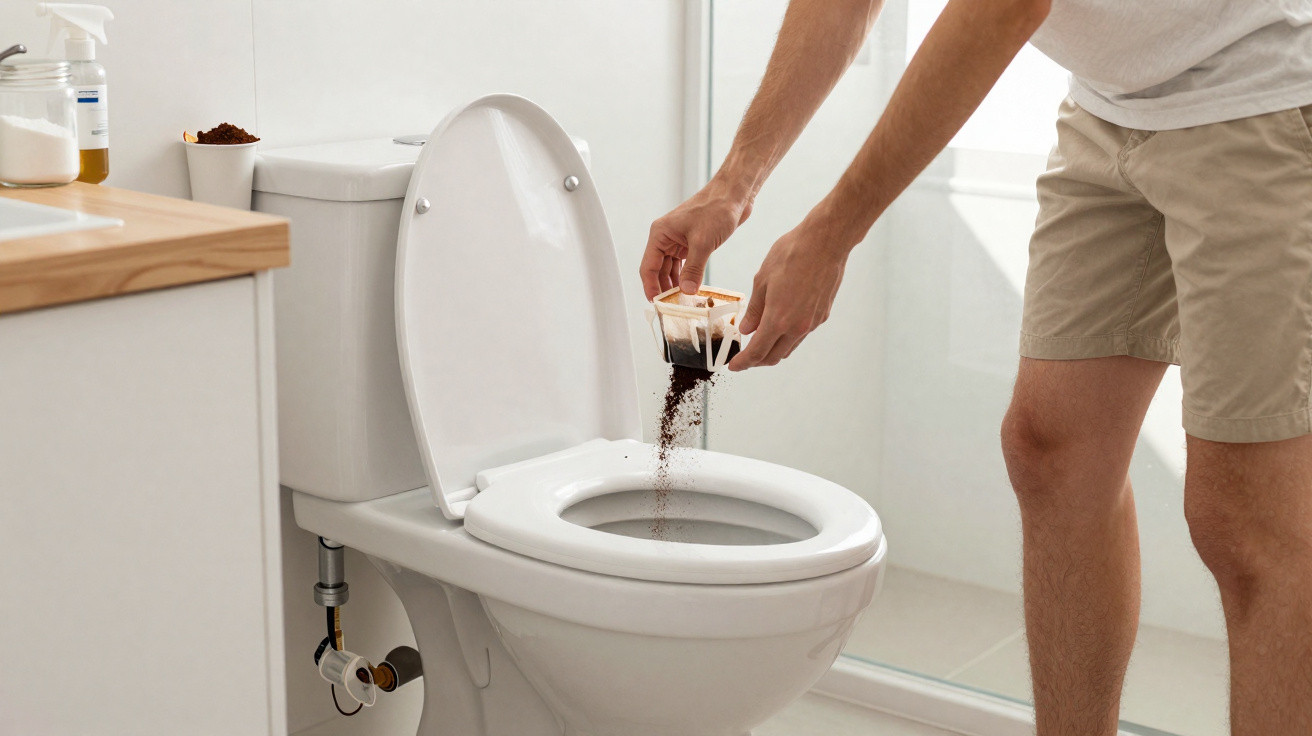
Across social media, videos and household “hacks” keep promoting the same idea: don’t throw away the coffee grounds from your morning brew-tip them straight into the toilet instead. Do it regularly, the claim goes, and you’ll need to clean less, spend less on cleaning products, and cut down on waste at the same time. It sounds like the perfect lifehack-until you consider what’s happening inside the pipework.
How the coffee-grounds-in-the-toilet trend started
Coffee grounds have long had a reputation as a do-it-all household helper: absorbing smells in the fridge, doubling as a skin scrub, or helping out in the garden as a fertiliser. Moving from these uses to the WC was almost inevitable.
The method is straightforward. You put a small amount of coffee grounds into the toilet bowl, spread it around with the toilet brush, and then flush. Online, many people report that light marks lift more easily and that the bowl seems to smell fresher.
"Coffee grounds act like a very fine abrasive and can genuinely remove light marks in the bowl – without any conventional cleaner."
There’s also the fragrance angle: coffee aromas can mask unpleasant smells for a short time. Some people even add a little coffee grounds before going away for a longer trip, hoping the bathroom won’t smell musty when they return.
On paper, the trick ticks several boxes at once: fewer chemicals, less waste, and lower costs. That combination is exactly why the tip spreads so quickly-often without any mention of possible damage.
What coffee grounds actually do in the toilet
A mild cleaning effect in the bowl
Inside the bowl, you may well see a difference. The fine particles lightly rub the ceramic and can shift thin films or small marks that might otherwise leave a faint grey haze. However, coffee grounds are far too gentle to tackle stubborn limescale.
- good for fresh, light soiling
- not suitable for a thick limescale ring
- does not replace a proper cleaner for heavily soiled toilets
When it comes to odour, the effect is mainly short-lived. Right around the bowl, it smells like coffee at first, pushing the usual toilet smell into the background.
The hidden issue: what happens in the pipes
Once the coffee grounds disappear past the U-bend, the situation changes. The grains don’t dissolve in water-they remain a solid material. That’s why many water companies and wastewater services list coffee grounds in their advice as something that doesn’t belong in the toilet, alongside items like wet wipes or food waste.
Tradespeople repeatedly describe the same pattern: coffee grounds combine in the pipes with fat, limescale and paper. Over time, this can turn into a tough, compact blockage that reduces the pipe’s effective diameter and eventually restricts flow.
"Flushing once is usually not a drama – it’s the accumulation of small amounts over months that becomes a problem, especially in older pipework."
It becomes particularly risky wherever water already drains slowly or tends to back up: older properties with lots of bends in the pipe runs, narrow waste pipes, shared stacks in blocks of flats, or private sewage systems.
Where the coffee-grounds trick is genuinely risky
If you live in a newer home with generously sized drainage, you might not notice anything for a long time. In more sensitive systems, though, this fashion can become expensive.
Specialists are especially clear about avoiding coffee grounds in the toilet in these situations:
- very old pipework or drains that are already slow
- blocks of flats with shared soil stacks
- properties with a cesspit or small private treatment system
In these cases, even a small routine-such as adding one portion of coffee grounds to the loo once a week-can gradually build a restriction over months. The result can be gurgling pipes, unpleasant smells and, in the worst case, a professional drain clean-out.
How to use coffee grounds without ruining the toilet
If it absolutely has to be the toilet
Some DIY blogs still back the idea, but only with strict limits. If you insist on trying it, the advice is to use a very small amount only very occasionally, and then follow up immediately with plenty of clean water-ideally adding an extra bucket of warm water afterwards.
Recommended precautions:
- Use it very rarely and only in tiny amounts.
- After brushing, flush once as normal.
- Then pour in a bucket of water from waist height to force a stronger rinse through the pipes.
- Avoid it entirely if you have older pipework or a cesspit.
Even so, many experts recommend removing the toilet from the list of “uses” altogether. If you want to be on the safe side, keep coffee grounds away from drains.
A bathroom odour absorber - with no flushing
If you simply like the smell of coffee, you can dry the used grounds and leave them in the bathroom in an open container-such as a small dish on the cistern or on a shelf. Used this way, coffee grounds act as a passive odour trap without putting any stress on the pipework.
Unlike using them in the bowl, nothing enters the drains. After one to two weeks, you can dispose of the old grounds easily in your general rubbish or on the compost.
Better everyday uses for coffee grounds
| Area | How to use coffee grounds |
|---|---|
| Kitchen | Rub onto chopping boards to neutralise onion and garlic smells |
| Garden | Work lightly into the soil or add to the compost to supplement organic material |
| Household | Leave in an open dish as an odour binder in the fridge or shoe cupboard |
| Cosmetics | Mix with a little plant-based oil as a body scrub (test skin tolerance first) |
Important: even in the garden, keep quantities reasonable. Large amounts of pure coffee grounds can briefly make soil more acidic. It’s best to mix them with other organic matter or add them straight to the compost heap.
Why supposedly eco-friendly hacks spread so quickly
The craze for coffee grounds in the toilet shows how powerful simple messages can be: “zero waste”, “natural” and “saves money”. Many people share these tips with good intentions, without questioning the technical side. Pipe diameter, flow speed, build-up-none of it sounds exciting, until a plumber turns up with a drain auger.
Especially with hacks involving wastewater, heating or electricity, a quick reality check pays off: what do water companies say? What do installers report? Does the tip mainly appear in viral clips, or in professional guidance?
A practical rule of thumb is: if something isn’t clearly labelled as “suitable for toilets”, it’s better placed in the bin, on the compost, or in your recycling-rather than flushed down the ceramic bowl.
Practical alternatives for a clean, fresh-smelling WC
If you want to reduce household chemicals, you can lean on proven options that don’t burden the drains. For example:
- a toilet brush and hot water for day-to-day cleaning
- diluted vinegar essence against limescale (do not use on natural stone)
- regular, thorough flushing, such as after a longer time away
- certified eco cleaners used sparingly
For a fresher smell, consider neutral odour absorbers instead of coffee grounds-such as activated charcoal, bicarbonate of soda in a small dish, or purpose-made fragrance stones that don’t go into the drain.
That way, the toilet stays clean and smells more pleasant-without quietly creating a problem in the pipework that can end up costing far more than any cleaning product you thought you’d saved.
Comments
No comments yet. Be the first to comment!
Leave a Comment