
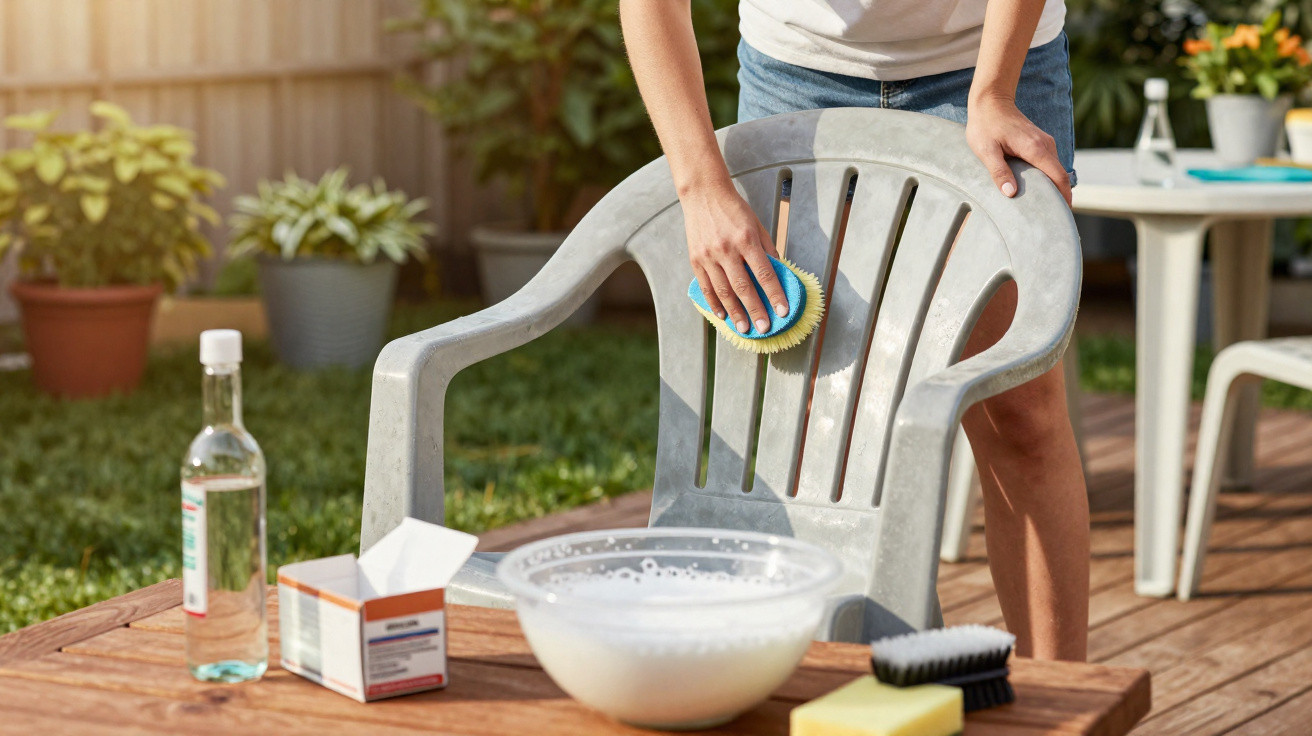
With a simple mixing trick from the kitchen cupboard, you can often achieve surprisingly big results.
Plenty of people pull out the garden table in spring with real anticipation - and then get a nasty surprise. The once bright white chairs have turned grey, patchy and yellowed, suddenly looking far older than they are. Before you plan a trip to the DIY store, it’s worth checking your own cleaning cupboard first: a low-cost blend of everyday basics can noticeably revive dull plastic.
Why plastic garden furniture turns grey so quickly
On the packaging, plastic furniture is often sold as the ideal solution: it won’t rust, it doesn’t need painting, and it can handle rain and hail. In reality, it can look tired after just a year or two. The reason is the material’s surface.
Sunlight, rain, temperature swings and dust constantly wear away at plastic. UV radiation fades it; the surface becomes rougher and slightly porous. Dirt, pollen, algae film and mould spores then settle into these tiny indentations. A white chair ends up looking grey, blotchy or yellow.
It’s important to distinguish between something that’s dirty and something that’s genuinely damaged:
- Only dirty: the surface still feels smooth, but looks dull, grey or greenish, with individual marks.
- Structurally damaged: the plastic looks chalky, crumbles when touched, shows cracks or has already broken in places.
In the first case, a thorough clean is well worth it. In the second, it’s more about “getting one more season” out of the piece - or replacing it straight away. Especially with chairs, safety matters more than appearance. If you can see cracks or a partially broken backrest, don’t put weight on it.
"A quick safety check before cleaning prevents painful surprises at the next barbecue."
The kitchen mix that brings plastic chairs back to life
For typical yellowing or dull plastic garden furniture, a blend of three basics is usually enough: soapy water, clear household vinegar and bicarbonate of soda. Most homes already have these to hand.
What you’ll need
- Warm water (around a bucket with 3 litres)
- Clear household vinegar
- Sodium bicarbonate (often sold as bicarbonate of soda)
- Liquid soap, soft soap, or a little washing-up liquid
- Optional for stubborn cases: a clay-based cleaning stone / polishing stone
For a bucket with roughly 3 litres of warm water, this mix works well:
- approx. 250 millilitres of vinegar
- 3 tablespoons of bicarbonate of soda
- a generous squirt of soap or washing-up liquid
The mixture will start to foam slightly - that’s normal. Use it straight away so it doesn’t lose effectiveness.
Step-by-step deep-clean method
- Remove loose dirt: sweep off cobwebs, leaves and dust with a hand brush or a dry cloth.
- Apply the mixture: dip a soft sponge cloth into the bucket and lather the furniture thoroughly.
- Leave to work: on very dirty or greyed areas, let it sit for 10–15 minutes.
- Gently scrub: go over it with a soft sponge. Only use an abrasive pad very carefully.
- Treat yellow patches: on white, heavily yellowed plastic, slightly increase the bicarbonate of soda and apply it directly as a paste.
- Rinse well: wash everything off carefully with a garden hose or watering can.
- Dry: wipe with a microfibre cloth to prevent water marks.
For extremely dirty white furniture, a cleaning stone can help. The fine clay polishing compound lifts stubborn deposits without scratching the material as harshly as steel wool or coarse scourers. Even so: test it first on an inconspicuous spot.
"The mix of soapy water, vinegar and bicarbonate of soda tackles grease, green algae film and grey haze at the same time - often one treatment per season is enough."
Coloured plastic needs a slightly gentler approach
Brightly coloured plastic furniture is more sensitive to overly aggressive cleaners. If you use too much bicarbonate of soda or other strongly abrasive products, you risk fading the colour.
For coloured surfaces, a combination of warm water, soap and a little vinegar is usually sufficient. Use bicarbonate of soda far more sparingly. Instead of scrubbing hard, rely on dwell time: let the solution sit briefly, then wipe with a soft sponge.
If you’re unsure, always test first on the underside or the back of a chair. That way you can see how the plastic reacts without causing visible damage.
Big mistakes that permanently ruin plastic
Many popular “hacks” online do more harm than good. Some products attack the plastic or make it more vulnerable in the long run.
| Mistake | Result |
|---|---|
| Bleach or chlorine-based cleaners | severe fading; material becomes brittle |
| Strong solvents, limescale removers | surface becomes rough; colour turns patchy |
| Steel wool, wire brushes, coarse scouring pads | deep scratches; dirt clings even more afterwards |
| Pressure washer at close range | material loss, hairline cracks, sometimes actual holes |
| Rubbing on cooking oil to create “shine” | sticky film that attracts dust and dirt |
The apparent instant effect from oil or silicone spray is misleading. The shine doesn’t last, and afterwards every pollen grain and speck of dust sticks even better. Over time, the piece ends up looking dirtier than before.
How to keep the garden table clean for longer
If you look after furniture a little after a deep clean, you can avoid a big job in mid-summer. A small, simple routine is usually enough.
In-season care
- Wipe down every two weeks with a cloth and mild soapy water.
- Remove spilled drinks and bird droppings as quickly as possible so nothing stains.
- If you can, position furniture under a parasol, gazebo or roof overhang.
Direct sunlight doesn’t just affect wood and metal - it also wears plastic over time. Light shade significantly reduces UV exposure and slows ageing.
Helping furniture get through winter
- Clean thoroughly before storing and let everything dry completely.
- Store in a garage, shed, or under a breathable cover.
- Choose a cover that won’t trap standing water.
If you don’t have indoor storage, at least use a sturdy protective cover. Constant damp and frost otherwise encourage fine cracks where dirt and algae will settle again later.
When painting is worth it - and when it’s better to bin it
Some plastic pieces look much better after cleaning but never become properly white again. If the furniture is structurally sound but visually tired, a specialist paint for plastic can be an option. DIY stores sell spray paints that adhere to PVC and similar materials.
Check these points first:
- No cracks, no damaged legs or backrests
- Surface is free of grease and dirt after cleaning
- Furniture is stable enough to last several more seasons
If the plastic is already crumbling, paint only disguises the problem - it won’t restore strength. With chairs and benches that must take weight, replacement is the only sensible route.
Why vinegar and bicarbonate of soda work so well
The success of this kitchen mix has a straightforward chemical basis. Vinegar helps dissolve limescale, light rust marks and many mineral deposits. Bicarbonate of soda binds odours, breaks down grease and provides mild abrasion. Combined with soap, you get a cleaner that tackles multiple types of grime without stressing the plastic as much as harsh specialist products.
If you have sensitive skin, wear gloves when using it. The mixture rarely causes problems, but longer cleaning sessions can dry out skin. It’s also best to keep children and pets away from the bucket - not because it’s acutely dangerous, but to prevent curious tasting.
With a little time, a kitchen bucket and manageable effort, many would-be “tip candidates” on balconies and patios can look presentable again - which ultimately helps both your wallet and your recycling bin.

Comments
No comments yet. Be the first to comment!
Leave a Comment