
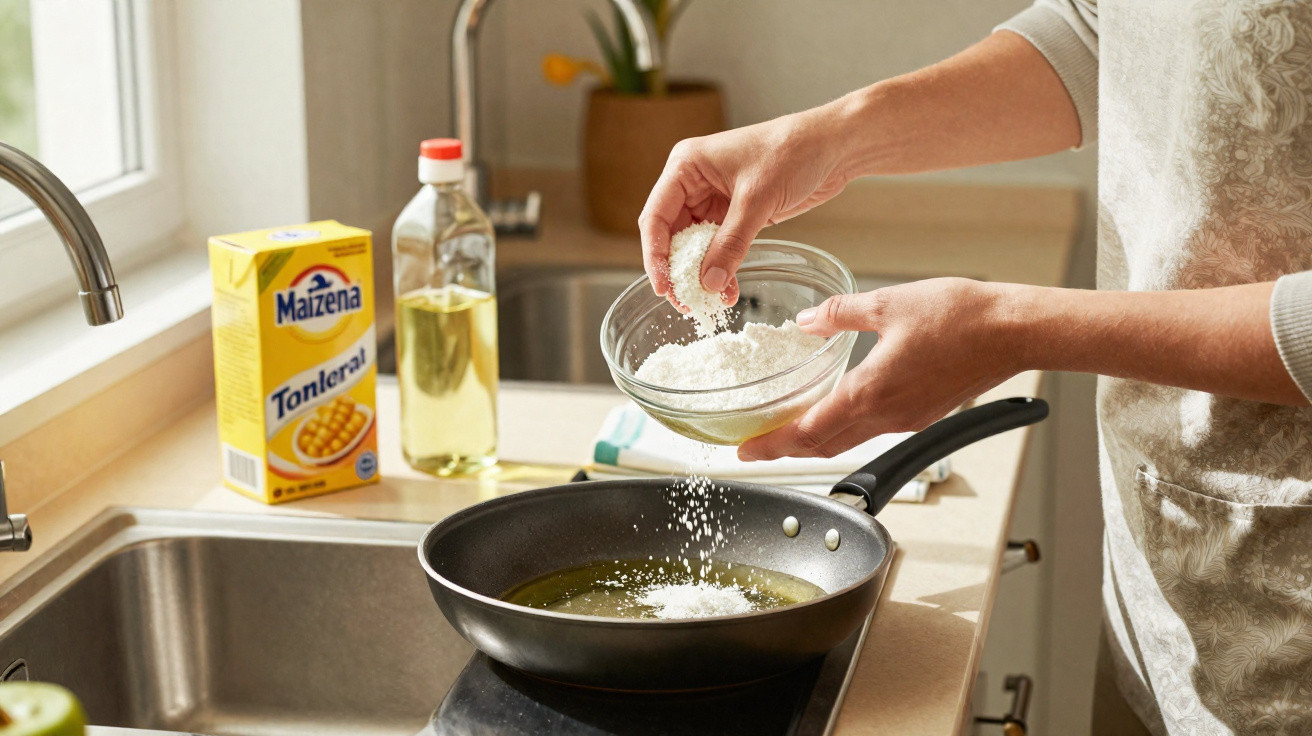
Many households routinely pour frying oil down the sink. A quick flush of hot water afterwards, and it feels dealt with - until the drain suddenly blocks, the water starts backing up, and the plumber’s bill runs into three figures. That was exactly the moment one customer received an unexpectedly simple, highly effective tip from her plumber: an unremarkable powder from the kitchen cupboard.
How frying oil slowly but surely cripples a drain
Tipping oil into the sink can seem harmless in the moment: the pan or deep-fat fryer is empty, the oil is still hot, so down it goes. A little later, the water appears to run as normal. No problem, you tell yourself. But inside the pipework, something very different is happening.
At first, the hot oil slides through the waste pipe as a liquid. Then it meets cooler water and, more importantly, the much colder pipe wall. That’s when it begins to set. It starts as a thin coating, then becomes a progressively thicker layer. Every time you fry again, you add more oil - and more of it sticks to that greasy lining.
Over time, a proper fatty cushion forms inside the pipe. The internal diameter narrows, water drains more slowly, and food particles catch and build up, making the problem worse. Eventually you end up with a greasy plug that can almost completely block the drain.
In many kitchens, just a few months of disposing of oil the wrong way is enough to noticeably narrow the pipes - the damage grows out of sight.
Local drainage services regularly warn about these fat deposits, which can grow into huge blocks in sewers. These so-called “fatbergs” cost towns and councils millions every year. On a smaller scale, the exact same thing happens in domestic kitchens.
Warning signs: how a pipe complains before it blocks completely
Before a drain stops working entirely, it usually gives clear signals. Taking them seriously in time often avoids an expensive emergency call-out.
- Water drains more slowly than it used to.
- There’s a strange gurgling from the trap (U-bend) or the pipe.
- A rancid, greasy smell sometimes wafts up from the drain.
- When washing up, small oily patches form on the water in the sink.
All of these suggest a grease barrier has already started to build. If oil continues to be poured into the pipe, the situation worsens step by step. In the worst case, the plug isn’t sitting right under the sink but much deeper in the system. Then the plumber may need to use drain rods, a spiral auger, or high-pressure jetting - and the cost climbs fast.
Why frying oil does not belong in wastewater
Blocked pipes aren’t the only issue. The second is environmental impact. A single litre of cooking oil can contaminate large amounts of water. In sewage treatment works, removing fats requires extra processing. If oil reaches rivers or lakes, it can form a film on the surface and harm plants and wildlife.
For that reason, many recycling operators explicitly point out that cooking oil should not go into the wastewater system and should never be dumped outdoors. Disposing of frying oil correctly protects your own pipework and reduces the burden on treatment plants and waterways.
The plumber’s trick: make frying oil harmless with cornflour (Maizena)
The surprisingly straightforward solution came straight from the plumber during a visit: not a heavily advertised drain cleaner, and not expensive specialist equipment, but a simple cupboard staple - cornflour, often sold under the brand name Maizena.
How the method works, step by step
Cornflour can absorb and bind fat. That makes it possible to create a simple, safe disposal routine at home. The plumber recommended the following approach:
- After frying, let the oil in the pan or fryer cool a little until it is only lukewarm.
- Pour the oil into a heat-resistant container, such as an old jar or an empty yoghurt pot.
- For roughly 0.5 litres of oil, add 1–2 tablespoons of cornflour.
- Stir slowly until there are no dry lumps left.
- Leave the container at room temperature - ideally for a few hours or overnight.
During that time, the cornflour absorbs the fat and turns it into a thick, firm mass. It feels like a creamy paste and often becomes almost sliceable. Nothing runs, nothing drips.
You can then tip this mass into a sturdy rubbish bag and dispose of it with your general waste. The key point is simple: not a single drop of oil ends up in the drain.
With a few spoonfuls of cornflour, liquid problem oil becomes solid household waste - with no specialist product and no stress on your pipes.
What makes sense for larger amounts of frying oil
If you only cook chips or a schnitzel now and then, the cornflour method works well. In households where frying is frequent, several litres of oil can build up quickly. In that case, a second step is worth considering.
Many household waste recycling centres accept cooking oil and frying fat separately. It is cleaned there and is then partly used as a raw material for biofuels. That closes the loop: old frying oil becomes new energy.
A practical option is to keep a well-sealed canister or large bottle in the kitchen. After each frying session, use a funnel to pour in the cooled oil. When the container is full, take it to the household waste recycling centre.
Which method suits which household?
| Amount of frying oil | Recommended disposal |
|---|---|
| Up to about 0.5 litres occasionally | Bind with cornflour and dispose of with general waste |
| Regularly 1–2 litres | Collect in a bottle and take to the household waste recycling centre when convenient |
| Very large amounts (e.g. takeaway, club) | Use specialist collection points or licensed waste disposal firms |
What you should never do instead
A number of “home remedies” sound convenient but cause more damage or simply shift the problem elsewhere. Experts specifically advise against these habits:
- “Washing away” oil with hot water: it only stays liquid longer and then settles deeper in the pipework.
- Using large amounts of chemical drain cleaner: it can attack seals and pipes, yet often only partly breaks down baked-on fat clumps.
- Pouring oil into the garden: it doesn’t just disappear - it can pollute soil and groundwater.
- Disposing of fat in the toilet: it merely moves the problem from the sink to another drain.
How to prevent blocked kitchen drains for good
The biggest difference is made day to day: small routines that keep fats and food scraps out of the pipes in the first place. A few habit changes are often enough:
- Wipe frying fat from pans or pots with kitchen roll, then put the paper into your general waste.
- Scrape leftovers from plates into the bin before washing up.
- Use a sink strainer so crumbs and bits don’t go down the drain.
- Rinse through regularly with hot water - but only when there’s no oil involved.
Combining these steps with the cornflour method greatly reduces the risk of a blocked drain. The plumber who gave his customer the tip summed it up with a half-serious line: if everyone disposed of their frying oil this way, he’d have far fewer call-outs for blocked kitchen sinks.
Background: why starch binds fat so well
Cornflour is made up of tiny starch granules. They have a large surface area and can absorb liquids. When starch comes into contact with oil, the fat clings to that surface, creating a thicker mixture. Given time, it firms up.
Cooks have long used this effect in the kitchen - for sauces, puddings, and crisp coatings. Starch helps fat and liquid take on a particular consistency. The drain-disposal routine uses the very same principle - just not on the plate, but for the bin.
If you don’t have cornflour to hand, breadcrumbs or plain flour can be used in a pinch. Both will bind oil too, though usually less efficiently. Cornflour remains the easiest option because it is very fine and stirs in smoothly.
More benefits than just a clear drain
At first glance, the cornflour approach looks like a small household trick. Look a little closer and there’s more to it: less hassle with plumbers, lower costs, better protection for pipework, and a meaningful contribution to environmental protection.
Anyone who stops casually tipping frying oil down the sink saves themselves stress and treats their kitchen plumbing, the local sewer network, and natural waterways far more gently. And it all starts with a simple spoonful of powder from the cupboard.

Comments
No comments yet. Be the first to comment!
Leave a Comment