
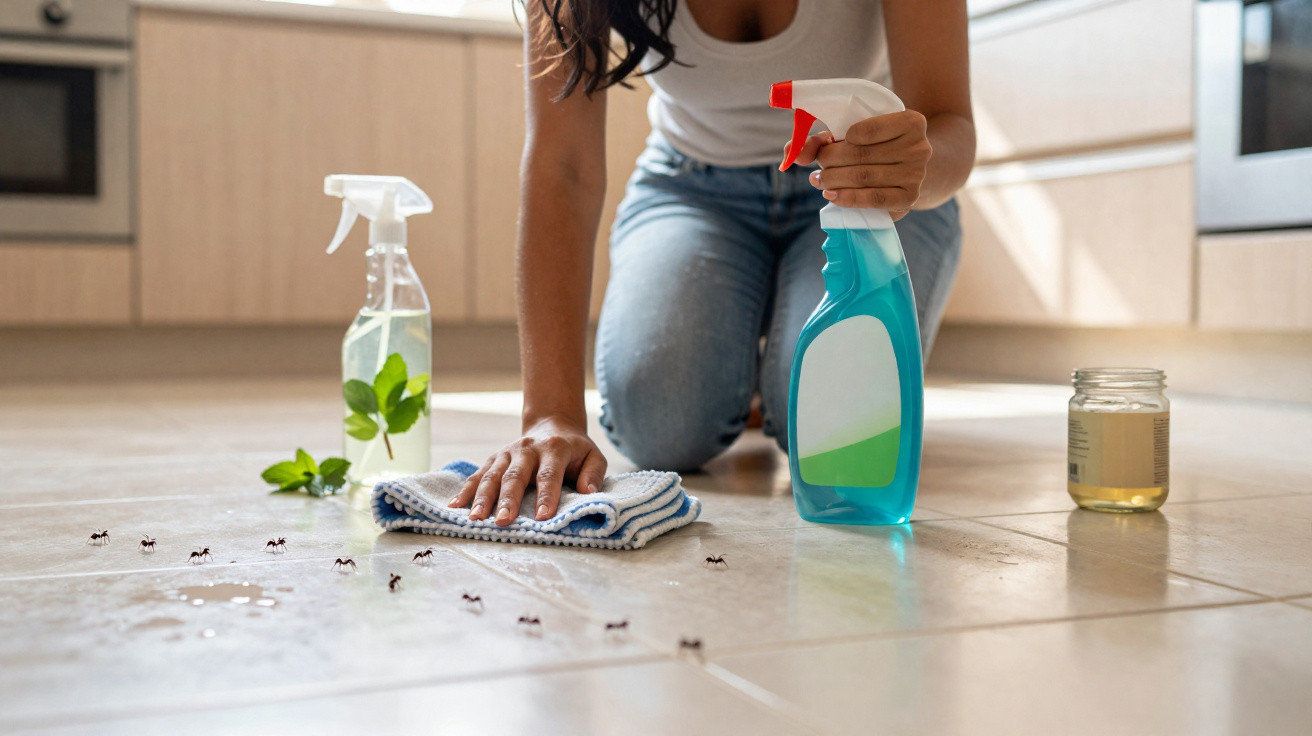
You diligently mop the floor, everything shines - and then an ant trail suddenly marches straight through the living room.
The trigger is often hiding in your cleaning product.
Many households, especially in spring, find themselves dealing with sudden columns of ants even though the kitchen and floors look meticulously clean. The cause is frequently not crumbs everywhere, but a small, easily missed step in the usual cleaning routine - one that effectively lays out a buffet for the insects. If you understand how ants smell, navigate and lay trails, you can get rid of them again with a few targeted changes.
Clean, shiny - and still full of ants
Most people know the scene: the floor has just been mopped, the room smells of red berries or “green apple”, and everything feels hygienic. Then, just a few hours later, there’s a perfectly organised ant highway running along the skirting boards. At first glance, there’s no obvious reason: no visible crumbs, the bin has been emptied, and worktops are spotless.
The timing also often matches the season. From around mid-April, many colonies come out of their winter dormancy. Scout ants start searching intensively for new food sources. With their extremely sensitive antennae, a single worker can detect tiny sweet traces from several metres away.
“What smells like a fresh fruity fragrance to us works for ants like a big ‘sugar here!’ signal.”
An ant isn’t wandering at random. It follows scent trails - and creates its own. This is exactly where a small mopping mistake becomes a problem that can intensify day after day.
Why strongly scented cleaners attract ants
The weak point is rarely the vacuuming, sweeping or taking out the rubbish. More often, the critical factor is the floor cleaner itself. Products with intense, sweet fragrances such as “berry mix” or “sweet citrus fruits” can attract ants - particularly if the label says they do not need rinsing.
Those “fruit cocktail” scents are usually created using so‑called esters. To insects, these fragrance compounds can smell very similar to natural fruit sugar. For an ant, that’s an enticing trail suggesting a potential sugar source.
It becomes problematic for two main reasons:
- “No rinsing required”: the cleaner remains behind as a thin film on the tiles.
- Slightly sticky surface: it then collects real sugar traces from juice drips, fizzy drinks or food residues - amounts far too small to see with the naked eye.
When a scout finds this combination of fragrance and tiny quantities of sugar, it marks the route with pheromones - chemical signals for its nest-mates. Not long after, the whole column appears.
“With every mopping session without rinsing, the invisible ‘sticky strip’ of fragrance and sugar on the floor becomes stronger.”
Health and indoor air: what experts say about fragranced cleaners
Heavily perfumed cleaners aren’t only interesting to ants. Indoor air specialists have been warning for years that many household products release volatile organic compounds. These substances can worsen indoor air quality - and indoor air is often already more polluted than outdoor air.
For floors, simple products with as little fragrance as possible are often recommended:
- traditional household vinegar (white distilled vinegar)
- genuine soft soap or so‑called black soap cleaner
- bicarbonate of soda or baking powder for stubborn stains
- lemon only for spot use, not litres of it in the mop bucket
- good microfibre cloths and a clean mop head
These options are gentler on the airways and also send far fewer “sugar signals” that ants could misinterpret.
Mopping properly: how to remove the fragrance film from the floor
If you adjust your cleaning routine, you can quickly make ants lose interest in your home. What matters is a combination of good preparation, a suitable cleaner, and one step many people like to skip: rinsing with clean water.
Step-by-step plan for ant-unfriendly floors
- Clean thoroughly first: vacuum or sweep up crumbs, especially along skirting boards, under the cooker, under the fridge, and around the bin.
- Use a neutral cleaner: fill a bucket with very hot water (up to about 60 degrees) and add only a small amount of black soap or a mild floor cleaner.
- Mop the floor: mop with a well-wrung mop; don’t leave puddles sitting on the surface.
- Important: rinse: go over the floor a second time with fresh, clean, equally hot water. This removes the remaining cleaner film.
- Ventilate well: open the windows so moisture and odours clear quickly.
“Only rinsing removes the invisible film where fragrance compounds and sugary residues collect.”
Vinegar routine for ant trails: how the acid tactic works
If you already have ant routes indoors, a regular “vinegar round” can disrupt the scent paths they’ve laid down. Ants rely heavily on their pheromone trails, and mild acidity can blur those trails and make them harder to follow.
A simple mix is enough:
- 1 litre warm water
- 2 tablespoons white household vinegar
Use this solution to treat typical ant routes directly: along skirting boards, under the dining table, around the edge of the bin, at door thresholds, and near floor level by windows.
Patience is important. Ants don’t reorientate immediately; it often takes several days for old trails to fade from the colony’s “memory”. Avoid vinegar on sensitive natural stone such as marble or other lime-rich slabs, because acid can damage the surface.
Menthol as a scent barrier: when peppermint oil makes sense
Many people use peppermint oil alongside a vinegar routine. The strong menthol smell irritates and masks insects’ scent receptors. Used sparingly, it can discourage ants from rechecking areas that have already been cleaned.
Using peppermint oil around the home
- add 3 to 5 drops of essential peppermint oil to a bucket of hot mop water
- mix it in right at the end so the fragrance doesn’t evaporate immediately
- don’t use higher amounts to avoid irritating mucous membranes in people and pets
- wipe surfaces where food sits directly with clean water after mopping
After using essential oils, always ventilate the room well. The mint barrier is not a substitute for proper cleaning - it simply makes the floor less appealing to curious scouts.
Practical example: how a small switch made the ants disappear
A typical case: a ground-floor flat, daily mopping with a strongly scented citrus cleaner that, according to the label, required no rinsing. In spring, visible ant trails formed across the kitchen within a few weeks, mainly in the mornings.
After changing the routine, this happened:
- the sweet citrus cleaner was replaced with black soap
- every mop ended with a second pass using clean, hot water
- once a week, vinegar water and 3 drops of peppermint oil were used
After a few days, far fewer ants were visible; after a few weeks, the ant trails disappeared completely. Not because the colony was destroyed, but because the kitchen was no longer perceived as a worthwhile food source.
What ants are really looking for - and what helps them avoid your home
Ants don’t target people; they follow opportunity. The fewer food cues a room gives off, the less energy a colony will invest in sending scouts there. For long-term peace, combine several measures:
- stop using strongly sweet-smelling floor cleaners
- rinse consistently to remove fragrance films
- keep bins tightly closed and clean them regularly
- wipe up juice and fizzy drink spills immediately with a damp cloth
- use vinegar or alcohol-based cleaners on ant routes
The shift from “smells strong and clean” to “smells neutral, but is genuinely clean” has a double effect: the indoor air is more comfortable, and ants lose the olfactory doorway into the flat.
If you have lots of natural stone flooring or specialist materials, seek advice on suitable cleaners and always test new products in an inconspicuous area first. Essential oils should be stored out of children’s reach and dosed sparingly. With a little understanding of smells, pheromones and cleaning chemistry, it’s easy to correct this subtle cleaning mistake - and the ant army will look for another target instead.
Comments
No comments yet. Be the first to comment!
Leave a Comment