
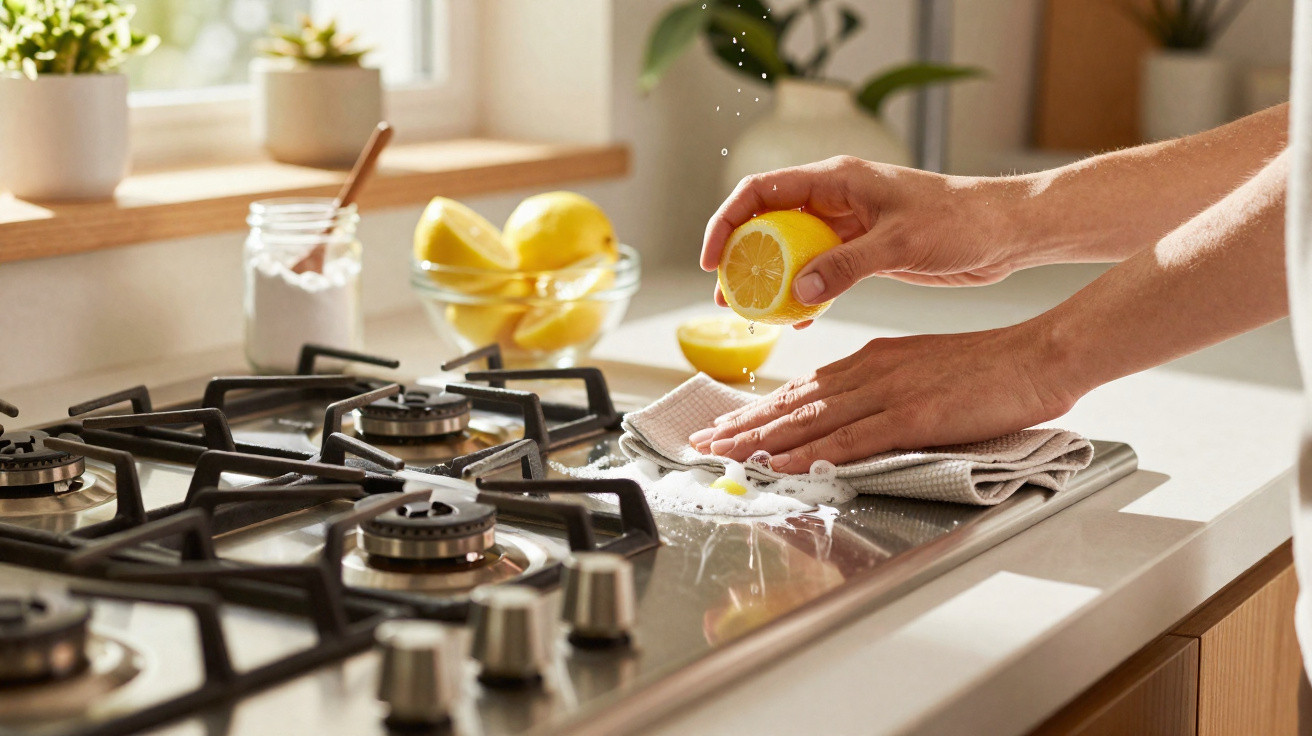
In most kitchens there is already a simple natural product that cuts through grease, neutralises odours and brings the cooking surface back to a shine without heavy scrubbing. Once you have tried it, you may genuinely wonder why all those pricey specialist cleaners are sitting in the cupboard at all.
Why hob plates yellow and get greasy so quickly
Whether it is a ceramic glass hob, an induction hob or a traditional cast-iron hotplate, cooking inevitably causes splashes: fat spits, liquids boil over, sauces spill and then bake on. Over time, this builds up into a stubborn layer of grease, sugar and carbonised residue.
A common mistake is to swipe at it quickly with a wet cloth, which mostly just smears the grease and grime around. Later, harsh cleaners often get used instead-products that can be tough on the environment and, in many cases, on the surface too.
"The good news is that, for everyday cleaning, a natural option is usually enough-something many people already have in the fruit bowl, and it works far more gently than aggressive chemicals."
The underestimated cleaning hero from the fruit bowl
The key ingredient in this method is the lemon. Thanks to its high citric acid content, it helps break down grease and limescale deposits, brightens mild discolouration and neutralises smells. At the same time, the juice has a light antibacterial effect.
The upside is clear: lemons are a staple in many households, cost little, are biodegradable and do not leave worrying residues behind on the cooking surface.
How to clean using only lemon
For lightly soiled hob plates, lemon juice on its own is often enough. Follow these steps:
- Let the hob cool completely: The cooking surface must be stone cold so the juice cannot bake on.
- Prepare half a lemon: Cut a lemon in half crossways and remove the pips if you can.
- Rub directly onto the hob: Use the cut side and work in circular motions over greasy marks and edges.
- Leave briefly to work: Two to five minutes is often enough for the dirt to loosen.
- Wipe with a damp cloth: Lift the loosened residue with a soft, slightly damp microfibre cloth.
- Finish by drying: Buff with a dry, lint-free cloth so no water marks remain.
You will notice the difference most with light greasy films and fresh marks. The surface looks clearer, fingerprints fade, and the hob smells pleasantly fresh-without any artificial fragrance.
When lemon alone is not enough: combine lemon with bicarbonate of soda
For baked-on spots, dark rings around the cooking zones or yellowed areas, lemon needs a bit of help. This is where bicarbonate of soda (or cooking soda) comes in-a mild, slightly alkaline powder with a fine texture.
"Lemon tackles grease and limescale, while bicarbonate of soda adds gentle abrasion-together they can shift stubborn, baked-on build-up without scratching the surface."
Step-by-step guide to the power combination
- Prepare the hob: Remove loose crumbs and dust with a dry cloth.
- Halve the lemon: Use one half like a natural cleaning sponge.
- Add bicarbonate of soda: Sprinkle one teaspoon onto the cut face of the lemon.
- Apply the mixture: Rub over the dirty areas in circular motions with light pressure. It will foam slightly.
- Allow time to work: Leave for five to ten minutes so baked-on layers start to lift.
- Wipe away with a damp sponge: Use a wet, soft sponge or cloth to remove all residue.
- Polish again to finish: Buff with a dry cloth until the surface shines without streaks.
If a mark is particularly persistent, repeating the process can be worthwhile. On ceramic glass hobs, you can also use a scraper carefully for stuck-on patches-always keep it flat and avoid pressing down to reduce the risk of scratches.
Which hob types this suits-and where to be careful
Not every surface responds the same way to acid and gentle abrasion. Here is a quick guide:
| Surface | Suitability | Note |
|---|---|---|
| Ceramic glass hob / glass-ceramic | Well suited | Use only soft cloths and fine powders; avoid rough scouring pads. |
| Induction hob (glass) | Well suited | Treat as you would a ceramic glass hob; do not scrape with metal tools. |
| Cast-iron hotplates | Limited suitability | Dry thoroughly after cleaning to help prevent rust. |
| Stainless-steel trim | Suitable | Wipe with the grain, not in circles. |
| Marble / natural-stone worktops | Not suitable | Acid can etch the stone permanently and leave it dull. |
Why choosing a natural option makes sense
Many conventional hob cleaners rely on harsh surfactants, solvents and perfumes. They can affect indoor air quality, irritate skin and eventually end up in wastewater. Lemon and bicarbonate of soda work differently: they break down fully and do not leave synthetic residues.
- Cost benefit: A lemon and a bit of bicarbonate of soda cost far less than specialist cleaners.
- Less plastic waste: You avoid pump bottles, spray heads and single-use packaging.
- A healthier home: No coughing, no sharp fumes while you clean.
- Multi-purpose: Lemon and bicarbonate of soda are also useful for sinks, chopping boards and baking trays.
"If you look after your kitchen regularly with mild natural cleaners, you extend the life of your appliances-while also being kinder to skin, airways and the environment."
Handy routines for a consistently clean hob
Rather than doing one big clean each month, a few small habits can prevent most of the hassle:
- Wipe up boiled-over sauces straight away with a damp cloth while they are still soft.
- Build in a quick weekly lemon-clean routine-ideally after the last time you cook.
- Check pan bases regularly: clean undersides help stop new marks forming.
- Use a splatter guard when frying so less grease lands on the hob in the first place.
If you stick to these routines, you will only need the lemon-and-bicarbonate combination for the occasional mishap-such as after a big cooking session or a burnt pan.
Risks, limitations and sensible extras
Even with all its advantages, this approach has limits. Deep scratches, dulled glass, or damage caused by the wrong cleaner cannot be undone. In those cases, professional refurbishment-or, long term, replacing the hob-may be the only answer.
A quick compatibility check also matters: if it is your first time using lemon and bicarbonate of soda on your hob, test it on a small, inconspicuous area first. That reduces the chance of an unexpected reaction on a sensitive surface.
As helpful add-ons, consider a glass-ceramic scraper for isolated burnt-on spots, a soft microfibre cloth for polishing, and-only if the manufacturer explicitly recommends it-an occasional specialist glass-ceramic cleaner. In that setup, lemon remains the everyday option, with the specialist product reserved for infrequent extra care.
Practical tip: leftover lemon halves can also be used on kettles, chopping boards or stainless-steel sinks. That way, less goes in the bin, and the same shopping-list item does several jobs around the home-from limescale remover to odour neutraliser.

Comments
No comments yet. Be the first to comment!
Leave a Comment