
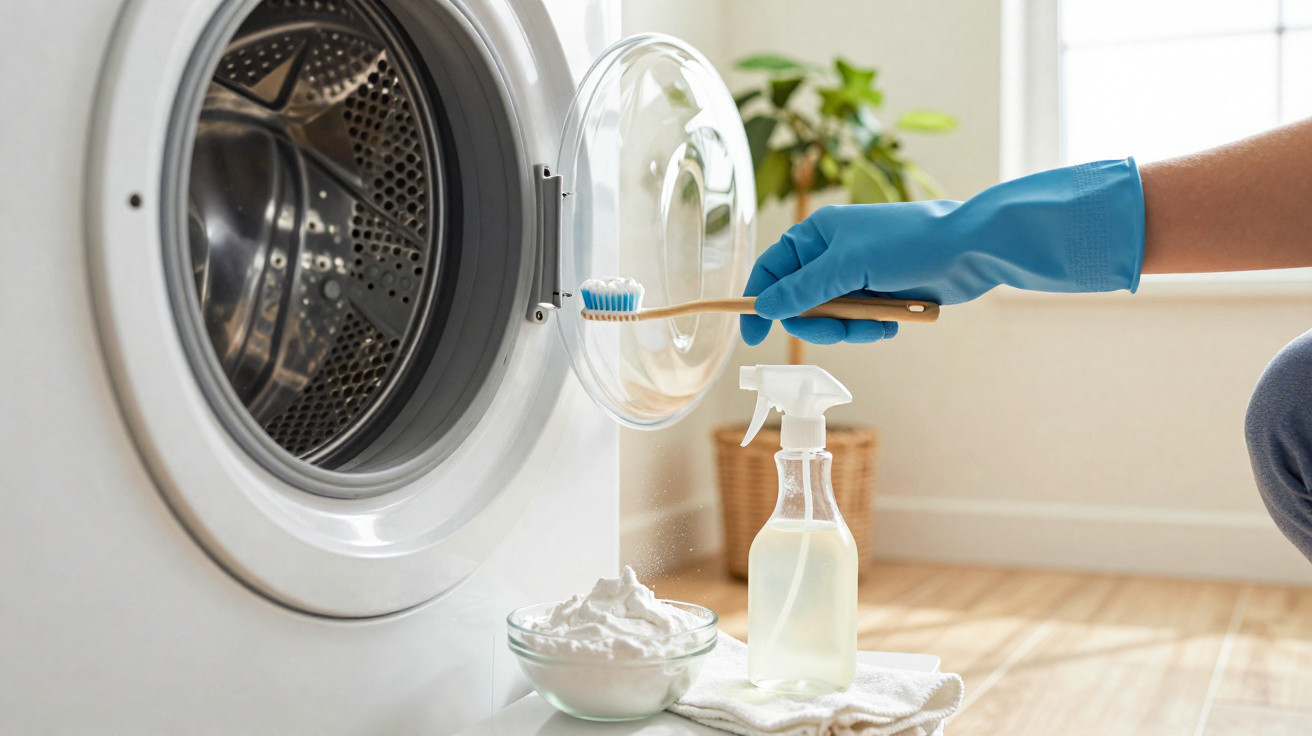
Plenty of washing machines look spotless on the outside – yet beneath an unremarkable rubber rim sits a damp mini-ecosystem that quietly ruins every load.
If you properly lift the rubber door seal on a front-loading washing machine, it can be a nasty surprise: dark marks, slimy residue, and a stale, musty smell. Right there, something has been building up for months, feeding on leftover detergent, fabric conditioner and skin flakes – and embedding itself deep into the rubber folds. The good news is that, with a few targeted steps, you can get this under control for the long term.
What really builds up under the rubber door seal
The rubber bellows around the door is an ideal place for dirt and micro-organisms. After each wash, a little water remains trapped there; the area barely dries out, and it stays pleasantly warm. That combination creates deposits that can look, at first glance, like ordinary grime.
In reality, it is usually a mix of:
- clumped-up detergent residue
- leftover fabric conditioner
- lint and hair from clothing
- limescale and tiny mineral particles
- organic debris such as skin flakes
Over time, this forms a sticky mass where mould spores and bacteria thrive. The result is a stubborn odour reminiscent of a damp cellar, along with dark staining in the rubber.
"If the machine smells ‘musty’ even when it is switched off, the cause is almost always around the rubber door seal and the hidden water pockets."
Warning signs you should not ignore
The machine may look clean on the outside, but as soon as you open the door you get hit with a dull, unpleasant smell? That is a clear red flag. These signs also point to a dirty seal:
- black or greenish spots and streaks in the rubber
- grey, greasy smears inside the folds
- light-coloured laundry coming out with grey edges
- laundry that smells “clean, but not fresh” – even when using scented detergent
People with allergies and anyone with sensitive airways often react to the damp mix of textile dust and mould spores with irritation. And anything sitting on the seal can transfer back onto laundry again and again on low-temperature washes.
The effective approach: cleaning with a bicarbonate of soda paste
A watery cleaner that runs straight off will not do much here. What works better is a thick paste made from bicarbonate of soda (baking soda) that clings to the rubber and helps loosen the buildup.
How to mix the cleaning paste
- around 40 g bicarbonate of soda, or baking powder based on bicarbonate of soda
- a few tablespoons of water, until it becomes a spreadable paste
- about 200 ml household vinegar for the wipe-down afterwards
Aim for a texture like a sandwich spread: not dry and crumbly, but not runny either. Only then will it stay in the deep folds of the seal rather than dripping straight into the bottom of the drum.
Step by step: reaching the hidden edges
Carefully pull the rubber seal forwards and look closely, especially along the bottom edge – that is where the most water collects. Apply the bicarbonate paste directly into the deep grooves and folds using your finger, a cloth or a small spatula.
- Turn off the power, open the door, and gently lift the rubber seal.
- Press the paste thickly into any suspect areas – especially along the bottom.
- Leave it for 5–10 minutes so the grime can soften.
- Use an old toothbrush to scrub into the folds and ridges.
- Wipe away loosened residue immediately with a damp cloth.
"An old toothbrush is the most important tool here: it reaches areas no sponge and no finger can get to."
Work your way all the way around the opening, even if some sections look clean at first. A thin, dark line often hides in the transitions near the drum.
Wipe with vinegar and neutralise odours
After scrubbing, much of the residue will be loosened. Now the aim is to remove it from the machine, not just smear it around. First, wipe up as much as you can with a damp cloth. Only then move on to the vinegar.
Soak a fresh cloth with household vinegar and wipe the rubber seal thoroughly again, including the tucked-away folds. Work in small sections and regularly switch to a clean part of the cloth so you do not rub the loosened dirt back into the rubber.
Vinegar helps dissolve limescale residue, neutralises odours and leaves the surface feeling far less greasy. Then wipe once more with clean water and dry the whole area carefully, for example with a tea towel.
Avoid steel wool, abrasive scouring pads or chlorine-based cleaners. These can damage the rubber, create fine cracks and open up fresh hiding places for dirt and micro-organisms.
The hot empty run: deep-clean at 90 degrees
Once the visible area is clean, it is worth giving the machine a full “reset”. An empty programme at 90 degrees (with no laundry) flushes through the internals: hoses, tub and hidden water routes.
Run this hot cycle immediately after the manual clean. The heat breaks down greasy films, detergent crusts and residue from concealed areas. A longer boil wash works best because the temperature is maintained for longer.
If you know your machine, it is also a good moment to check three other spots:
- Detergent drawer: pull out the insert and scrub it with hot water and a brush.
- Lint filter: open the flap, remove the filter, and clear out lint and any foreign objects.
- Door glass and drum: wipe with a damp cloth to pick up any remaining residue.
"A machine that smells neutral inside – of nothing – usually washes much ‘fresher’, even with a simple standard detergent dose."
A simple routine keeps the seal clean for the long term
Once the worst of the grime is gone, you can maintain the result with a few quick habits. Running a hot programme without laundry once a month makes new deposits far less likely. In households that wash frequently, that rhythm is particularly worthwhile.
A practical day-to-day routine that takes hardly any time:
- after every wash, quickly dry the rubber seal folds with a cloth
- leave the door and detergent drawer slightly open so everything can air out
- adjust detergent quantity to water hardness and load size, rather than overdosing “just in case”
- once a month, do a visual check of the seal and touch up the first dark spots with a little bicarbonate paste
Many people underestimate how much dosage matters: too much detergent does not fully dissolve, clings as a film in pipes and seals, and creates fresh “food” for build-up. Following the manufacturer’s recommendation for your water hardness often gets you halfway there.
Why front loaders are especially prone – and what that means for allergy sufferers
Front-loading machines have a relatively wide, bowl-shaped rubber area around the door. After washing, a small puddle often lingers there. Top loaders tend to have this issue less because water drains differently and the upper edge dries faster.
For people with hay fever, asthma or sensitive skin, a clean machine is more than a cosmetic concern. Damp areas can collect not only mould but also pollen, household dust and microfibres. Breathing in that mix every time you open the door can, over time, trigger stronger reactions – such as an urge to cough or irritated mucous membranes.
A well-maintained rubber bellows reduces that burden noticeably. This is especially relevant in small bathrooms without a window, where the machine is already sitting in a relatively humid environment. In that case, it also helps to air the home properly after washing.
How seal problems affect the machine’s lifespan
If the rubber door seal is neglected, it can become brittle over time. Mould and harsh cleaning products attack the material, small cracks spread, and eventually water can leak. A replacement door seal including fitting can quickly cost a three-figure sum, depending on the model.
Using the straightforward combination of bicarbonate paste, a vinegar wipe-down, a hot empty programme and a bit of attention after each wash can substantially reduce that risk. The machine runs more efficiently, needs fewer repairs, and your laundry smells the way it should: neutral to lightly fresh, never musty.

Comments
No comments yet. Be the first to comment!
Leave a Comment