
An unassuming everyday food solves exactly these kinds of problems.
Anyone with children, old paintings, delicate walls or fine glass surfaces at home knows the dilemma: ordinary cleaners are often far too harsh, yet dust and tiny particles still linger. A simple kitchen staple that most people already have at home quietly works in the background as a surprisingly effective specialist cleaner - with no chemicals, no strong smell and no risk to sensitive surfaces.
The hidden cleaning marvel from the bread basket
It’s fresh, soft white bread crumb - the plain, pale centre of the loaf with the crust removed. This old household technique is enjoying a comeback: instead of reaching for a spray bottle and microfibre cloth, more and more people are grabbing a piece of soft bread centre when a job is genuinely fiddly.
Soft bread crumb works like a natural mini sponge, soaking up dirt particles instead of smearing them around or kicking them into the air.
The key point is that bread works mechanically, not chemically. It doesn’t dissolve finishes, it doesn’t scrape, it simply absorbs. That’s why this trick is ideal wherever aggressive products are off-limits - for example on old pictures, delicate wallpaper, fine glassware or even tiny fragments of glass after a breakage.
Why bread crumb cleans so effectively
The porous structure traps near-invisible glass fragments
If you’ve ever dropped a glass, you’ll know the problem: you sweep carefully and vacuum thoroughly - then later you still end up stepping on a fragment you can barely see. This is exactly where bread crumb comes into its own.
Fresh white bread has an interior made up of lots of tiny air pockets. Those soft cavities behave like a close mesh. When you gently press the bread onto the floor, the elastic pores conform to the surface and can enclose even microscopic slivers of glass.
Unlike a broom, which tends to scatter fragments, or a cloth that can just push them around, the particles stay embedded in the bread. Afterwards, you simply throw the bread away - dangerous remnants included.
- Ideal after broken glass in the bathroom or kitchen
- Especially useful for grout lines and textured flooring
- A good companion to the vacuum cleaner for a “final safety pass”
Elastic crumb instead of an abrasive cloth
Where a cloth can drag dirt across a surface, bread crumb captures it. It moulds itself to the area, works into tiny recesses and lifts dust and residue without aggravating the material.
That makes it particularly suitable for surfaces that scratch easily or react badly to moisture. Cleaning stays controlled, targeted and dry - a big advantage with older materials.
Bread crumb presses dirt inwards rather than smearing it across the surface - and that’s exactly what protects delicate finishes.
Where bread really shines: delicate surfaces around the home
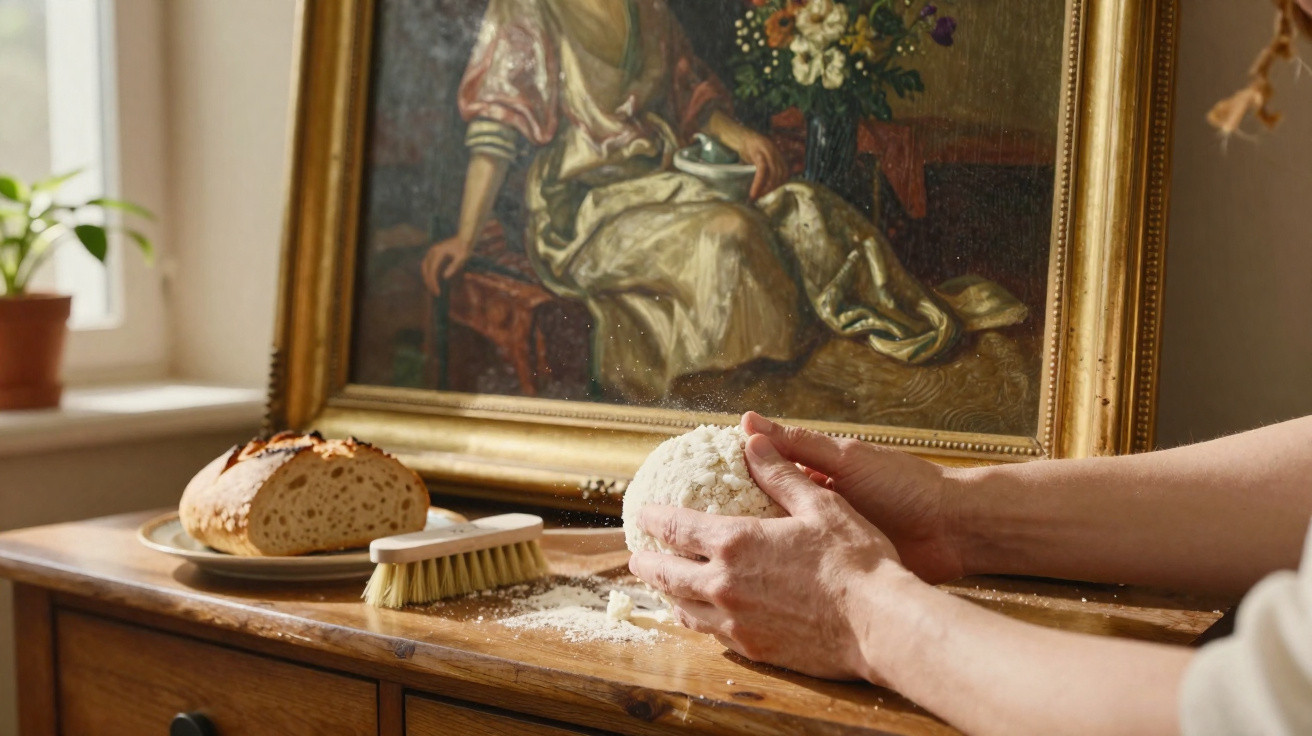
Gently dusting old oil paintings and artworks
If you have an old oil painting on the wall, you’ll recognise the worry: the wrong cleaner, too much water or a bit too much rubbing - and the surface is ruined. Professionals have long relied on a very simple approach: working with soft bread crumb.
The method is straightforward: form a piece of fresh crumb into a small ball. Then lightly dab it onto the painted surface without rubbing. With each touch, the bread picks up fine dust. After a few dabs, switch to a clean piece.
Used patiently, a dusty painting can look noticeably fresher bit by bit - without solvents, without water marks and without scratches. For very valuable works, a conservator is still the right choice, but for everyday decorative pictures this approach is remarkably effective.
Removing pencil marks on light-coloured walls
Bedrooms for children, hallways or kitchens - pale walls seem to attract pencil and light coloured-pencil marks. Classic erasers often leave grey smears or roughen wallpaper. Soft bread crumb is much gentler.
The technique is similar to using an eraser, just far softer: press the little ball of crumb lightly onto the marks, hold briefly, then lift away. Step by step, the graphite ends up in the bread instead of spreading across the wall.
This can be well worth trying on matt paint or delicate wallpaper. The wall stays even, the surface remains unchanged - and in the best case you avoid repainting an entire section.
Cleaning mirrors and glass without micro-scratches
Fine glassware, display-cabinet doors or antique mirrors can be sensitive to rough cloths and paper. Even newspaper can, over time, leave very fine scratches. Bread crumb is a gentler option.
Again, use light pressure rather than circular rubbing. Dust and the tiniest particles transfer into the soft mass. Afterwards, a very soft cloth that’s only slightly damp can add a final shine - and the risk of micro-scratching drops noticeably.
How to use bread crumb properly
The right type of bread makes all the difference
For this trick, soft, pale toast or sandwich bread without crust is the best choice. It offers:
- fine, even pores
- enough elasticity when pressed
- no hard edges that could leave marks
Wholemeal, seeded loaves or very dry breads are less suitable. The crumb breaks apart too quickly or can scratch sensitive surfaces. Slightly stale toast is often still perfectly usable - especially when it’s no longer very appealing for eating.
Dabbing, not scrubbing
It’s not just the bread that matters - it’s the motion. Rubbing is off the table; dabbing is essential. Here’s the process at a glance:
- Tear off a piece of soft crumb and roll it into a small ball.
- Press the ball straight down onto the affected area and hold for a few seconds.
- Lift it, rotate the bread slightly, and press again.
- As soon as the bread looks dirty, switch to a fresh piece.
This slow, repeated movement ensures the particles end up locked inside the bread rather than being dragged across the surface.
Sustainable, low-cost and family-friendly
Bread crumb won’t replace a full clean, but it fills a gap: those awkward little issues that would otherwise call for a specialist product from the shop. Many of those products contain fragrances, solvents or preservatives that people don’t particularly want at child height or near food.
The bread approach has several advantages: it’s biodegradable, costs virtually nothing extra, goes straight into the bin after use, and is usually not a problem for pets if a crumb happens to drop.
Anyone who uses old household tricks doesn’t just save money - they also cut down the number of everyday chemicals significantly.
When it’s better to use other products
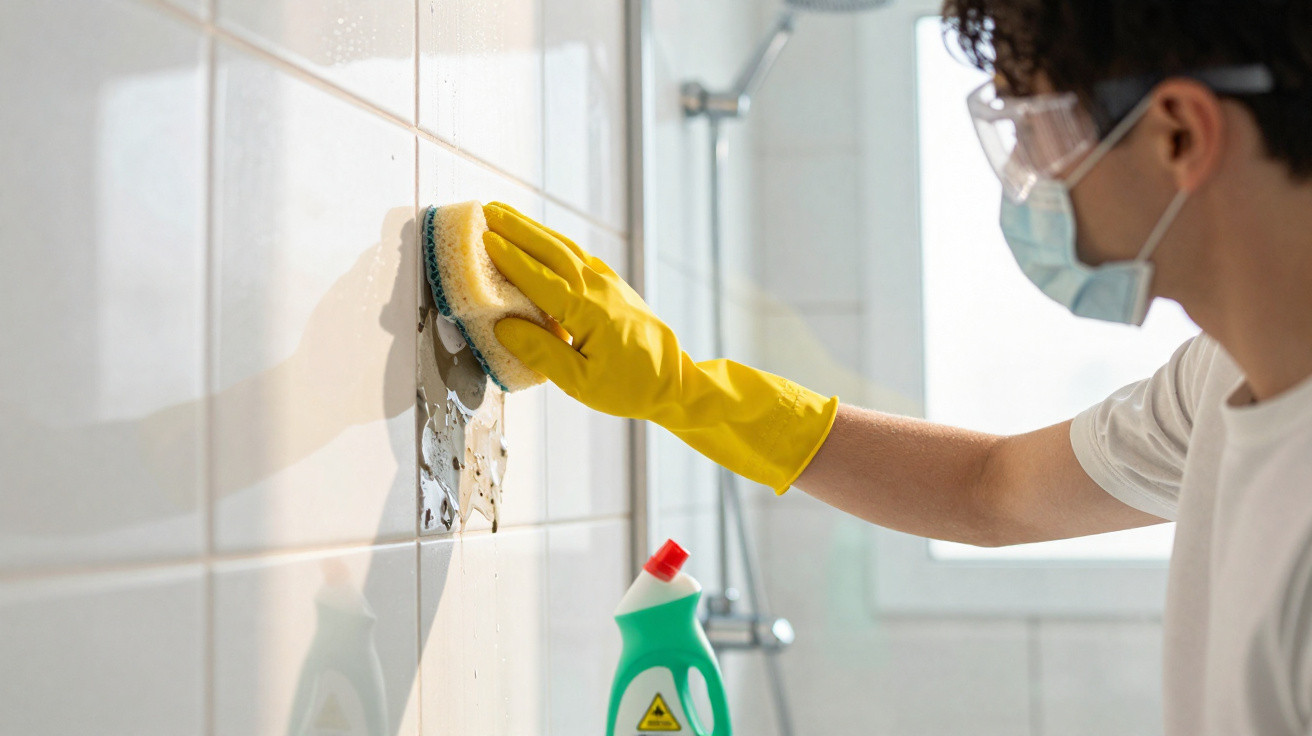
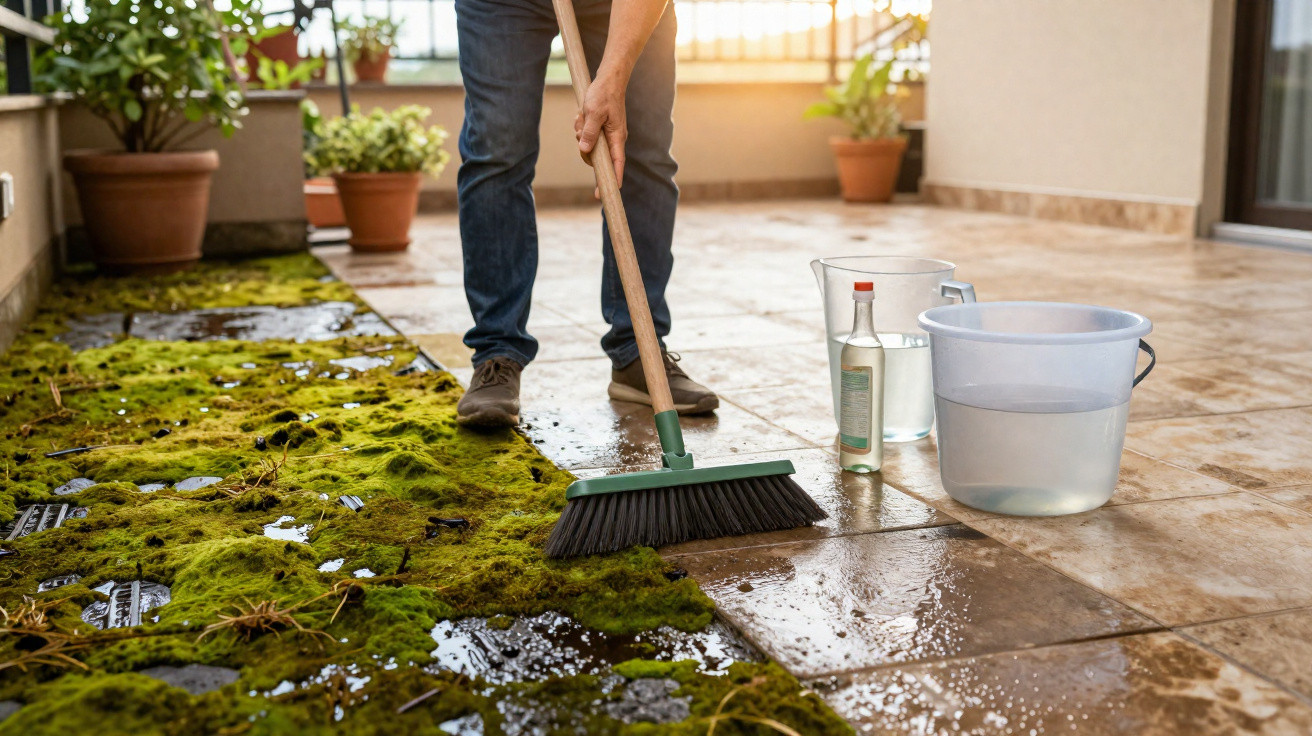
Even with all its strengths, bread isn’t a miracle cure. Greasy kitchen grime, stubborn limescale in the bathroom or mould on a wall need other solutions. It’s also ineffective on very damp surfaces - the crumb becomes soggy too quickly and loses its shape.
The most sensible approach is targeted use: bread crumb for fine dust, sensitive surfaces and awkward particles like glass fragments; conventional cleaners for heavy dirt and hygiene. Used together, the two methods complement each other and deliver a noticeably safer, gentler cleaning result across the home with minimal effort.
Comments
No comments yet. Be the first to comment!
Leave a Comment