
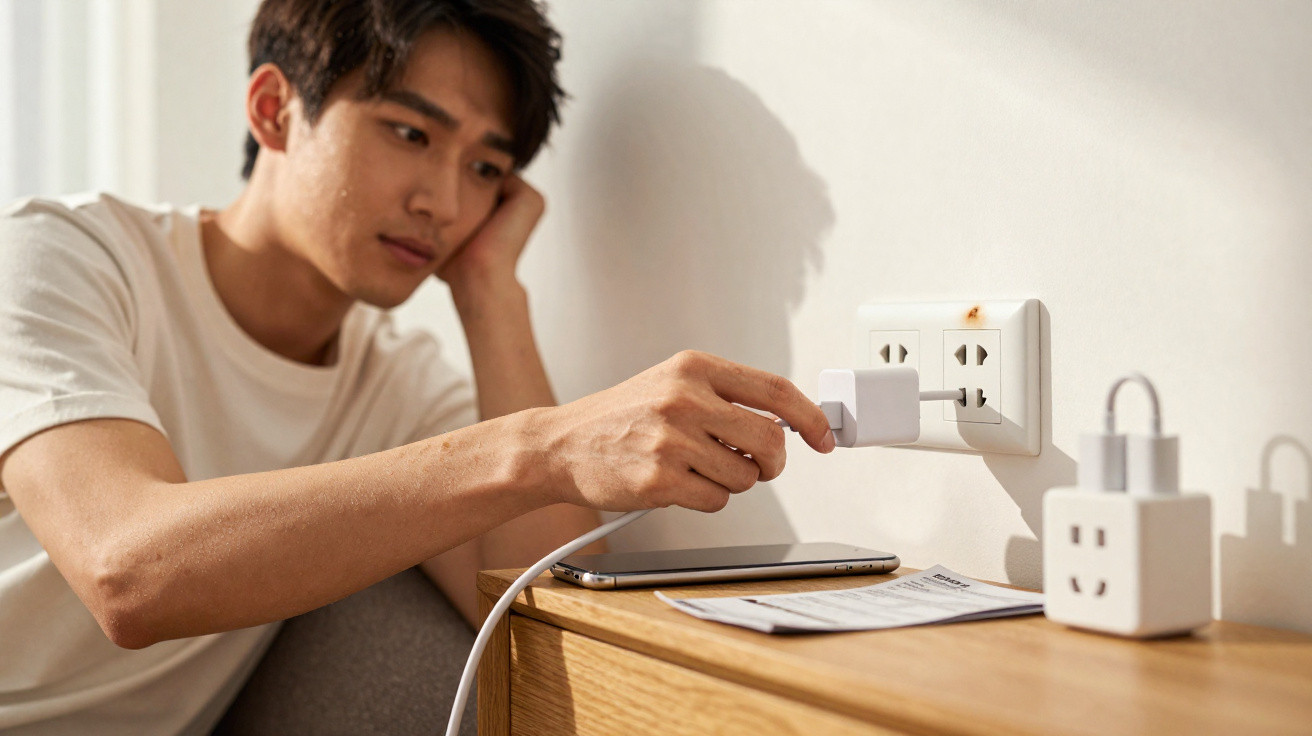
Whether it’s by the bed, next to the sofa or in the kitchen, chargers sit in countless homes permanently plugged into the socket - even when no phone is connected. Reaching for the charging lead becomes a harmless-looking habit. Yet that convenience can come at a price: for safety at home and for your electricity bill.
The seemingly harmless everyday mistake
Most people know the routine: the smartphone reaches 100%, you unplug the handset and leave the mains adapter in place. “I’ll need it again later,” you tell yourself - and the plug stays there.
That’s where the issue starts. A charger doesn’t simply “do nothing” just because no phone is attached. Inside, current can still flow through its components. With high-quality, tested products this is usually unproblematic. It’s very different with bargain chargers sold online or at the supermarket till for a few pounds.
"A charger left permanently plugged in keeps working in the background - and if the quality is poor, it can become a real danger."
When a charger becomes a fire source
Cheap power supplies often cut costs in the worst places: low-grade components, poor insulation, and inadequate separation between high and low voltage. If such a device is left in the socket continuously, it can overheat.
Electricians increasingly report melted sockets and scorched extension leads caused by low-quality chargers or adapters. In many cases it ends with a warped plastic faceplate and an unpleasant smell. Sometimes, however, nearby furniture or curtains can catch fire.
It becomes especially risky when several factors combine:
- Cheap or counterfeit charger without a recognised safety mark
- Left plugged in permanently, even without a phone
- Socket located behind furniture with little air circulation
- Flammable materials nearby, such as paper or textiles
European safety authorities repeatedly advise using only devices with recognised certification marks, for example CE in combination with GS or TÜV. Even then, the rule is simple: any plug that becomes warm or hot should be removed from the socket - and replaced.
How to spot risky devices
If you’re not a specialist, you can only judge a charger’s quality to a limited extent. Still, there are a few warning signs:
- It feels extremely light, almost “hollow”
- Poor finish, loose or wobbly plug pins/contacts
- Crooked or blurry logos and certification marks
- It becomes noticeably warm or hot in use, even with nothing connected
- A suspiciously low price compared with branded products
If in doubt, it’s safest to stick with chargers from the phone manufacturer or well-known brands. These typically have to meet stricter standards and are subject to better oversight.
The invisible role as a power drain
Beyond safety, there’s a second - often underestimated - aspect: energy use. A charger left plugged in without a smartphone can still draw electricity; professionals refer to this as “standby” or “no-load operation”.
The power draw is usually a few tenths of a watt up to around 1 watt. That sounds tiny, but it isn’t zero. In a household with several chargers left plugged in day and night, it adds up over the year.
"One plug hardly registers. Millions of chargers left plugged in permanently end up equalling a power station of unnecessary consumption."
Energy agencies estimate that standby devices and chargers running with no load together can account for up to around ten per cent of a household’s electricity consumption. Chargers are only part of that - but they’re one part you can tackle with minimal effort.
The dripping-tap principle
The effect is like a dripping tap. One drop seems insignificant, but after weeks or months the meter makes it obvious that something has been wasted. Electricity is similar: a few watts here, a few watts there - and over a year that becomes kilowatt-hours nobody actually used.
Practical tips for more safety and lower consumption
A few simple habits can reduce the problem noticeably - without sacrificing convenience.
- Unplug the charger after charging
As soon as the phone is full, or whenever you leave the house, pull the plug. After a few days it becomes second nature. - Use a switched extension lead
If you charge several devices in one place, a power strip with an on/off switch helps. One click and all the adapters are fully off. - Use only tested chargers
Branded products or certified accessories cost more, but they save stress - and in a worst-case scenario, they may save your home. - Don’t block sockets
Chargers shouldn’t be wedged behind tightly fitted furniture or buried under cushions. Heat needs space to escape. - Take suspicious smells seriously
If you notice a burnt-plastic smell or the socket becomes hot, unplug immediately and consult a qualified professional.
How smart tech can help
If you like using technology, smart plug adapters or timer switches can help. You can set specific sockets to supply power only at certain times - for instance in the evening while the phone is charging.
Some smart plugs even display real consumption. That makes it clear how much electricity a charger left plugged in can use over a year. For many people, seeing that number on the screen is the moment they finally change their habits.
Why the small effort is worth it
Many people underestimate how small everyday risks can add up. A cheap charger, an overloaded extension lead, and a curtain right beside it: only when several pieces of the puzzle come together does a serious fire risk develop.
Reconsidering your charging routine doesn’t just reduce that risk. It also lowers your electricity bill and saves resources. Making a habit of unplugging becomes a mini safety check you perform every day - quick, but effective.
In households with children or older people, there’s another benefit too: fewer adapters left plugged in means fewer trip hazards from cables, and fewer tempting items for small hands to tug.
Ultimately, it’s about a different idea of convenience. True comfort isn’t leaving everything plugged in all the time. Comfort is a home where technology runs safely, the meter isn’t racing for no reason, and you can sleep soundly without worrying about an overheating plug in the wall.






Comments
No comments yet. Be the first to comment!
Leave a Comment