
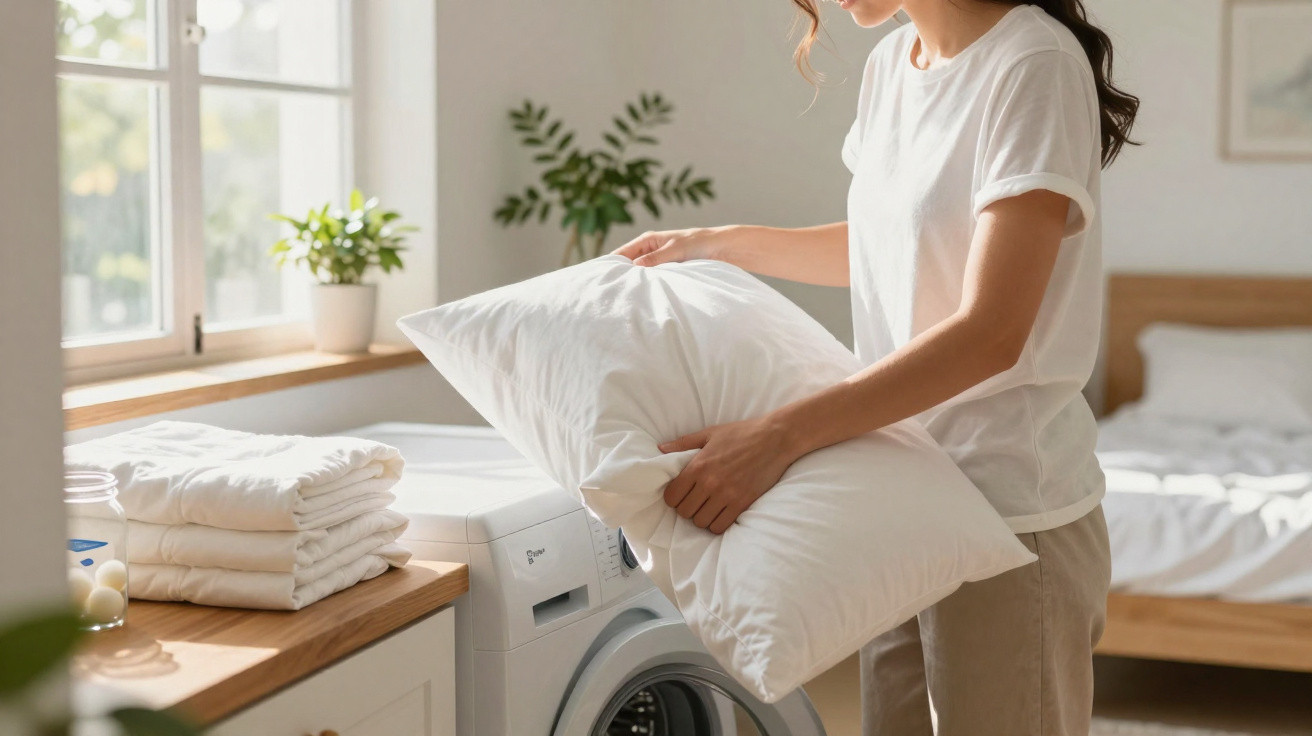
Throwing your pillow straight into the washing machine can turn good intentions into an expensive mistake. Instead of hygienic freshness, you may end up with lumpy filling, a musty smell and a perfect breeding ground for microorganisms that can irritate your airways and skin. With a few deliberate steps, you can avoid all of that - and your pillow will last much longer.
Why a badly washed pillow can become a health risk
Every night, your body sheds sweat, skin oils, dead skin cells and bacteria. A lot of it doesn’t just stay on the sheet - it builds up directly in the pillow. Over time, the pillow accumulates a mix of:
- Dead skin cells and body oils
- Sweat and saliva
- Household dust and pollen
- Pet hair, if an animal sleeps on the bed
That combination is a feast for house dust mites and an ideal environment for fungi. Studies have found moulds in older pillows, including species such as Aspergillus fumigatus, which in sensitive people may contribute to asthma attacks, a runny nose or eczema flare-ups.
A poorly maintained pillow can irritate the airways over time, disrupt sleep and worsen allergies - often without you realising.
If you wake up with a blocked nose, burning eyes or itchy skin, it’s easy to blame hay fever or dry air. Quite often, though, the cause is directly under your head. That’s why specialists recommend not only clean bedding, but also a clear care routine for the pillow itself.
How often pillows and bedding really need washing
Most people don’t wash their sheets and pillowcases often enough. Doctors generally advise washing covers at least once a week - and every three days if you sweat heavily or a pet sleeps in the bed.
The pillow’s inner filling follows a different schedule:
- Pillow: wash every 3 to 6 months, more often for allergy sufferers
- Duvets: clean roughly every 3 to 4 months
- Pillowcases and sheets: wash at 60°C, dry thoroughly or iron on a hot setting
What matters is not only how often you wash, but how completely the pillow dries. If the centre stays even slightly damp, mould spores and bacteria have ideal conditions.
The most common washing mistakes - and why they ruin a pillow
The biggest misconception is treating every pillow the same. Many people shove any pillow into the machine like a T-shirt, whether it’s down, latex or foam. That can be a costly habit.
Problem number 1: The wrong cycle and a temperature that’s too high
A lot of people automatically choose a hot wash in the hope of “killing everything”. However, temperatures well above 60°C can shrink synthetic fibres, damage coatings and permanently clump the filling. Special anti-mite or moisture-resistant treatments can also be compromised.
Problem number 2: Too much detergent and fabric softener
An extra scoop of detergent may feel “more thorough”, but it often fails to rinse out and gets trapped deep inside the pillow. Leftover residue can:
- irritate the skin
- interfere with breathing
- weigh down the filling and cause clumping
Fabric softener is even more troublesome for many pillows. It coats fibres and down with a film, reducing loft and breathability. The pillow can feel flatter and become clammy more quickly.
Problem number 3: Harsh bleaching products
Trying to “rescue” a yellowed pillow with chlorine-based cleaners or ammonia-containing products can leave fabrics brittle and skin irritated. The cover may tear, the filling can spill around the drum - and the pillow is effectively beyond saving.
Problem number 4: Drying it in the wrong place
The pitfalls don’t end when the wash ends. If a pillow dries on a very hot radiator or for hours in strong direct sun, fibres and covers can dry out, fade and become brittle. At the same time, the centre can remain damp even when the surface feels warm and dry.
A pillow that’s only dry on the outside is, on the inside, a warm damp microclimate - ideal for mould and bacteria.
How to wash your pillow properly - depending on the filling
The most important step happens before you wash it: take a quick look at the label and the seams.
- Identify the filling: synthetic fibre, feathers/down, latex, viscoelastic foam
- Read the care symbols: maximum temperature, whether tumble drying is allowed, spin speed
- Check seams and stitch them up first if needed
- Wash the cover and any protective case separately
Synthetic fibre pillows: straightforward, if you follow a few rules
Synthetic pillows usually wash well in a machine. A gentle cycle at 30–40°C with a low spin speed is ideal. Washing two pillows together - or adding a few towels - helps keep the drum balanced.
For drying, a tumble dryer on a low heat setting works well. Adding two or three clean tennis balls helps fluff the filling and prevents clumps. When the cycle finishes, check that the centre is completely dry. If necessary, leave the pillow to air-dry for a few more hours.
Feather and down pillows: plenty of air, minimal force
Down and feathers are more delicate. If the label allows it, a machine wash at 30–40°C with a mild detergent and a reduced spin is sufficient. Tennis balls in the tumble dryer also help here, keeping the filling loose rather than stuck together.
After drying, it’s worth shaking the pillow vigorously and “plumping” it at intervals, so the filling redistributes evenly.
Latex and memory foam: never put them in the machine
Latex and viscoelastic pillows hold their shape well - and are also particularly sensitive to water and mechanical stress. In a washing machine they can tear, crumble or become permanently misshapen.
In this case, stick to surface cleaning only. Use a soft, slightly damp cloth with a mild detergent. Then let the pillow dry completely in the air - but don’t place it directly on a radiator and don’t leave it in direct sunshine.
If you’re unsure, you can choose a hand wash in lukewarm water: gently press the pillow (don’t wring it), then dry it flat. It takes longer, but it protects the structure and extends the pillow’s life.
How to tell when your pillow should be replaced
Even the best-cared-for pillow won’t last forever. It’s time to replace it if:
- it still smells musty even after washing
- noticeable discolouration remains
- the filling clumps permanently or develops gaps
- you increasingly wake up with neck tension or headaches
As a rough rule of thumb, sleep medicine specialists suggest replacing a pillow every two to three years - sooner for allergy sufferers.
Allergies, hygiene and sleep quality - what a clean pillow changes
A well-maintained pillow significantly reduces exposure to mites, bacteria and fungi. People with asthma, atopic dermatitis or a house dust allergy often notice quickly whether their bedding is genuinely hygienic or not. Fewer irritants for skin and airways usually means more restful sleep and less night-time scratching, coughing or sneezing.
There’s another benefit too: when you care for your pillow regularly, you also check its shape and support more often. That makes it easier to spot when the wrong pillow is putting strain on your neck and spine. In many cases, choosing a suitable model and sticking to a clean routine can noticeably improve sleep quality - without medication.
If you build these simple steps into your habits - read the label, choose the right cycle, use detergent sparingly and dry thoroughly - you protect your health and save money. A pillow that doesn’t clump, yellow or develop mould needs replacing far less often.




Comments
No comments yet. Be the first to comment!
Leave a Comment