
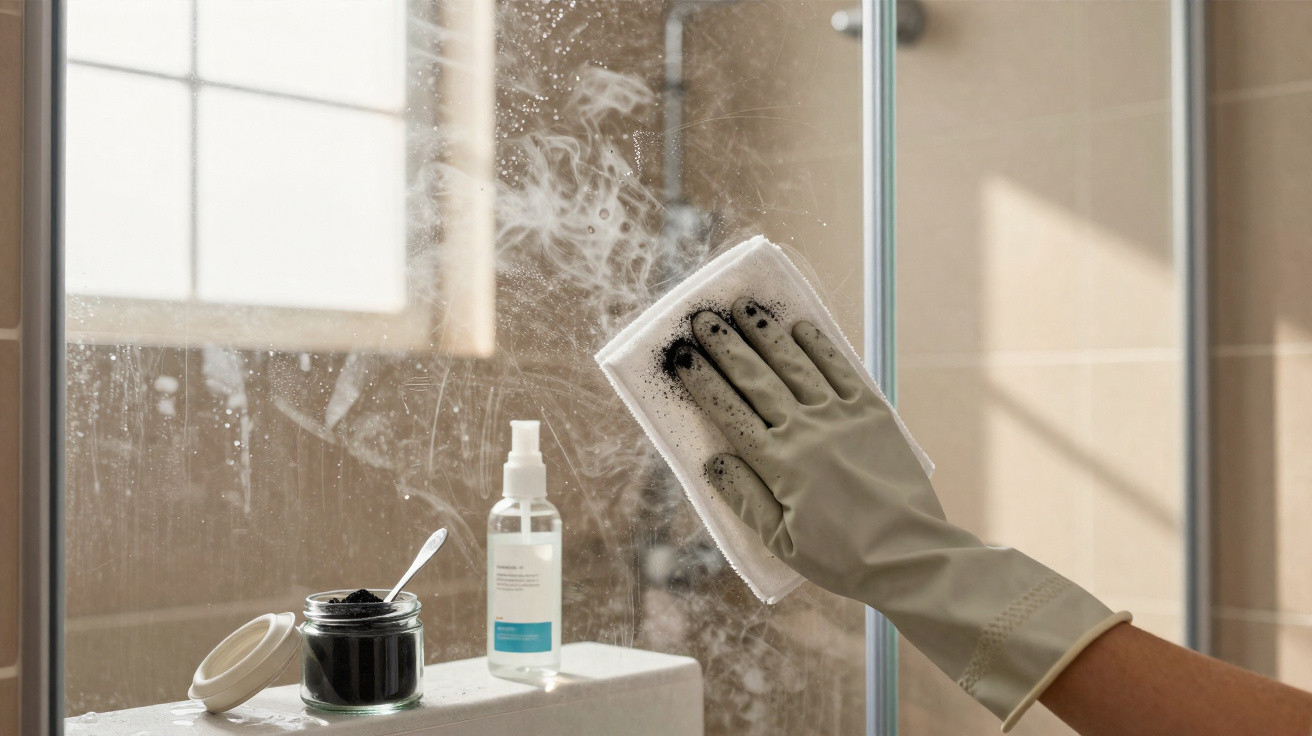
If you clean your shower regularly yet still lose the battle against streaks, limescale spots and dull glass panels, you’ll recognise the annoyance: pricey bathroom cleaners, a sharp smell, and barely any improvement. A straightforward approach using activated charcoal is said to deliver the opposite - fewer chemicals, minimal effort, and surprisingly clear results.
Why activated charcoal is becoming a bathroom insider tip
Most people know activated charcoal from water filters or from medical use, such as in cases of poisoning. In the bathroom, though, it has largely been overlooked - even though it relies on a physical effect that suits cleaning glass and tiles extremely well.
Unlike ordinary barbecue charcoal, activated charcoal is specially treated. It contains countless tiny pores, cracks and channels, creating an enormous internal surface area - in theory, a teaspoon of activated charcoal offers the surface area of a small flat.
“This huge surface acts like a magnet for grease, soap residue, limescale particles, metals and odour molecules - they attach themselves to the charcoal surface and can then be rinsed away easily.”
The technical term is adsorption: the dirt particles don’t soak into a material; they cling to the surface of the charcoal particles. In practical bathroom terms, that means less scrubbing and more chemical-free “pull”.
Which deposits come off particularly well
In shower enclosures, the most persistent build-up is what accumulates day after day:
- Greasy films from shower gels, oils and shampoos
- Dried-on soap residue
- Fine limescale haze from hard tap water
- Traces of metals from pipework
- Organic dirt particles that cause smells
This is exactly where activated charcoal shines. It binds these substances rather than simply smearing them around - which can happen with some conventional cleaners.
How to use activated charcoal correctly in a shower enclosure
This method is simple and only takes a few quick steps. The key is a fine, easily spread charcoal powder, like the kind sold for water filters or cosmetic use.
Step-by-step guide to the shower-glass trick
- Put 1–2 level teaspoons of activated charcoal into a small bowl.
- Add only enough water to make a thick, spreadable paste.
- Use a slightly damp microfibre sponge or a soft cloth.
- Dab the charcoal paste onto the cloth and rub it over glass, taps and tiles using circular motions.
- Finally, rinse thoroughly with warm water and finish with a dry cloth or a squeegee.
The fine charcoal particles work in two ways: they adsorb grime and also act as a very gentle abrasive. Because the grains are rounded and soft, glass and smooth tiles remain undamaged.
“Many users report that cloudy panels look noticeably clearer after treatment and feel fresher - without biting cleaning fumes.”
Three tricks that noticeably boost the cleaning effect
With a small amount of optimisation, you can get far more out of the black powder. Three simple tweaks can be the difference between “fine” and “wow, it’s actually clear again”.
1. Use heat
Before applying the activated charcoal, run hot water in the shower briefly. The warmth and steam help open up the fine structure of limescale deposits. That makes the surface more receptive, so the charcoal can bind dirt and minerals more easily.
2. Add a dash of vinegar in hard-water areas
If you live somewhere with very limescale-heavy water, a tiny splash of household vinegar in the charcoal paste can help. The mild acid loosens the limescale layer while the charcoal captures the freed particles.
Important limitation: this mixture does not belong on natural stone such as marble, travertine or certain engineered stone types. Acid can attack these surfaces. If you’re unsure, test on an inconspicuous spot first - and when in doubt, skip the vinegar entirely.
3. Make use of dwell time
If the shower walls are badly affected or have been neglected for years, a quick rub often isn’t enough. It can help to leave a thin layer of charcoal paste on the problem areas for 2–3 minutes. During that time, more dirt particles can adhere to the charcoal surface. Only then rinse off and buff dry.
How does activated charcoal compare with traditional bathroom cleaners?
Activated charcoal won’t replace every specialist product, but it can take a lot of the work off many cleaners. For day-to-day upkeep, it can become a reliable part of your bathroom routine.
| Aspect | Activated charcoal | Conventional bathroom cleaner |
|---|---|---|
| Chemical load | No aggressive additives, usually low-odour | Often contains acids, fragrances and preservatives |
| Effect on light limescale | Very good with regular use | Also good, sometimes faster |
| Effect on thick limescale crust | Limited | Strong descalers are clearly superior |
| Risk of scratching glass | Low with fine powder | Depends on sponge and product |
| Smell in the bathroom | Very low | Ranges from “fresh” to strongly irritating |
For everyday care and slightly dulled panels, the charcoal method is usually sufficient. With very thick, hard limescale crusts or long-standing deposits, you may still need a specialist descaler occasionally. After that, activated charcoal can make it much easier to keep the glass in good condition.
Common questions from real-world use
Doesn’t the black powder just make everything even messier?
At first glance, it can look like you’re creating a bigger mess: a dark grey film on glass and taps. However, if you use a fine powder and rinse thoroughly with warm water, it won’t leave lasting residue in the bathroom. The key is not to neglect hard-to-reach grout lines and silicone edges - those areas need careful rinsing too.
Is the trick also suitable for plastic enclosures?
Yes - as long as the plastic is still smooth and not heavily scratched. A soft microfibre cloth or a gentle sponge is essential; keep harsh scouring pads in the cupboard. Charcoal can settle temporarily in deeper scratches, so use light pressure.
Does activated charcoal help with musty bathroom smells?
Odours are often made up of volatile organic compounds, and activated charcoal binds these particularly well. If you gently rub a slightly thinner charcoal paste over the shower drain channel, the drain strainer or silicone joints and then rinse thoroughly, you remove the basis for many unpleasant smells.
How often can I clean my shower enclosure with activated charcoal?
With normal use, weekly cleaning is not a problem. The charcoal doesn’t attack glass, ceramic or most plastics. If you also squeegee the glass quickly after each shower, the workload drops further - often making a deep clean every two weeks sufficient.
What to look out for when buying and using it
Activated charcoal comes in many forms, from coarse pellets to ultra-fine powder. For a shower enclosure, fine grades work best - for example, products intended for water filters or cosmetics.
- Choose powder form, not tablets or pellets
- Go for the finest grain possible to avoid micro-scratches
- Store it dry so the charcoal doesn’t absorb moisture inside the container
- Test first on a small area for delicate stones and metals
If you have very sensitive hands, thin household gloves are a good idea. Charcoal can stain temporarily, but it washes off easily with soap.
More benefits than just shiny glass
Using activated charcoal in the shower has an additional advantage: many conventional cleaners contain fragrances, preservatives and surfactants that not everyone tolerates well. If you react to those additives, the charcoal method can be a noticeably less irritating alternative.
The combination option is also interesting: in a shower-head filter, activated charcoal can bind metals and chlorine before the water even hits the glass. In the follow-up clean, the same substance then lifts remaining soap and limescale residues from the surface. The result is a kind of cycle that keeps the enclosure clearer for longer and reduces the cleaning effort noticeably.


Comments
No comments yet. Be the first to comment!
Leave a Comment