
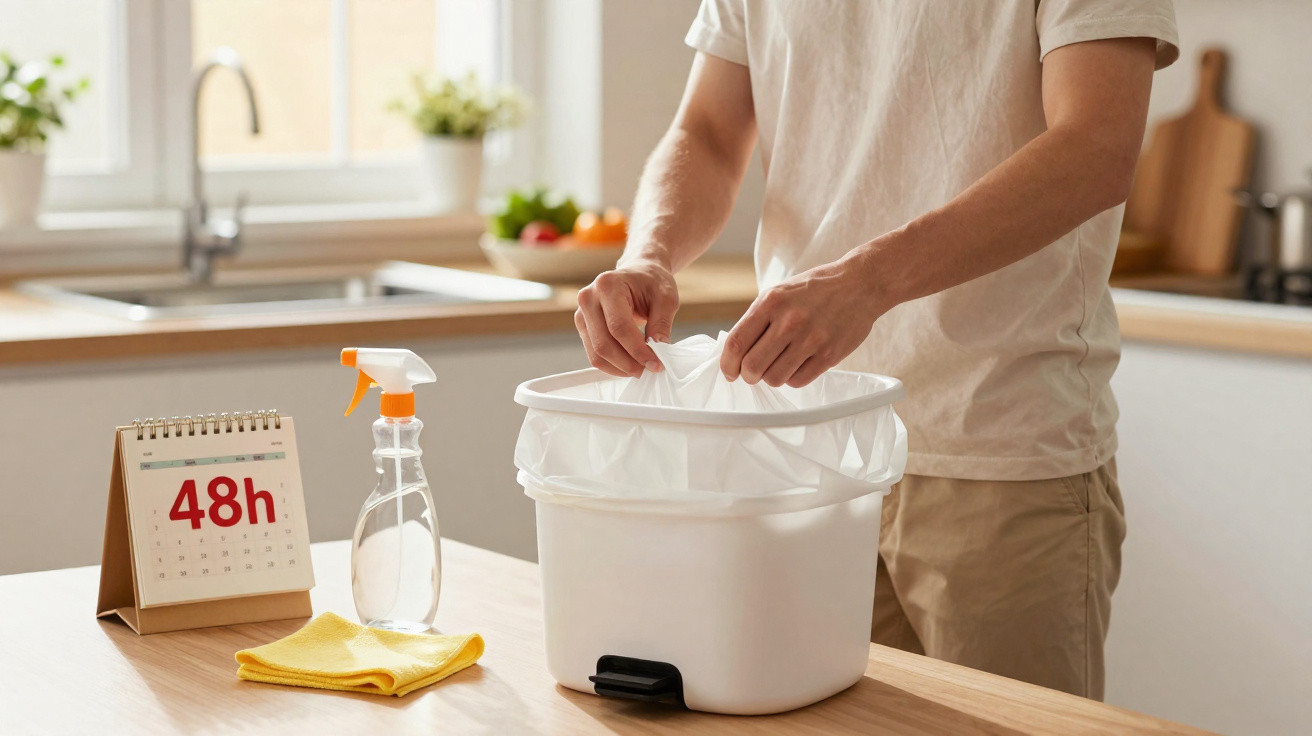
In many homes, the kitchen rubbish bag stays put until it is bulging or bin day is looming. The bin itself tends to sit quietly in a corner: you drop something in and move on without a second thought. A microbiologist is now warning that this exact habit allows bacteria, odours and even insects to spread far faster than most people would like.
Why kitchen waste is so tricky
A kitchen bin ends up as a catch-all for everyday discards: leftover food, fruit and vegetable peelings, used tissues, kitchen roll, nappies, period products, cleaning wipes and wet wipes. It may not look unusual, but that combination can cause real problems.
- Leftovers and peelings add moisture and sugars.
- Tissues and kitchen roll can carry germs from noses, mouths and hands.
- Hygiene items and wet wipes tend to stay warm and damp.
- Everything sits tightly packed together inside a closed bag.
That is exactly the sort of environment microorganisms thrive in. Within a few hours, a warm, humid microclimate develops in which bacteria, mould spores, and even maggots or mosquito larvae can feel at home. The result is unpleasant smells, more germs circulating in the air, and a hygiene issue in the very place where you prepare and eat food.
"A kitchen bin isn’t a neutral storage spot for rubbish, but a small laboratory for microorganisms - the longer the bag stays put, the more active that laboratory becomes."
The microbiologist’s rule of thumb: maximum 48 hours
The hygiene specialist and microbiologist quoted sets a firm limit: a kitchen rubbish bag should stay in the bin for no more than two days, even if it is not yet full. That may sound extreme to many households, but it reflects what is happening inside the bag.
Their advice is clear: after 48 hours at the latest, the bag should be taken out of the kitchen. The logic is straightforward: the less time waste sits in a warm room, the less opportunity bacteria have to multiply in large numbers, and the lower the risk of attracting fruit flies, maggots or other insects.
When changing it daily makes sense
The two-day limit is only a broad guideline. In practice, your living situation matters a great deal. In some cases, switching the bag every day is sensible or even advisable:
- Families with children: there is often a lot of kitchen waste, including leftovers, nappies or grubby tissues.
- Households that cook daily: plenty of fresh scraps, peelings, and meat or fish waste end up in the bag.
- Warm weather or a very warm kitchen: higher temperatures speed up decay and bacterial growth.
- Homes with pets: strong smells can attract animals, and they are more likely to get into the bin.
It is different for single-person households where little cooking happens at home. If you mainly eat packaged foods and produce hardly any fresh scraps, you can often stretch the timeframe slightly. What matters most is the type of waste, not just how full the bag looks.
Collection day is not the same as your change schedule
Many people base their bag-changing routine on local council collections. If the wheelie bin is only emptied once a week - or even less often - the bag in the indoor kitchen bin can end up staying there just as long. That is a common misunderstanding.
"The council’s collection dates say nothing about how long kitchen waste can hygienically sit in a bag inside your home."
A practical routine could look like this:
- Remove the kitchen bag after a maximum of two days.
- In between, take the tied bag to a bin store, garage, or straight to the outdoor wheelie bin.
- The outdoor bin can stand for longer - it is not in the middle of your living space.
If you separate food waste for a caddy or compost, that also reduces what ends up in your general kitchen rubbish bag. Fruit and vegetable peelings, coffee grounds or tea bags then never reach the general waste bag in the first place. Even so, the advice to change the bag regularly still applies, because other items can continue to cause odours and harbour germs.
Without cleaning, each bag change only does half the job
When you lift out the bag, another issue often becomes obvious: liquid collects at the bottom of the bin. This so-called “bin juice” comes from seeping food scraps, condensation and small leaks in the bag. It is not only unpleasant-smelling - it also creates a fresh breeding ground for germs.
A realistic cleaning routine looks like this:
- After removing the bag, quickly check the bin.
- If you can see stains or liquid, rinse with hot water and washing-up liquid.
- Let the bin dry properly before putting in a new bag.
- Plan a thorough wash at least once a month - or weekly if you generate lots of kitchen waste.
The bin’s material and shape make a difference too. Smooth plastic or stainless-steel bins are easier to clean than surfaces with grooves and edges. A lidded bin helps keep smells under control, but it can also make it easier to “forget” what is inside for longer.
Choosing the right rubbish bag
Beyond timing and cleaning, the bag itself also affects kitchen hygiene. Bags with handles or a drawstring can be sealed neatly, without you needing to touch the contents again. That reduces contact with germs and keeps smells contained more effectively.
A few straightforward rules help in daily life:
- Do not overfill the bag: avoid creating little “towers” of rubbish that push the lid up.
- Do not cram it down: pressing the contents with your hand or foot can split seams and tear the base.
- Do not pour in hot liquids: let cooking water or soup cool first, then dispose of it carefully.
- Pick the right size bag: it should match the bin’s capacity - not too small and not excessively large.
If you are particularly sensitive to odours, you can sprinkle a little bicarbonate of soda or baking powder into the bottom of the bin before inserting the new bag. The powder absorbs moisture and helps reduce musty smells. Important: sprinkle first, then put the bag in, so the powder does not become airborne in the room.
Health effects people often underestimate
A kitchen rubbish bag that is changed infrequently will not automatically make you ill. However, it does increase the germ load in the immediate area. Open cuts, small children’s hands or pets can come into contact with contaminated material more easily. Anyone with asthma, allergies or a weakened immune system can benefit noticeably from stricter waste hygiene.
Waste that includes meat, fish, eggs or dairy products is particularly problematic. It spoils quickly, attracts insects and may contain salmonella or other pathogens. Ideally, those leftovers should be removed from the home promptly - not only once the bag is close to bursting.
Practical everyday tips to make kitchen waste less stressful
A few habits can make dealing with kitchen rubbish much easier:
- Phone alarm: set a reminder every two days to change the bag.
- Smaller bin: a compact bin reduces the temptation to “stretch” a bag for weeks.
- Fixed routine: take the bag out after dinner or before going to bed.
- Portion strong-smelling waste: double-bag fish scraps or take them straight to the outdoor bin.
A lot of disagreements in house shares or families revolve around this exact topic: “Whose turn is it to do the bins?” A clear rule - for example, every other evening, or immediately if there are certain smells - removes tension and, as a bonus, reduces germs in the kitchen.
Once you think about what is happening inside a tied rubbish bag, it becomes easier to see why hygiene experts focus less on how full it is and more on the clock. Two days as an upper limit, proper cleaning, and well-fitting bags - that is all it takes to turn an annoying chore into a straightforward routine.

Comments
No comments yet. Be the first to comment!
Leave a Comment