
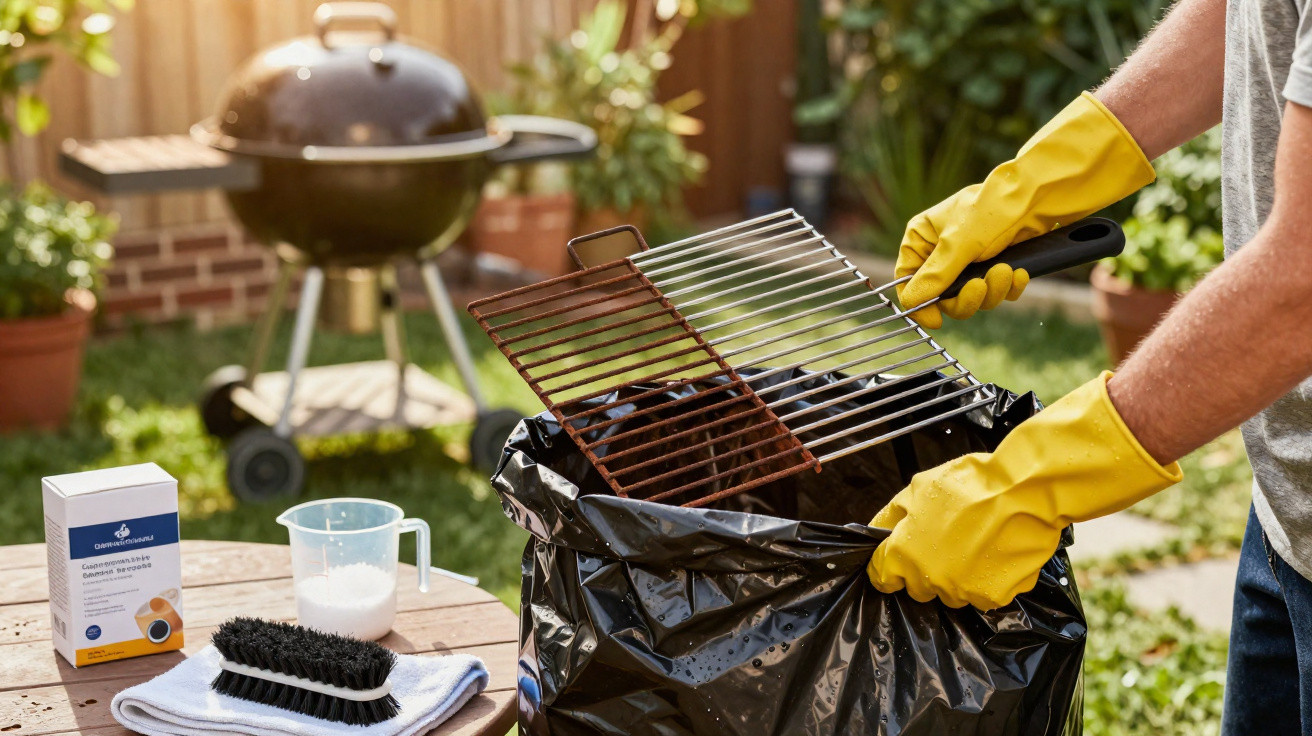
Many people wheel the gas or charcoal barbecue out of the garage or cellar in spring and get an unpleasant surprise: the grill grates are coated in rust, old grease and burnt-on residue. Any excitement about the first steak quickly turns into irritation. The good news is you don’t need harsh chemicals or hours of scrubbing to get the metal back into decent condition.
Why grill grates rust so quickly
If you simply close the barbecue lid after the last evening of summer, you often (without meaning to) create ideal conditions for rust. Common triggers include:
- Storing the grate while it’s still damp, for example after a rain shower or a quick wash.
- Leaving the barbecue outdoors, where wind and rain still find their way in even with a cover.
- Using a cover that doesn’t let air circulate, so condensation stays trapped.
- Letting a combination of grease, marinade and moisture sit on the metal for weeks.
When moisture sits on unprotected steel or cast iron for any length of time, corrosion is almost inevitable. What makes it worse: early rust spots are often hidden under a layer of grease. The surface becomes rougher, food sticks more readily, and each season the grate looks more neglected.
"The sooner you remove rust, the longer the grill grate will last - and the easier it is to clean."
Once the metal starts to warp or crumble, it’s no longer just about appearances but about strength and safety. At that point, a replacement grate is the sensible option. Until you reach that stage, a straightforward household method can rescue many grates that look beyond saving.
The cleaning trick using a household product and a bin bag
Instead of pricey specialist cleaners, you can rely on a classic from the cleaning aisle: washing soda (sodium carbonate). Combined with very hot water, it breaks down grease and softens rust - and it does so far more effectively than ordinary washing-up liquid.
What you need for the clean
- Washing soda from a chemist or supermarket
- Very hot water, ideally boiling
- A heavy-duty bin bag (or a large tub)
- A stainless-steel pan scourer
- Rubber gloves and, ideally, safety goggles
- An old cloth or kitchen roll for drying
Washing soda is strongly degreasing and loosening, so avoid handling it with bare hands and don’t use it on delicate surfaces.
Step by step to a clean grill grate
To make the method work, you only need a few simple steps:
- Remove the worst debris: With the grate cold, brush it with a grill brush or a dry scourer to knock off thick, burnt-on bits.
- Mix the solution: Pour very hot water into a bucket (or straight into the bin bag) and stir in washing soda according to the pack instructions until fully dissolved.
- Soak the grate: Place the grill grate in a tub or slide it into the sturdy bin bag, then pour the hot soda solution over it. Ideally, the grate should be completely covered.
- Seal the bag: Tie it tightly so nothing leaks and the heat is retained for longer.
- Leave it to work: Let it sit for several hours - overnight is best. The solution loosens grease and softens rust without constant scrubbing.
- Scrub afterwards: The next day, carefully remove the grate and scrub thoroughly with the stainless-steel scourer until clean metal shows again.
- Rinse properly: Wash off with plenty of clean water so no solution or loosened dirt remains.
- Dry immediately: Wipe with a cloth and allow it to dry completely in the air.
"The actual work takes only a few minutes - the solution does the rest on its own overnight."
If you’d rather not use a bin bag, an old washing-up tub or a large baking tray works too. The key point is simply that the grate sits in the liquid as fully as possible.
How washing soda breaks down grease and rust
The result comes down to a straightforward principle: washing soda pushes the water’s pH up sharply. In this alkaline environment, sticky, oxidised fats and dried-on marinade residues release much faster. Burnt layers soften, so you can remove them with a bit of mechanical help.
With longer soaking times, light surface rust and brown staining will also fade. Deep, heavily pitted rust won’t always vanish entirely, but the surface often becomes smooth enough to keep using without trouble. If you have enamelled grates, work gently and avoid very stiff, aggressive brushes so you don’t chip the enamel.
Tips to keep your grill grate rust-free for longer
A few minutes after each barbecue saves a lot of frustration later on. Three simple habits make a real difference:
- Clean straight after grilling: While the grate is still warm, residue comes off easily. A grill brush - or a crumpled piece of aluminium foil held in tongs - is often enough.
- Dry it well: After any contact with water, wipe it carefully. Leave the barbecue open briefly so any remaining moisture can escape.
- Oil lightly: Put a little cooking oil on kitchen roll and wipe a thin film over the cooled grate to create a protective layer.
Where you store the barbecue matters almost as much as cleaning it. A dry spot under cover - a carport, shed or a roofed balcony - is better than an exposed corner of the garden. Covers should be breathable; otherwise moisture builds up underneath and condenses, creating exactly the damp environment rust loves.
When replacing the grill grate makes sense
This rescue method works surprisingly well, but it does have limits. Signs that replacement is the better choice include:
- Bars feel loose or bend even with light pressure.
- Metal crumbs come away when you wipe it.
- Large areas look deeply eaten away and uneven.
- Welds are heavily rusted or have cracked.
In these situations, it’s usually worth investing in a new grate made from stainless steel or well-enamelled cast iron. Stainless steel rusts far more slowly and is easier to maintain, while cast-iron grates hold heat better and create strong sear marks - but they require more care and regular oiling.
How often you should deep-clean the grate
A thorough clean with washing soda is usually enough one to three times per season, depending on how often you barbecue. If you grill frequently, it’s sensible to do a more intensive clean roughly every four to six weeks; occasional grillers often get by with one deep clean in spring and another in late summer.
For routine upkeep, a quick brush after cooking is often sufficient, possibly with a little washing-up liquid and hot water. That prevents stubborn build-up and makes the next deep clean much easier.
More practical guidance for safer barbecuing
A clean grate isn’t just about looks. Burnt-on residue and charred marinade can create unpleasant smoke and bitter compounds. From a health perspective, it’s also wise to remove old, burnt layers regularly so as little as possible transfers onto fresh food.
When using washing soda, take basic precautions: protect your hands, ventilate the area well, and avoid open flames nearby while handling very hot water. If you have small children or pets, keep the bucket or sealed bin bag well out of reach during the soaking time.
Once you’ve tried the process, many people automatically build it into the start of each season: grate into the bin bag, solution over the top, leave it overnight - and by the next day the barbecue looks far fresher than that first shock suggested.


Comments
No comments yet. Be the first to comment!
Leave a Comment