
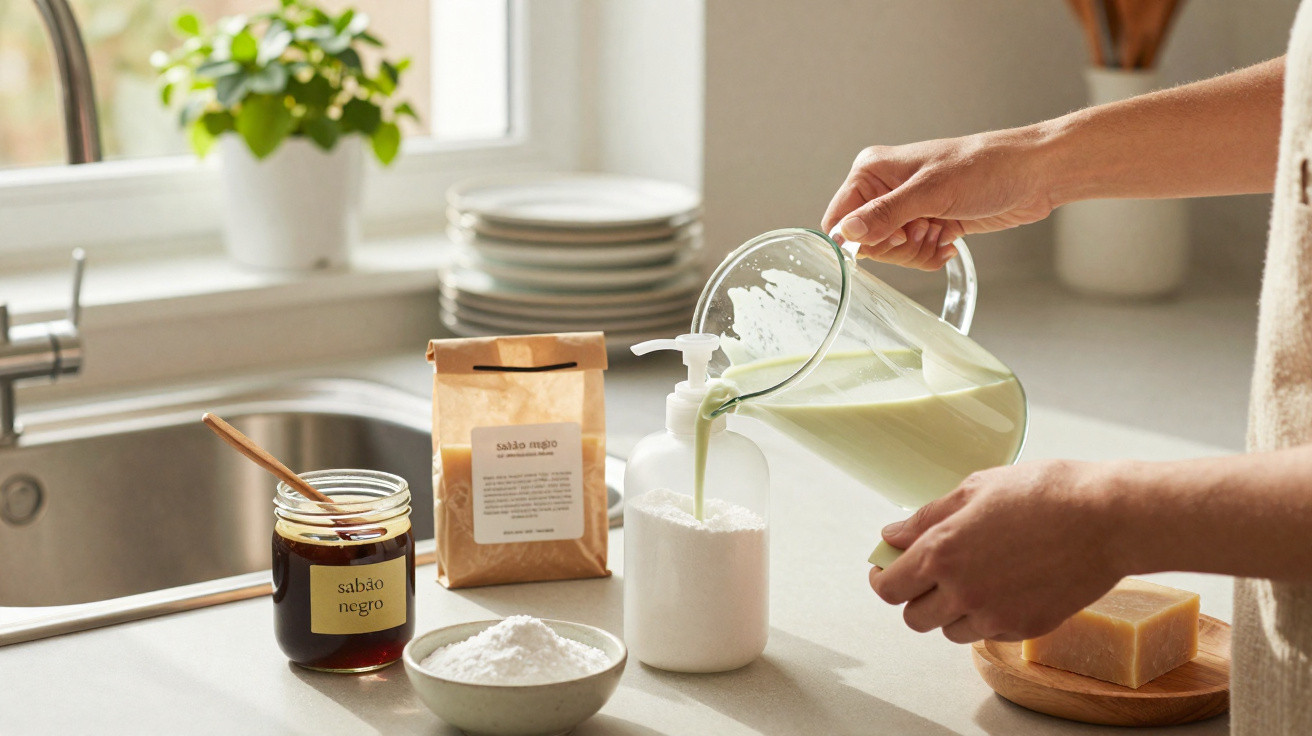
More and more people are fed up with harsh cleaners, stinging hands and a steady stream of new plastic bottles in the kitchen. A homemade washing-up liquid made from just a few low-cost ingredients is currently spreading fast - and in some households it is replacing the usual supermarket option completely.
Why more people are switching to homemade washing-up liquid
Shop-bought liquid washing-up detergent does the job, but it often comes with several downsides. Many bottles contain aggressive surfactants, fragrances and preservatives. These can irritate the skin, trigger allergies and ultimately end up in rivers and lakes.
Then there is the packaging problem: every empty bottle means more plastic waste. Some of it gets recycled, some of it does not - and that is exactly where the kitchen DIY movement comes in. If you mix your own washing-up liquid, you only need a refillable bottle and a handful of straightforward raw ingredients.
"A homemade cleaner made from three basic ingredients can get dishes clean, be kinder to skin and cut plastic use significantly."
The base: the three ingredients in the recipe
The core recipe currently doing the rounds on social media and household blogs relies on three building blocks. All three are tried-and-tested, inexpensive, and easy to find in many chemists or health food shops.
1. Black soap as a gentle cleaning base
Black soap - often made from olive oil or linseed oil - forms the foundation of the blend. It helps to cut through grease, lifts everyday grime, and is generally considered mild on both skin and surfaces.
- plant-based, usually without harsh additives
- reliably degreases pots, pans and plates
- does not leave a greasy film on dishes
- can also be used for other cleaning jobs around the home
2. Bicarbonate of soda - gentle scouring and odour control
Sodium hydrogen carbonate, better known as bicarbonate of soda or baking soda, brings two useful effects: it is mildly abrasive and it neutralises odours. Baked-on food comes away more easily, without scratching more delicate surfaces.
It is also handy for plastic tubs and drinking bottles that hold onto smells from tomato sauce, onions or coffee. In washing-up liquid, it helps everything smell fresh - even if you avoid perfume entirely.
3. Washing soda for stubborn grease
Washing soda (sodium carbonate) is the trio’s real grease-buster. It helps break fats down into water-soluble components so they can be rinsed away more easily. That matters when you are dealing with baked-on casseroles, oily frying pans or oven trays.
Because washing soda is more powerful than bicarbonate of soda, a small amount goes a long way. It can also help reduce build-up in pipes and traps, which takes some strain off the drain.
How to mix around 500 millilitres of washing-up liquid yourself
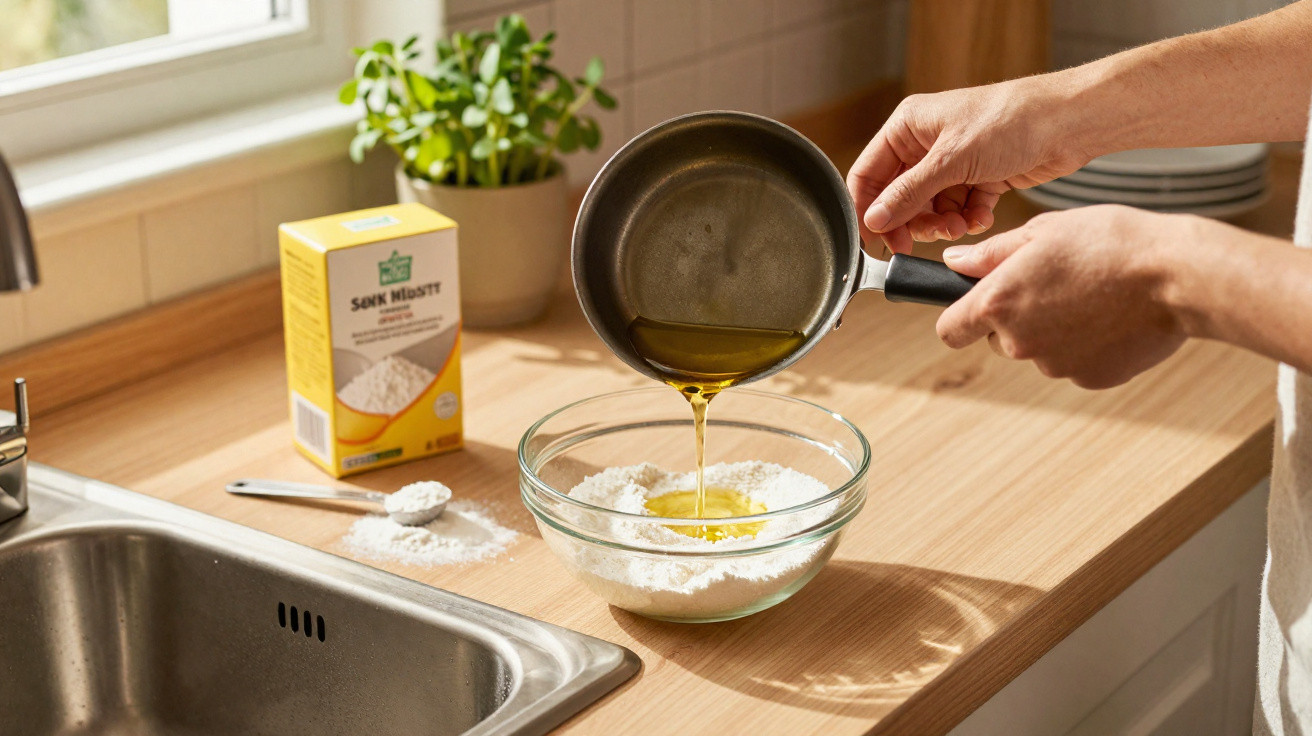
The basic version comes together in just a few minutes. All you need is an empty, clean dispenser bottle, a funnel and hot tap water.
- Put about 1 tablespoon of bicarbonate of soda into the empty bottle.
- Add 1 tablespoon of washing soda.
- Pour roughly two centimetres of liquid black soap into the bottom of the bottle.
- Top up with hot water from the tap, leaving a little space at the top.
- Close the bottle and shake vigorously until everything has dissolved.
Within seconds, you get an even liquid you can dose just like standard washing-up liquid. The mixture may thicken slightly; if you prefer it runnier, simply add a little cold water and shake again.
Extended version with pure soap for even more foam
Many people also add grated pure soap (or a solid household soap) to make a denser, foamier product. The method stays straightforward:
- 800 millilitres hot water
- 1 tablespoon black soap
- 1 tablespoon washing soda
- 1 tablespoon bicarbonate of soda
- about 50 grams finely grated pure soap or solid household soap
Put the solid ingredients into a bowl first. Then pour in the hot water and stir until the soap shavings have melted. Transfer the mixture to a bottle, leave it overnight, and dilute with a little cold water the next day if needed.
"In this version, the cost works out at roughly 20 Cent per litre - far less than many branded products."
How well does it actually clean?
User reports and practical tests are surprisingly positive. Plates, glasses and cutlery come out clean and streak-free, even if the foam looks weaker than you might be used to. Many people quickly notice that lots of foam does not automatically mean better cleaning.
The blend is particularly convincing on greasy pans: thanks to the washing soda, greasy films lift reliably. Stubborn burnt-on residue can usually be shifted with a short soak and a little extra bicarbonate of soda.
A welcome side effect is that hands tend to feel far less stressed. People with sensitive skin or a tendency towards eczema report less redness and that tight, uncomfortable feeling.
Costs, environmental impact and practical benefits
The cost argument is easy to see: one pack of bicarbonate of soda, a bit of washing soda, a canister of black soap and a bar of pure soap can make dozens of litres of washing-up liquid. Per bottle, that is only a fraction of the price of typical branded products.
| Aspect | Conventional washing-up liquid | Homemade mixed washing-up liquid |
|---|---|---|
| Price per litre | often 1,50–4 Euro | around 0,20–0,50 Euro |
| Packaging | single-use plastic bottle | one refillable bottle |
| Ingredients | synthetic surfactants, fragrances, colourants | simple, familiar basic ingredients |
| Skin compatibility | often irritating with frequent contact | usually milder and easier to control |
The environment benefits too. The basic ingredients used are generally considered more readily biodegradable than many aggressive industrial surfactants. On top of that, packaging waste drops if you consistently buy larger containers - or even shop package-free.
Where DIY washing-up liquid reaches its limits
Even so, it is not something to use without a bit of thought. Washing soda is more strongly alkaline and is not suitable for every material. Sensitive surfaces such as aluminium, unsealed wooden boards or certain natural stones can react badly.
For those situations, it can be worth keeping a second, gentler option that uses only black soap and bicarbonate of soda. If you often tackle very heavily soiled barbecue gear or baking trays, you can slightly increase the washing soda proportion for those specific jobs.
Hygiene matters as well. In households where raw meat or fish is prepared on boards, hot water, clean sponges and a reasonable contact time are essential - regardless of whether you use a ready-made product or a DIY mix.
How to fit the recipe into everyday life
The most practical approach is to set up a small “cleaning kit”: a jar of bicarbonate of soda, a tub of washing soda, black soap and a little solid soap. With these, you can make not only washing-up liquid, but also an all-purpose cleaner, scouring paste or bathroom cleaner.
Many households find that a handful of basic ingredients can replace almost the entire cleaning cupboard. That saves space and money, and reduces the number of substances your skin and airways have to deal with day after day.
If you are unsure, start by mixing half a bottle and testing it on normally soiled dishes. If it performs well, you can replace more conventional products step by step - until, potentially, there is genuinely no new washing-up liquid bottle ending up in the shopping basket.
Comments
No comments yet. Be the first to comment!
Leave a Comment