
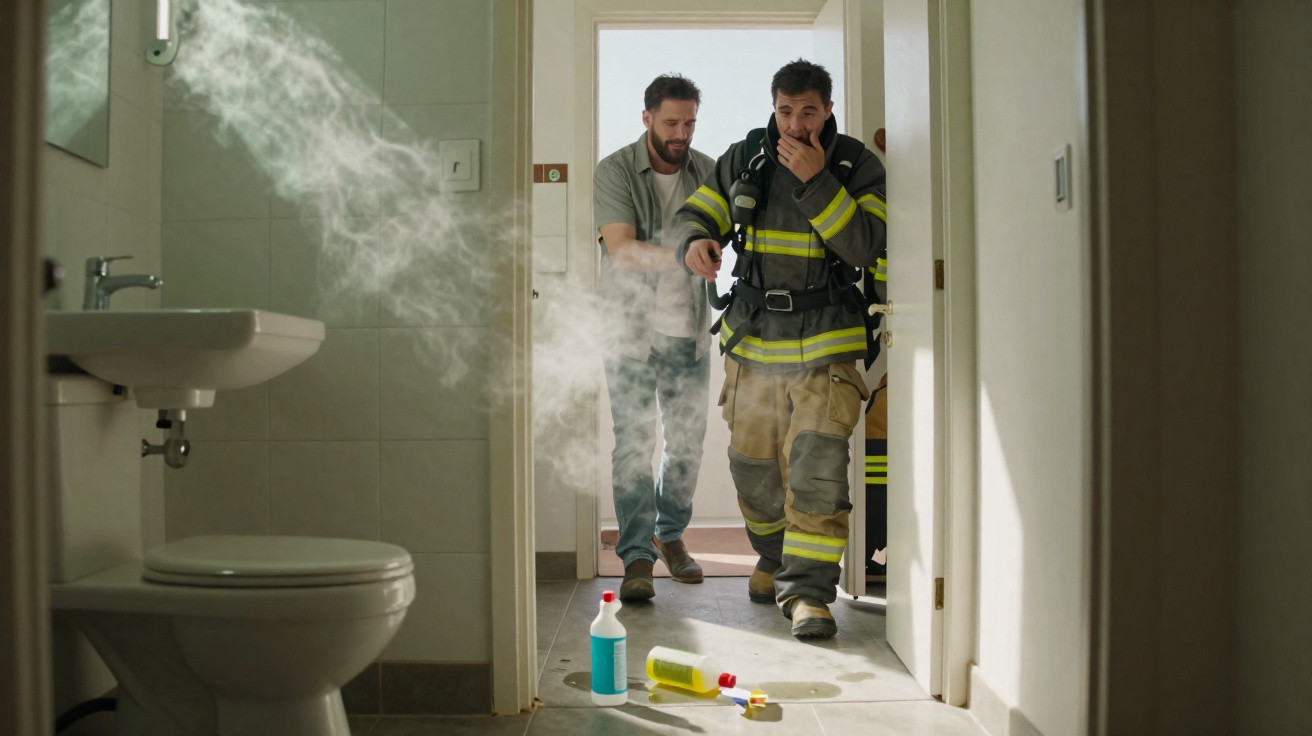
Anyone determined to get their bathroom properly spotless often reaches for the strongest products. A man in southern France did exactly that - and within minutes he was on the floor struggling to breathe. The cause: he combined two household chemicals that seem harmless in everyday use, but together can release a highly toxic gas.
Dangerous mix while cleaning the bathroom
On Thursday evening, just before 18:00, in a residential area near Albi in the Tarn département, a 35-year-old resident set out to deep-clean his bathroom tiles and grout. Rather than using products one after the other, he poured bleach and a vinegar-based cleaner into a spray bottle, shook it vigorously and started spraying.
Very quickly, he noticed a scratchy throat. His eyes began watering, he started coughing hard and found it increasingly difficult to draw breath. At first he assumed it was only mild irritation. But the symptoms intensified, and his chest began to feel as though it was tightening. Eventually, he dialled the emergency number.
The dispatcher sent firefighters and paramedics. On the phone the man described his shortness of breath and mentioned that he had just mixed different cleaning products. For the emergency services, that was a clear warning sign: this could be more than simply an “overly strong cleaning smell”.
13 firefighters deployed because of cleaning-product gas
At the property, responders found a patient who was coughing continuously and clearly weakened. The bathroom had a sharp, biting odour and the air itself felt irritating. Firefighters did not enter the bathroom unprotected; instead, they worked wearing breathing apparatus.
"Mixing a chlorine-based cleaner with vinegar can release a corrosive, toxic gas that severely attacks the eyes and airways."
Because it was unclear how much gas had built up in the room - and whether other residents might be at risk - the fire brigade responded in greater strength. A total of 13 personnel and three vehicles were mobilised. Windows were thrown wide open, the area was cordoned off and the bathroom was thoroughly ventilated.
The 35-year-old was taken to hospital, where doctors checked his lungs and mucous membranes. The fire service warned that serious chemical burns to the airways are possible, depending on the concentration and duration of exposure. Early information suggested the man’s condition stabilised, but he remained in hospital for observation.
What happens chemically when the products are mixed?
Many people are unaware how hazardous certain cleaning-product combinations can be. Chlorine-based cleaners - commonly used at home as “bleach” or “chlorine cleaner” - react particularly aggressively with acids.
Put very simply:
- Chlorine-based cleaners + acid (e.g. vinegar cleaner, limescale remover) → toxic gases
- Chlorine cleaner + ammonia (e.g. some window or toilet cleaners) → irritating fumes and substances that can damage the lungs
- Several strong cleaners in one bucket or spray bottle → chemical reactions that cannot be controlled
In this specific case, combining bleach with vinegar produces a gas that attacks the mucous membranes. At high concentrations, even a single short breath can trigger severe irritation. People with asthma or chronic lung disease are particularly vulnerable.
Typical symptoms after inhaling the fumes
Symptoms often start within seconds to minutes after exposure. Possible signs include:
- a sharp smell that “burns in the nose”
- an urge to cough and a feeling of tightness in the chest
- shortness of breath up to a fear of suffocation
- intense watering of the eyes, redness and stinging
- dizziness, nausea and headaches
If you notice these symptoms after cleaning - especially if you have mixed products or used strong cleaners one after another - leave the room immediately and ventilate thoroughly. If symptoms do not improve quickly, or if they worsen, calling the emergency services is the safer option.
How to clean the bathroom without a toxic cloud
In day-to-day life, you can keep a bathroom clean without risky experiments. The key is not to combine products and to use them sensibly.
Basic rules for safer cleaning
- Never mix different cleaners. Even “just a splash” can be enough to produce dangerous gases.
- Read first, then spray. The label will indicate whether a product is chlorine-based or acidic.
- Ventilate well. Open a window while cleaning or run the extractor fan.
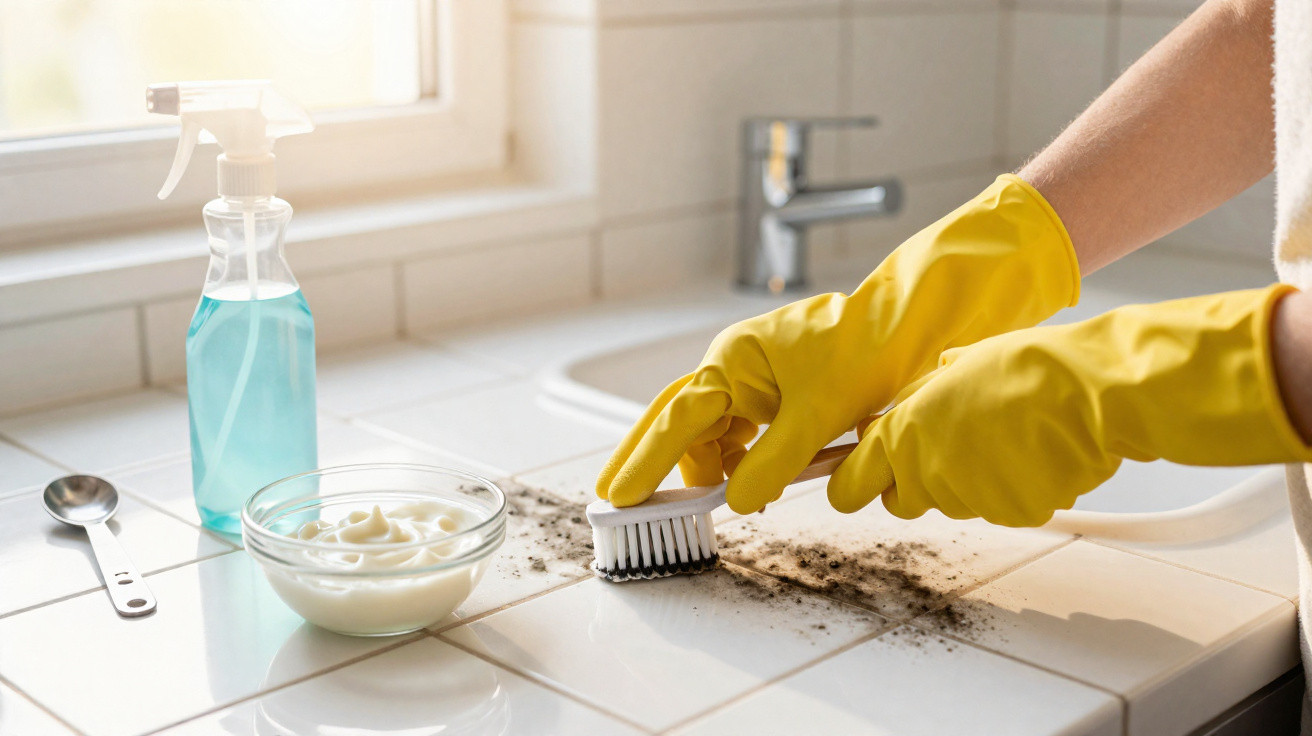
- Wear gloves. Cleaning agents can also damage the skin.
- Use products one after the other, not at the same time. Apply one, rinse thoroughly, then use another.
If you want to minimise risk, rely mainly on mild cleaners in the bathroom and add mechanical help: a brush, a microfibre cloth and a shower squeegee. Stubborn limescale and mould can often be kept under control with simple routines, such as drying surfaces after showering and airing the room regularly.
When specialist cleaners make sense
Chlorine-based products do have a place - for example, with heavy mould growth or for disinfection in exceptional situations. If you use them, you should:
- apply the product only in targeted spots
- avoid using any other cleaner at the same time
- leave the room while it is working
- rinse thoroughly afterwards with plenty of water
Household chemicals: an underestimated everyday risk
The incident near Albi is not a one-off. Poison information centres receive hundreds - in some cases thousands - of enquiries every year relating to cleaning products. Those affected are often adults who simply wanted to “clean properly for a moment” and had no idea how risky their mixture was.
Children can also be put at risk quickly. Brightly designed bottles with fruity scents can look like a drink. For that reason, parents should always store cleaning products out of reach and, where possible, locked away. In an emergency, every minute counts - especially if products are swallowed or fumes are inhaled.
| Situation | First steps |
|---|---|
| Irritating fumes inhaled | get into fresh air immediately, open windows, breathe calmly, call emergency services if short of breath |
| Cleaner in the eyes | rinse with lukewarm water for at least 10–15 minutes, remove contact lenses, see an eye doctor or go to A&E |
| Cleaner swallowed | do not induce vomiting, take the packaging with you, contact a poison information centre or the emergency services |
Why the fire brigade turns out in such numbers
Many people wonder why 13 firefighters would be sent for a single bathroom. From an operational perspective, the answer is straightforward: no one knows in advance how much gas is in the room, whether it has spread into other parts of the home, or whether neighbours may also be affected.
In a worst-case scenario, firefighters may need to:
- secure the area and ventilate it
- enter the contaminated zone wearing breathing apparatus
- rescue the patient and bring them out of danger
- take measurements and deal with residues
That requires equipment, vehicles and sufficient personnel. Compared with the potential consequences - such as multiple casualties in a block of flats - an incident like this is still relatively small.
What can be learnt from this case
The 35-year-old only wanted to clean his shower thoroughly, yet he now illustrates a hazard that exists in many homes. Cleaning products can feel harmless because they are freely sold in supermarkets, and it is easy to forget the strength of the chemistry involved.
If you reach for a spray bottle in the bathroom in future, remember one simple rule: use one product at a time, and never combine them in the same container. Good ventilation, protection for skin and eyes, and a quick glance at the warnings take only seconds - but they can prevent a major fire-service response and a trip to A&E.


Comments
No comments yet. Be the first to comment!
Leave a Comment