
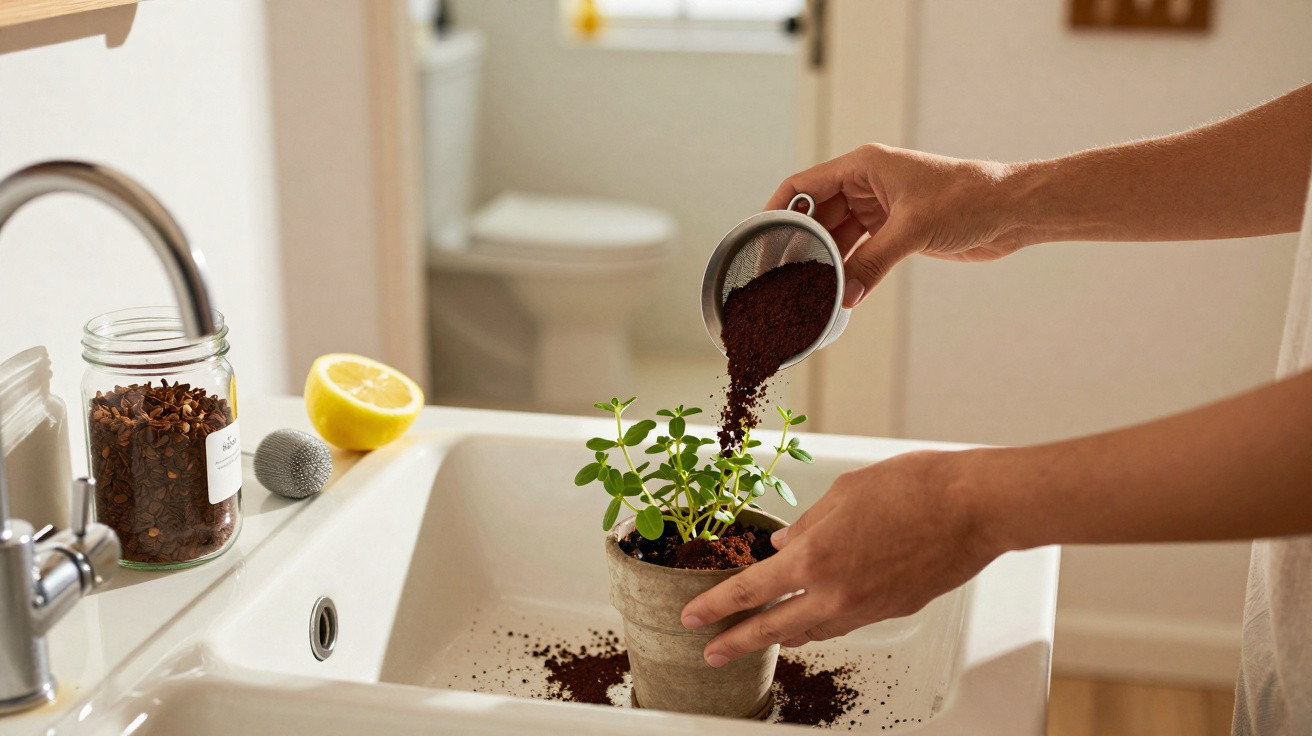
If you drink coffee every day, you end up with plenty of coffee grounds - and most of it goes straight in the bin. Yet a curious household tip keeps popping up on social media and in home forums: supposedly, one tablespoon of coffee grounds can leave the toilet and drain smelling fresher, without relying on harsh chemicals. So what’s the idea behind it, and where can it go wrong?
How a spoonful of coffee grounds is meant to work in the toilet
Coffee grounds may look harmless, but they have an interesting texture. The particles feel soft to the touch, yet they can act as a gentle abrasive when rubbed against a surface - and that is exactly what many people are now using in the bathroom.
The commonly shared method is essentially this: tip one tablespoon of still-damp or slightly dried coffee grounds straight into the toilet, leave it to sit briefly, then scrub firmly with a toilet brush.
"The fine grain works like a mild scouring agent and at the same time binds unpleasant odours in the drain."
Used this way, light build-up and rings around the waterline can loosen without immediately reaching for aggressive cleaners. The gritty texture helps lift grime, while generally being much milder than traditional cream scourers or scouring powders.
Odour neutralisation in the drain
For many people, the smell matters just as much as the cleaning. Once wet, coffee grounds can bind odour molecules. Plenty of users say the familiar “drain” smell in the bathroom noticeably fades after using it.
The tip is particularly popular before longer trips: just before leaving, a little coffee grounds is added to the toilet and not flushed right away. As the water sits for days, the grounds are said to reduce smells in the bowl and in the U-bend.
It is not a miracle cure, but in a slightly musty bathroom the difference can be noticeable - especially where the toilet is flushed infrequently, such as in a guest WC.
A trend with a catch: what plumbers say
Alongside the enthusiasm, there are clear warnings from the trade. Plumbing firms and specialist sites point out that coffee grounds do not really belong in wastewater systems. The reason is straightforward: the material swells, clumps easily, and can stick to rough pipe interiors.
"In older pipes, coffee grounds can combine with soap residue and paper into a tough plug - and that’s exactly what causes trouble later."
It becomes especially risky when:
- your home has old waste pipes made of cast iron or ceramic,
- drains already run slowly,
- you have had blockages before,
- lots of paper and wet wipes are flushed down the toilet.
In those situations, a “clever” hack can quickly amplify existing issues. Coffee grounds tend to settle in bends and junctions. Add cooking grease from the kitchen plus soap from the bathroom, and a hard layer can form - until, eventually, nothing moves at all.
When coffee grounds in the toilet may still be acceptable
If you still want to try it occasionally, keep the dose low and stick to a few basic rules:
- Use only a small amount - no more than one tablespoon.
- Rinse thoroughly straight after scrubbing, ideally flush twice.
- Do not tip in solid lumps; only use loose grounds.
- Avoid daily use; treat it as an occasional trick.
If the toilet already drains slowly or you hear gurgling from the pipes, stop experimenting - use a standard cleaner instead and, if in doubt, call a professional before the pipe blocks completely.
Where coffee grounds are much better used
While plumbers are only mildly impressed by the toilet trick, coffee grounds are widely seen as a genuine all-rounder at home. Many uses are far less risky - and can help you avoid pricey specialist products.
Tackling smells in the kitchen and around the house
The brown leftovers from the filter can be particularly handy in the kitchen:
- After chopping onions or garlic: rub a small amount of coffee grounds between your hands, then rinse - sharp smells tend to disappear faster.
- Cleaning chopping boards: spread damp grounds on the board, rub gently, then wash off - it can reduce odour and light staining.
- Freshening the fridge: place a small bowl of dried coffee grounds inside and replace every few weeks - similar in principle to activated charcoal.
- Deodorising shoes: put dry grounds into a cotton pouch or an old sock and leave it in the shoe overnight.
Important: for the fridge and shoes, only use fully dried coffee grounds, otherwise mould can develop.
A gentle cleaning aid for pots and pans
Coffee grounds can also work as a mild abrasive cleaner. The grain is firm enough to tackle residue, yet often gentle on glass, stainless steel, and many coatings. Burnt-on bits in frying pans, crusted pots, or a greasy barbecue rack can be loosened mechanically.
Use it like this:
- Mix coffee grounds with a little water or washing-up liquid.
- Apply to the dirty area with a sponge or cloth.
- Rub in circular motions until the dirt lifts.
- Rinse everything thoroughly so no gritty particles remain.
On very delicate surfaces such as high-gloss cabinet fronts or softer plastics, test first on a hidden spot to check it does not scratch.
Fertiliser, slug deterrent and cat barrier in the garden
In the garden, the ingredients in coffee grounds can really come into their own. The leftover material contains potassium, phosphorus and nitrogen - nutrients many plants appreciate. Vegetables such as tomatoes, cucumbers and courgettes can benefit from light feeding with coffee grounds.
"Correctly dosed and lightly worked into the soil, coffee grounds can improve the soil and boost plant growth."
At the same time, amateur gardeners report that slugs, ants and even neighbours’ cats may avoid areas edged with a ring of dried coffee grounds. The smell and texture seem to put some animals off - but it is not guaranteed.
Despite the benefits, coffee grounds do not suit every plant. Species that prefer very chalky conditions, or particularly sensitive houseplants, can become stressed if too much acidic coffee grounds ends up in the pot. It pays to check what each plant type likes.
How to use coffee grounds sensibly day to day
If you find the “spoonful in the toilet” idea appealing, it is best treated as an occasional extra, not a routine cleaning method. In many cases, coffee grounds are more useful elsewhere - while also being kinder to the environment and your wallet.
A possible weekly plan for committed coffee drinkers could look like this:
- Dry some and keep it in a small dish for the fridge.
- Use some fresh for cleaning pans or boards.
- Dry the rest and put it in the garden or on the compost.
- Only use one tablespoon in the toilet when needed, and only if no pipe issues are known.
If you are unsure whether your own pipework can handle coffee grounds, it is sensible to check quickly with a plumbing firm or your property manager. A blocked pipe can cost far more than any bottle of bathroom cleaner.
Overall, the trend shows that what used to be seen as useless kitchen waste can turn out to be a versatile raw material. With a bit of know-how, coffee grounds can be used cleverly at home - just don’t tip it into the toilet blindly.

Comments
No comments yet. Be the first to comment!
Leave a Comment