
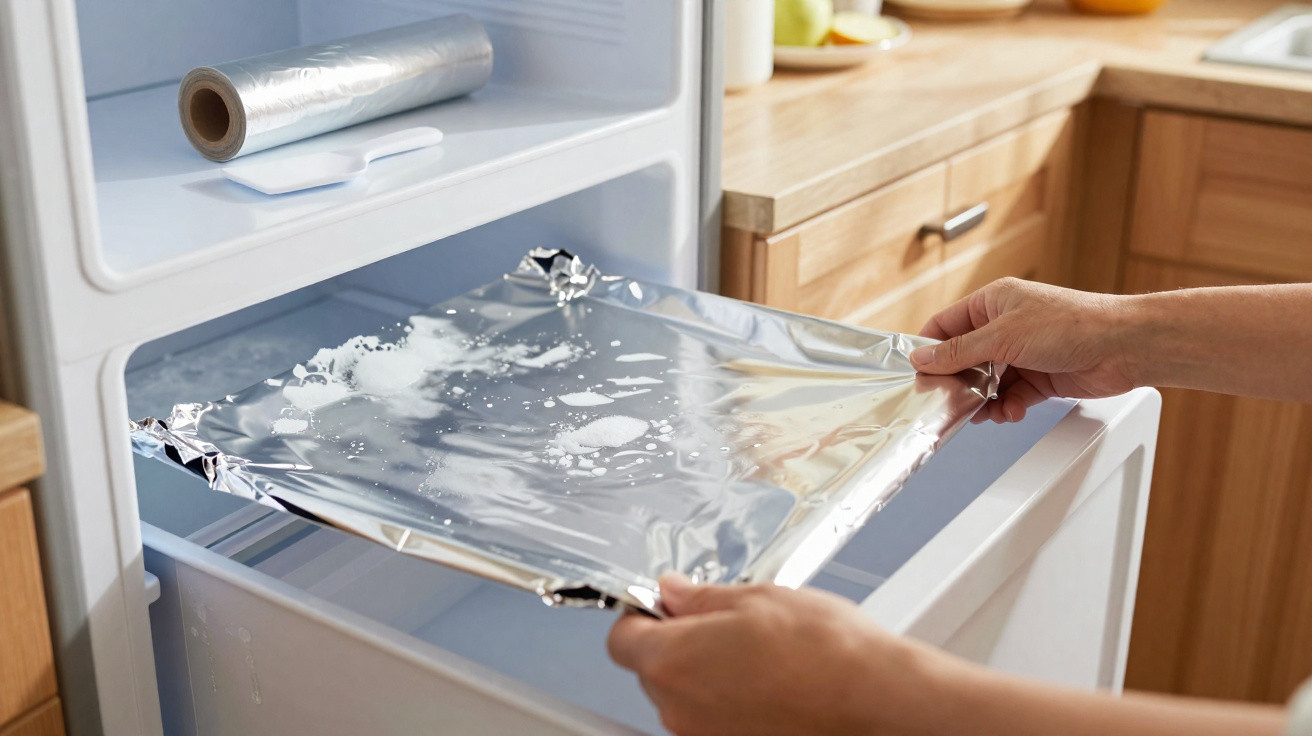
What looks like a purely cosmetic nuisance can cause very real problems: iced-up walls, drawers frozen shut, and a door that barely seals. Rather than spending hours scraping away at it, there is a surprisingly simple hack from the kitchen cupboard: an everyday household item most people already have to hand - aluminium foil.
Why ice builds up so quickly in the freezer compartment
Every time you open the freezer door, warm, moist air rushes into the icy interior. That moisture settles on the cold surfaces, freezes, and forms an ever-thickening layer of frost, one sheet at a time.
"The thicker the ice layer becomes, the worse the freezer can cool - and the higher your electricity costs climb."
In day-to-day use, that leads to:
- The compressor running for longer and switching on more often to hold the temperature.
- The door sealing less effectively, so warm air gets in even more easily.
- Food sticking to the walls or getting buried behind lumps of ice.
- Usable storage space shrinking with every new layer of frost.
Anyone who has defrosted a freezer knows the routine: empty everything out, unplug it, lay down towels, wait, scrape, and mutter under your breath. Many people put the job off for as long as possible - and in the meantime pay for it with higher electricity use and a more heavily strained appliance.
The aluminium foil trick: how a smooth layer prevents stubborn frost
Freezer interiors are often made from plastic or coated metal. These surfaces are never perfectly smooth; they have tiny irregularities. Ice clings particularly well to those microscopic bumps - and that is exactly where the aluminium foil trick comes in.
"Aluminium foil creates a smooth, non-porous surface - the ice no longer grips as firmly and can later be removed easily along with the foil."
The principle is straightforward: ice bonds far more strongly to rough surfaces than to smooth ones. If you line sections of the inner walls with aluminium foil, frost will form on the foil first. However, it “sticks” much less than it would directly to plastic or metal. When it is time to clean, you peel off the foil and take most of the ice with it in one go.
How to fit aluminium foil in the freezer properly
For this to work reliably in real life - not just in theory - a few simple but important steps make all the difference.
Preparation: without dryness, nothing will stick
- Empty the freezer completely: remove all drawers, baskets, and food.
- Defrost the appliance: clear existing ice - the safest method is letting it thaw rather than using sharp tools.
- Dry the interior thoroughly: use absorbent cloths to rub every surface completely dry, including corners and edges.
If the surface is still damp, the foil will not adhere well, will come loose sooner, and can form air pockets. Moisture can then collect behind it, and the benefit is lost.
Cutting and applying the aluminium foil
Start by targeting the areas where ice usually builds up most in your appliance. Typically, these are:
- the back wall of the freezer
- the upper interior section
- areas near ventilation slots
Then work through the application step by step:
- Cut the aluminium foil into appropriately sized pieces so it covers the surfaces as fully as possible.
- Place the pieces against the walls with the smooth side facing inwards.
- Smooth them down with your hand or a clean cloth, pressing out air bubbles.
- Firmly press along the edges so nothing loosens or creases during everyday use.
Important: do not fully cover ventilation slots or sensors. These areas need airflow; otherwise the appliance may cool unevenly or measure temperatures inaccurately.
Less effort, less risk - how the foil trick saves time
Once the foil is fitted neatly, freezer maintenance becomes noticeably easier. Instead of painstakingly levering off chunks of ice with a plastic scraper, you can simply pull away the foil with the ice attached when needed, then replace it with a fresh piece.
"Many users report that defrosting time is more than halved when aluminium foil is used."
There is another upside too: you reduce the chance of damaging the inner lining. Knives, screwdrivers, and other hard tools can quickly cause scratches. Those fine grooves make the surface even rougher - and therefore an ideal anchor point for new ice. The foil acts like a protective shield against exactly that kind of wear.
How often should you replace the foil?
Aluminium foil does not last forever. At the latest, when:
- it has torn,
- large ice sheets are hanging from it, or
- it is coming loose in several places,
you should fit a new piece. In many homes, replacing it every few months is enough; if your freezer is opened very frequently, you may need to do it sooner. It is practical to keep a roll of foil near the freezer so swapping it out only takes a few minutes.
Small habits that make the effect even stronger
The aluminium foil trick works best when you also keep a few simple day-to-day habits in mind. Even minor changes can noticeably reduce new frost build-up.
- Open the door briefly: decide what you need beforehand instead of staring inside for ages.
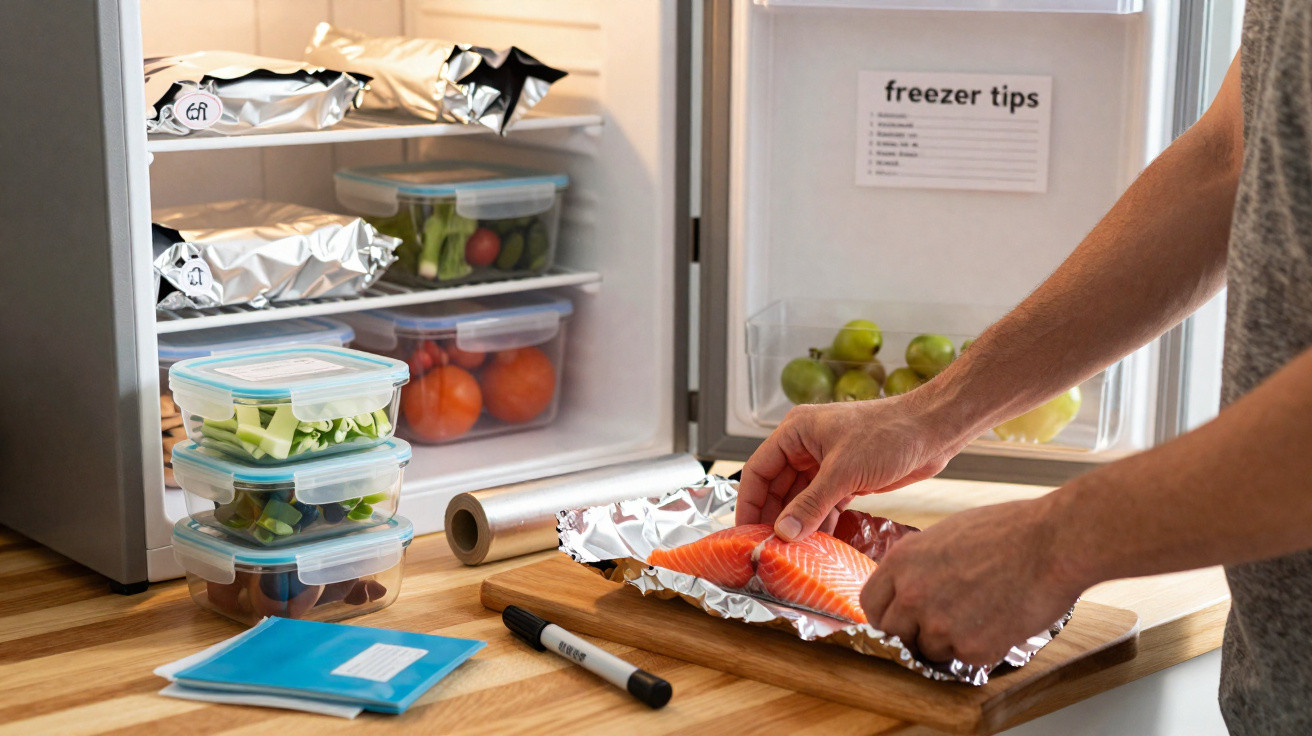
- Wrap food well: open containers release moisture that later turns into ice.
- Do not freeze warm leftovers: let them cool completely first, otherwise humidity inside the appliance rises sharply.
- Watch the fill level: neither completely empty nor crammed full - both can encourage ice formation.
If you manage your supplies more deliberately, you open the freezer less often and avoid unnecessary moisture. That also helps with other foods in the fridge that should not be left unused for too long.
What to keep in mind when using aluminium foil in the freezer
Aluminium foil is inexpensive, easy to find, and already a staple in most households. Even so, it is worth using it sensibly and in moderation.
A few points to remember:
- Only line as much surface area as you genuinely need.
- Do not reuse damaged foil, as it can trap moisture.
- Make sure no sharp edges come into contact with cables, door seals, or sensors.
Used sparingly and with intention, aluminium foil can reduce effort and energy consumption without putting the appliance under strain. Unlike complicated specialist solutions sold in shops, this approach relies on a simple household product - and you stay in full control of any changes inside the freezer.
Why the trick is especially worthwhile for older freezers
Newer no-frost models reduce ice build-up technologically, but they often rely on fans and additional electronics. Many homes still use traditional freezers or fridge-freezer combinations that ice up quickly and offer no convenience features.
That is where the aluminium foil trick really shines: it extends the time between major defrosting sessions, protects interior surfaces, and can noticeably cut electricity use. If you want to keep an appliance going for a few extra years, this small step helps you get more efficiency out of the equipment you already have, rather than immediately considering a replacement.
In simple terms, the maths is easy: a roll of aluminium foil costs only a few pounds, while the time saved and reduced energy demand add up to considerably more. Once you have seen how quickly a completely iced-over compartment can be “peeled” clean in one motion, most people do not want to go back to the old scraper.





Comments
No comments yet. Be the first to comment!
Leave a Comment