
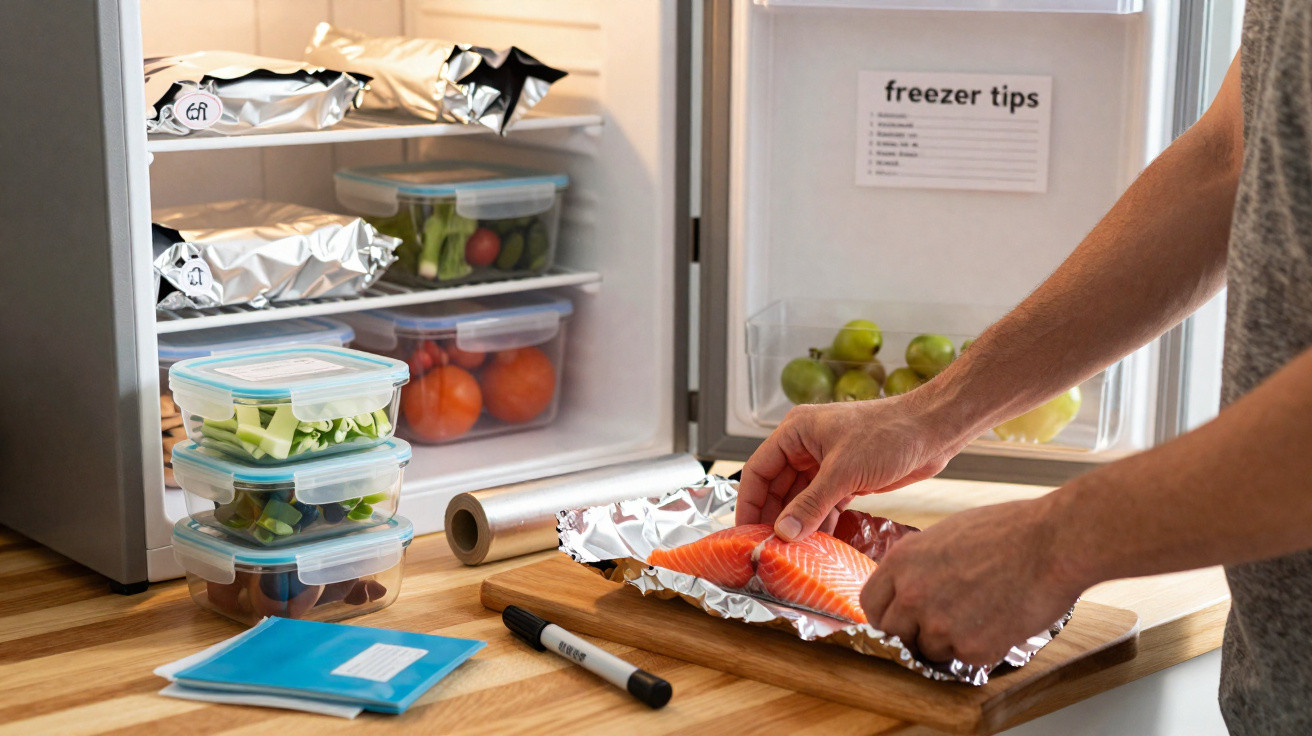
The scene is familiar: the casserole is half eaten, there’s a leftover piece of meat, you quickly wrap it in a bit of aluminium foil, pop it in the freezer, lights out. It’s practical, fast, everyday life. At the same time, the worry about aluminium has been doing the rounds for years - toxins, the brain, Alzheimer’s. What’s true, what’s hype, and where’s the line between “that’ll do” and “best avoid”?
Aluminium foil in the freezer: generally allowed, but with drawbacks
From a purely technical point of view, aluminium handles cold without any problems. Even at –18 °C, the material doesn’t become brittle, and many guides explicitly list aluminium foil as a suitable packaging option for the freezer. So, if you look only at temperature, there’s no reason not to use it.
"In day-to-day use, aluminium foil fails less because of temperature and more because of handling and certain foods."
The foil is thin, tears easily, and lets air and odours through more readily than sturdy bags or containers. The typical result is freezer burn: dried-out edges, grey patches on meat, and a soggy texture. Freezer burn isn’t unhealthy, but it’s hardly appealing.
For longer storage - several months - airtight freezer bags or rigid boxes have a clear advantage. They keep moisture in the food more effectively, protect against odours, and are often reusable.
When aluminium foil works well for freezing
Despite its weaknesses, aluminium foil still has its place. With certain foods and for limited periods, it can do a decent job - provided you follow a few basic rules.
Foods that suit aluminium foil in the freezer
Aluminium foil works best with fairly dry, firm foods that aren’t heavily seasoned:
- raw meat without marinade (e.g. schnitzel, roasting joints)
- fish fillets without lemon juice or a strong salt brine
- baked goods such as bread, rolls, brioche
- dry cakes or biscuits
- leftover portions of casseroles with a moderate salt content
Before wrapping anything, the food should always be completely cooled. Hot food in direct contact with aluminium foil is never a good idea - regardless of whether it’s going into the freezer.
How to wrap with aluminium foil as safely as possible
A few simple steps can noticeably reduce risk and improve quality in the freezer:
- Let it cool: bring food to room temperature before wrapping it.
- Wrap tightly: press the foil directly onto the surface so as little air as possible is trapped inside.
- Add a second layer of protection: put the foil-wrapped item into a freezer bag or a container as well.
- Label it: write down the contents and the date so you can track how long it’s been stored.
"Aluminium foil is better as an emergency option or extra protection - not as standard packaging for everything in the freezer."
When aluminium foil can become a real risk during freezing
The crucial issue isn’t the cold - it’s the chemistry. Aluminium reacts with certain substances in food. In particular, very acidic or heavily salted foods can draw aluminium out of the foil.
These include, for example:
- tomatoes and tomato sauce
- citrus fruits and their juice
- marinades with lots of vinegar
- heavily salted cured meats and ham
- very salty cheeses or feta in brine
With longer storage, aluminium can leach out and pass into the food. Studies link a persistently higher intake of aluminium with possible effects on the nervous system. Potential impacts discussed include impaired brain function and a connection with degenerative diseases such as Alzheimer’s - the evidence isn’t final, but the overall direction is clearly towards caution.
"If you want to play it safe, don’t wrap anything strongly acidic or salty in aluminium foil - neither for the oven nor for the freezer."
Aluminium foil remains strictly off-limits in connection with a microwave. It can cause sparking, damage to the appliance and, in the worst case, a fire risk. Frozen foods should therefore always be defrosted in a microwave-safe container.
Better alternatives to aluminium foil in the freezer
Many households are looking for ways to cut down on single-use materials anyway. When it comes to freezing, that’s relatively easy to do without sacrificing convenience.
Common alternatives at a glance
| Packaging | Advantages | Disadvantages |
|---|---|---|
| Freezer bags | flexible, space-saving, good protection against freezer burn | plastic; single-use versions create waste |
| Reusable silicone bags | long-lasting, leak-proof, often dishwasher-safe | higher upfront cost |
| Glass containers with lids | no chemicals; also suitable for reheating | heavy; takes up more space; can break |
| Plastic freezer containers | stackable, light, fairly robust | can absorb odours over time; plastic remains a concern |
| Baking parchment plus bag/container | good as a separating layer; less contact with plastics or foil | not airtight on its own; only useful in combination |
For acidic foods such as bolognese, chilli, lemon cake or pickled gherkins, it’s better to use glass or plastic containers that genuinely seal well. That way the food is protected, and metal doesn’t come into it at all.
How long can food stay frozen in aluminium foil?
If you do use aluminium foil, it’s sensible to keep storage time short. Here are a few rough guidelines when you’re using only a simple foil wrap:
- bread and rolls: 1–2 months
- raw meat: about 1–2 months
- baked goods such as cake: 1 month
- unseasoned fish: 1 month
With an added protective layer - foil plus a bag or container - you can usually extend these periods a little. Even so, it’s worth doing a regular “freezer inventory” and not endlessly pushing ancient parcels to the back.
Freezer hygiene: what many people overlook
Cold temperatures stop bacteria from multiplying, but they don’t reliably kill them. If food is frozen too late, any existing germs simply remain in “cold sleep” and become active again when the food is defrosted. The type of packaging doesn’t change that.
So the basic rules are:
- freeze leftovers the same day if possible, or by the next day at the latest.
- get highly perishable items such as fish or mince into the freezer particularly quickly.
- don’t refreeze defrosted food if it has been at room temperature for a longer time.
In this context, aluminium foil is best used only as an outer layer - for example, wrapping around a glass dish or container to help prevent odours escaping into the freezer.
What “aluminium intake” actually means
Aluminium isn’t found only in foil - it also turns up in some cooking utensils, baking trays, colourings, or (in the past) deodorants. Each individual source adds a small amount to the body’s overall exposure. The more direct contacts you avoid, the lower the total tends to be.
People who regularly eat ready-marinated barbecue products, heavily salted cheese or cured meat specialities, and strongly seasoned ready meals should look even more critically at how they use aluminium foil. Choosing glass, silicone or suitable plastics instead can noticeably reduce contact with aluminium.
Ultimately, this isn’t about banning aluminium foil completely. It’s still handy - for short-term covering or as an extra protective layer. But if you know which foods make it problematic and which alternatives work better, you can use your freezer with far less worry.


Comments
No comments yet. Be the first to comment!
Leave a Comment