
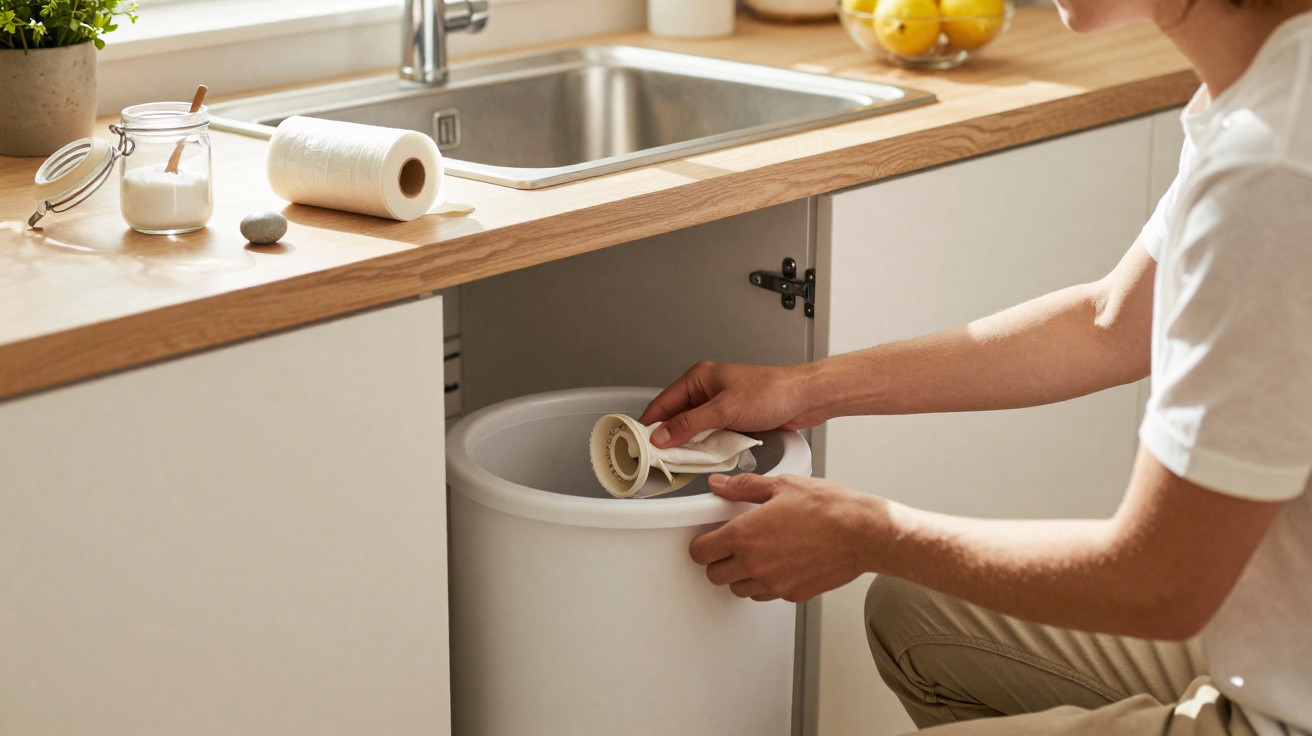
Most people replace the bin liner, snap the lid shut and mentally tick “clean” off the list. Yet inside the bin-beneath the plastic-conditions slowly build into a perfect breeding ground for bacteria, mould and stubborn odours. And that’s exactly the spot many households go for months without cleaning.
The dirtiest place in the kitchen is often right under the sink
It’s a common assumption: if there’s a bin bag in the bin, everything stays hygienic. In reality, that’s simply not true. Liners tear, slip to one side or develop tiny holes you don’t notice. Liquids, juices and grease from food waste find a way out-and end up on the base and walls of the bin.
Over time, a greasy film forms from food residue, fat and moisture. That combination is exactly what microbes, mould spores and odour-producing bacteria thrive on. And kitchens warm up quickly anyway-ideal conditions for germs to multiply at speed.
“In many households, the kitchen bin is one of the most germ-laden surfaces-often even more so than the toilet or the floor.”
On top of that, day-to-day kitchen life means almost anything can end up in the rubbish-anything you’d rather not look at. Gone-off food from the fridge, greasy packaging, fish scraps, meat trimmings, coffee grounds, fruit peel. All of it brings moisture, fat and bacteria with it.
Worktops might get wiped down, and the sink gets a cleaner now and then. The bin, however, is usually left to cope on its own. You don’t always see the problem straight away-but you will smell it eventually. If it stinks even with the lid closed, that isn’t a “normal kitchen smell”; it’s a clear warning sign.
How often the bin really needs cleaning
Hygiene experts recommend giving your kitchen bin a thorough wash once a week-especially if you cook every day. That can sound excessive, but the bin is effectively a collection point for the most perishable waste in the home.
If weekly cleaning feels unrealistic, you can stretch it-but you should still do a proper clean at least every two weeks. This matters even more in warmer months, when odours and germs develop much faster.
“Non-negotiable: as soon as liquid has leaked into the bin or a bag has torn, it needs cleaning immediately.”
If spilled sauce, meat juices or yoghurt sit in the bin for days, it doesn’t just increase the smell. It also raises the risk of mould and bacteria that can then spread around the kitchen-for example via your hands, the lid handle or splashes.
Step-by-step guide: how to get the kitchen bin properly clean
With a few simple actions and basic household products, you can clean a bin thoroughly. Once you build a routine, it usually takes under ten minutes.
A simple cleaning routine for the kitchen bin
- Empty the bin completely and remove any obvious residue by hand or with a disposable spatula.
- Part-fill the bin with hot water and washing-up liquid. Hot water helps cut through grease, while washing-up liquid lifts dirt and reduces odours.
- Scrub the inside with a brush or sponge-don’t forget corners and the rim.
- Spray on a grease-cutting disinfectant cleaner and leave it to work for a few minutes.
- Rinse thoroughly with clean water until no cleaning product remains.
- Dry the bin completely using kitchen roll or a clean cloth. Dampness inside the bin encourages fresh bacterial growth.
- Finally, wipe the outside with a damp cloth: the lid handle, edges and base are often dirtier than you expect.
A handy trick if you don’t want to make a mess in the kitchen: carry the bin to the bathroom and rinse it in the shower or bath. Using the handheld shower head is usually quicker and more thorough than juggling a bowl of water at the sink.
How to keep your bin cleaner between washes
If you tweak a few disposal habits, you’ll need less scrubbing and you’ll notice far fewer odour issues. The key point: never put wet or very greasy waste “as is” straight into the liner.
What to do before throwing things away
- Pour off liquids (leftover sauces, stock, yoghurt) into the sink where possible before putting the packaging in the bin.
- Wrap very wet or greasy food scraps (meat, fish, cheese) in a bit of kitchen roll or newspaper.
- Don’t let strong-smelling leftovers like fish or onions sit in the bin for days-take them out sooner.
The drier the rubbish, the more slowly that typical “bin smell” develops. Any food that’s gone off in the fridge should be moved as quickly as possible to the outdoor bin or food-waste caddy, not left for days in the small bin under the sink.
When you should change the liner
Many people wait until the bag is almost overflowing. It may save liners, but it also means waste sits in a warm bin for longer. A better approach is to change it a bit more often-especially in summer or whenever you’re throwing away lots of wet food scraps.
A simple guide can help:
| Household type | Recommended frequency for changing the liner |
|---|---|
| Single person, little cooking | every 2–3 days |
| Couple, cooking regularly | daily to every 2 days |
| Family with children | daily; in summer, possibly twice daily |
If you compost at home, you can put a large share of organic waste straight onto the compost heap. Coffee grounds, tea bags, and fruit and vegetable peelings won’t end up in the kitchen bin at all, which significantly reduces both moisture and odour.
Helpful extras: from bicarbonate of soda to a scent stone
Alongside regular wet cleaning, a few small add-ons can make day-to-day life more pleasant. A classic option is to sprinkle 1–2 tablespoons of bicarbonate of soda (plain, with no additives) on the bottom of the empty bin or directly into the liner. It absorbs odours and draws in moisture.
These measures can also make a noticeable difference:
- Place a sheet of newspaper under the liner to catch small leaks.
- Use odour-neutralising bin liners, particularly in summer or for strong-smelling waste.
- Put small scent stones or gel pads next to the bin rather than inside it-these should never just mask smells and must be combined with proper cleaning.
Why a clean bin is about more than “just appearance”
A neglected bin isn’t only unpleasant for your nose. Germs can be transferred to other surfaces via hands, cleaning cloths or splashes-such as worktops or fridge handles. If you have children or pets, the chances of germs spreading unnoticed are even higher.
That’s why washing your hands after taking out the rubbish matters just as much as cleaning the bin itself. If you touch the lid and then start chopping vegetables without washing your hands, you may pass potential pathogens to the one place they least belong: fresh food.
If you keep up regular cleaning for a while, you’ll quickly notice the difference: the whole kitchen feels fresher, and that familiar “kitchen smell” largely disappears. Many people only realise then how much this unremarkable container affected the overall feel of the room.
Whether you use bicarbonate of soda, hot water, a vinegar-based cleaner or a disinfectant spray-the crucial point is that the bin is no longer ignored for months at a time. A fixed slot in your weekly schedule is enough to turn an invisible germ hotspot back into a harmless everyday item.
Comments
No comments yet. Be the first to comment!
Leave a Comment