
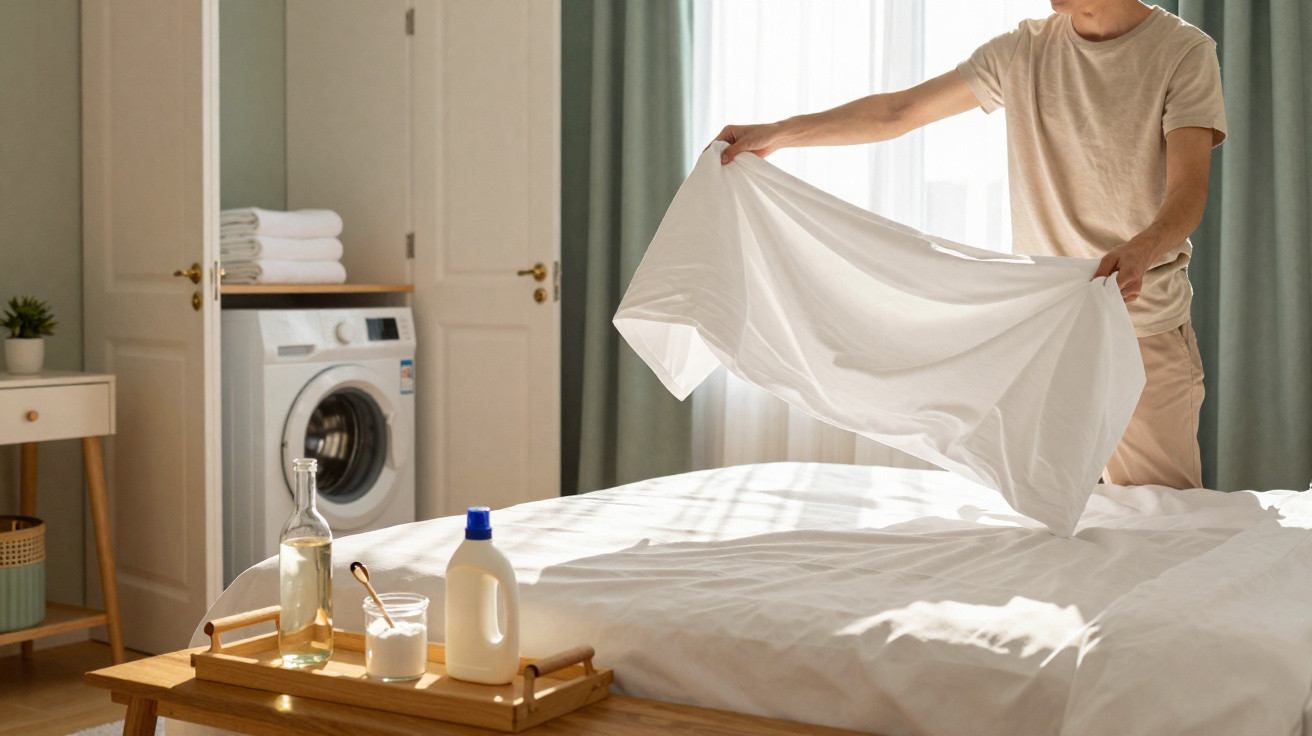
Many people are struck by the same contrast: why do hotel bed sheets still look spotless after dozens of washes, while bedding at home can turn grey, stiff or stained after only a few months? Behind the scenes, professionals rely on consistent routines, specific products and strict laundry rules. With a few smarter habits, you can recreate much of that effect in a standard home washing machine.
Why hotel bedding feels so different
Hotels spend heavily on bed linen, mattresses and overall sleep comfort. To make that investment worthwhile, the bedding has to last and keep looking pristine. That’s why housekeeping teams and commercial laundries focus on three essentials: protecting the fibres, maintaining a consistent white, and achieving hygienic cleanliness. Combined, those priorities create the familiar “hotel-bed feel”.
"The principle is simple: the fibres need to be cleaned without losing a bit of their lifespan with every wash."
Most of these methods work perfectly well with ordinary household appliances-no industrial washer required. What matters is not fancy technology, but consistency, and cutting out the habits that quietly damage fabric.
The right detergent makes the difference
Hotels typically use liquid or powder detergents designed specifically for light-coloured textiles. The reason is straightforward: the wrong detergent can weaken cotton fibres or leave a dull grey cast.
- choose a mild, dye-free detergent
- use products made for whites
- use optical brighteners sparingly
- adjust the dose to water hardness and load size
A common mistake at home is using too much detergent. The result is residue trapped in the fabric, sheets that feel flat or slightly “waxy”, and a loss of that light, crisp finish. Hotels tend to use the lowest effective dose and make sure it rinses out thoroughly.
Water temperature: no hotter than necessary
The instinct of “hotter means cleaner” causes long-term damage to bedding. Professionals often wash white sheets at moderate temperatures that protect fibres while still cleaning properly.
At home, that means:
- 40 °C for lightly soiled bedding
- 60 °C for illness, heavy stains or allergies
- boil wash only in exceptional cases
Excessive heat roughens the fibre surface. It may feel cosy at first, but over time it encourages pilling, a greyish haze and faster wear. Cooler washes protect textiles and also reduce energy use.
Why fabric softener ruins bed sheets over time
Fabric softener is often seen as the shortcut to soft laundry. In many hotels, however, it’s not used for bed sheets at all-or only in tiny amounts. The issue is the chemical coating: it wraps each fibre, making it feel smoother, but it gradually reduces how well the fabric absorbs water and detergent.
"Too much fabric softener makes whites look dull and can effectively ‘clog’ the fabric."
A simple alternative is household vinegar (clear, with no additives). A small splash in the fabric-softener drawer helps dissolve detergent residues, neutralise odours and lightly relax the fibres. Any vinegar scent disappears as the laundry dries.
How to use vinegar correctly
- add roughly half to one small glass of clear vinegar to the fabric-softener compartment
- do not pour it directly onto the laundry
- do not combine it with chlorine-based products
If you have sensitive skin, start with a smaller amount and see how your skin responds.
Bicarbonate of soda as a secret weapon against greying
Another staple trick from hotel laundry routines is bicarbonate of soda (or baking powder with no added ingredients). It boosts cleaning performance and brightens white bedding without attacking the fabric structure.
Practical use:
- add about half a cup of bicarbonate of soda directly into the drum with the laundry
- for badly greyed bedding, use it regularly over several washes
- test cautiously if fabrics seem very fine or delicate
Bicarbonate of soda helps bind odours, lift sweat marks and make whites look clearer again. Even older bedding can look noticeably fresher.
Mistake number one: overloading the washing machine
In many homes, people pack the drum too tightly. It may save time, but it reduces movement and water circulation. Hotels stick rigidly to correct load sizes so textiles can move freely.
"White sheets need space in the drum-otherwise dirt and detergent just pass over the surface."
A simple rule of thumb: never fill the drum to the top. You should still have roughly a hand’s width of space between the laundry and the drum edge. Sheets and duvet covers are large, heavy pieces that quickly bunch together when you try to wash too much at once.
Gentle handling before and after washing
That professional finish doesn’t start with the wash cycle. How you handle bedding before and after laundering matters as well.
| Step | Hotel practice | Tip for home |
|---|---|---|
| Sorting | Whites kept strictly separate from colours | never mix light bedding with dark textiles |
| Pre-treatment | Stains treated immediately | pre-treat stains with bile soap or a mild stain remover |
| Drying | Removed from the machine as quickly as possible | don’t leave damp sheets sitting in the drum |
| Smoothing | Professional ironing or pressing | iron sheets slightly damp or hang them taut |
If you don’t want to iron, shake bedding out straight after washing and hang it on the line or airer as smoothly as you can. Many wrinkles will drop out on their own.
How often bedding really needs washing
Many hotels change bedding daily or after a few nights, depending on category and house standards. At home, changing it every one to two weeks is usually enough-weekly is better if you sweat a lot, have allergies or share your home with pets.
Frequent washing stops sweat, skin particles and skincare products from working deep into the weave. That way you don’t need harsh programmes or extreme temperatures later just to get that fresh feeling back.
Keeping health, comfort and cost in mind
Treating your bedding like hotel bedding brings several benefits at once. Fabric lasts longer, comfort improves, and the whole bedroom can look noticeably neater and more premium with crisp, clear sheets.
At the same time, gentler temperatures and fewer chemicals reduce energy and product use. In households with several beds, that difference can add up over the year.
One point people often overlook: your skin lies directly on your bedding for hours every night. Residues from aggressive detergents, too much fabric softener or poorly rinsed fragrances can irritate skin. If you’re prone to eczema, dry skin or allergies, you may feel a real difference when you switch to mild products and reliable rinse cycles.
How to bring the hotel-bed feel home
At heart, this isn’t about complicated professional hacks-it’s about a consistent routine: a mild detergent, the right temperature, little or no fabric softener, a bit of bicarbonate of soda when needed, and enough room in the drum. Add quick drying and smooth hanging, and you get that fresh, high-quality bedding impression usually associated with being on holiday.
Stick with these steps for a few weeks and most people notice it clearly: sheets stay whiter, feel softer-and the bed looks more inviting the moment you walk into the room.



Comments
No comments yet. Be the first to comment!
Leave a Comment